Showing posts with label horror. Show all posts

Saturday, 4 October 2025

REVIEW: The Long Walk


Fifty boys walk in a straight line at three miles per hour for as long as they can. If they slow down or stop for too long, they’re shot dead. If they try to escape or even step off the road, they’re shot dead. The last boy walking wins untold riches and his heart’s desire.

It’s a grim premise for a story, and slim basis for a film. Frankly, that Stephen King managed to wring a novel out of it is impressive enough. The fact that he was nineteen when he did so is even more impressive, although it also explains a lot about the story, an angry adolescent polemic against society. Long dismissed as unfilmable, The Long Walk has actually been rattling round Development Hell for years, until finally being picked up by Vertigo with Francis Lawrence as director.

It's probably going to be my film of the year.

It’s one of the best films I’ve seen in a long time, albeit one that I will probably never watch again. It’s a harrowing experience as you are pulled along with the young men as they trudge painfully on. There’s levity there, but it’s gallows humour, the brutal laughing in the face of misery that so many of us learn in order to survive. The original 4 mph rule of the book was knocked down for being frankly impossible, but even keeping up 3 mph for hundreds of miles without rest is pretty unfeasible for all but the most immaculately trained superhuman. (You just know there are some hypermasculine pricks in the audience scoffing and insisting that they could win it.)

Cooper Hoffman is excellent as the central protagonist Ray Garraty, perfectly cast as a believable but damaged everyman, but it’s David Jonsson who really steals the film as the resolutely optimistic Pete McVries. The friendship between the two is the heart of the film, a friendship built in the most unfriendly of circumstances. We see the best of masculinity as well as the worst, with even the most unpleasant of the walkers (that’ll be Charlie Plummer’s Barkovitch) being sympathetic as we know they are all here out of desperation. Not one of them truly grasps just how brutal the Walk is going to be, with the possible exception of the stoic Stebbins (Garrett Wareing), and even he isn’t truly prepared for it.

Even with the novel’s hundred walkers reduced to fifty, there are too many to fully focus on. Tut Nyuot, Ben Wang and Joshua Odjick all give strong performances as Baker, Olsen and Parker, respectively. Olsen, one of the more unlikely contestants, is especially likeable, but in a way that only drives home how unsuited he is for the gruelling challenge. There’s an unpleasant complicity in the Walk from the audience, spectating from comfort just like the gawping onlookers at the roadside. The brutal Walk is fiction, of course, but the cast still walked for miles in order to get realistic footage, with Hoffman reporting that on some days they walked for up to fifteen miles in the heat.

While King wrote and seemingly set his novel in the 1970s, and the aesthetic of the time has been carried over to the film, there’s no real indication of when the film is set. This is to the film’s benefit, since the themes are timeless and can’t be pinned down to one era. Many have read an allegory for the Viet Nam War in the novel, and while there’s a clear parallel between signing up for the Walk and volunteering for military service (down to youngsters lying about their age to get in), it’s a broader story of desperation and hope amongst hopelessness.

Whenever it’s set, The Long Walk occurs in some distorted alternative history, where the USA has become a fascist dictatorship and undergone economic collapse after an unspecified war devastated the nation. The idea that it would take a war to inflict this on America is laughable; given what you people actually voted for last year, a lot of you practically volunteered for this dystopia to be delivered. As outlandish as the idea of the Walk is, it’s also depressingly easy to believe that it would be enacted, for inspiration or entertainment, and that desperate souls would sign up for it even knowing that it would almost certainly mean a painful death.

So much of the film is spent just waiting for the inevitable, a chilling feeling that makes it an uncomfortable yet compelling experience. None of it would work were it not for the depth of the cast’s performances. While the boys, particularly Garraty, are our way into this disturbing world, it’s brought to life by Mark Hamill’s gloriously loathsome Major, seemingly the head of the military junta in this reality and a snarling figurehead for the oppressive regime. In contrast we have the always wonderful yet still sadly underrated Judy Greer as Ray’s mother Ginnie, who essentially represents all that is good and all that is feminine and nurturing in this brutal state.

There are no punches pulled in this film. Injuries and illness are depicted graphically; there are no clean, screen-friendly gunshots here. Lawrence lingers on the violence just long enough to feel repulsed before forcing us to move on with the rest of the walkers. For all that the Walk is a deliberately contrived kind of brutality, it’s none too far removed from reality in the worst places on Earth. Right now, Palestinians are being marched through Gaza for miles at gunpoint, while men and boys have been forced to walk in front of tanks as human shields. It’s disturbing to think that in Gaza, Sudan or Congo, young men likely would sign up for a gruelling trek with a 1-in-50 likelihood of survival if it meant a chance of escaping and providing for their families.

The film marches along with the boys with a crushing inevitability until we are left with only two. The ending is somewhat predictable (although different to the original ending in the book), yet this only makes the sense of the inevitable more foreboding. Throughout, the cast force you to care about the poor bastards you know you’re going to watch die. And yet, like the best of King adaptations, The Long Walk has an uplifting message at its core: to never give up and to go down fighting.

Friday, 7 February 2025

REVIEW: Nosferatu


Never underestimate the staying power of a good horror story. Over a century since F. W. Murnau’s silent classic Nosferatu: A Symphony of Horror was released, another version has rocked the world with its powerful gothic imagery. Of course, even the original Nosferatu wasn’t actually original, being simply Dracula with the names and half the setting changed, to the point where several versions have had the names of the main characters changed back to the ones from the book. It’s a funny thing, copyright: the 1922 Nosferatu was almost destroyed at the orders of Bram Stoker’s widow and now it’s in the worldwide public domain itself. Hence two remakes in just over two years (the 2023 version by David Lee Fisher has not made such a big impact, but it does star Doug Jones, so must be worth a look).

Robert Eggers (The Lighthouse) has had Nosferatu on his ambition list for years, announcing it back in 2015 before production finally started in early 2023. Director’s dream projects that sit in pre-production for years don’t often make for very good films in the end, but Eggers’s ambition and flair are more than up to the task of bringing Nosferatu back to haunting and powerful unlife. Infused with a desolate, strange beauty, Nosferatu is ashen, cold and dour, and yet palpably unsettling. There’s barely any more colour to it than the original, with the odd flashes of bold colour energising the scenes around them: a bouquet of lilacs, the blonde locks of the doomed Anna Harding, and, of course, plenty of blood.

There’s an incredible attention to detail in the production, with pains taken to make the archaic Transylvanian locations look authentic. For external shots, Castle Orlok is in fact Corvin Castle in Transylvania, where the real Vlad Dracula was once imprisoned, with much of the remaining filming taking place in Czechia. Orlok is dressed in heavy furred robes rather than the long, shroud-like coat of the original or eveningwear popularly associated with Dracula. Together with the decision to use a reconstructed form of the ancient Dacian language for Orlok’s own tongue, makes him appear as an actual Transylvanian noble for once. There’s a dedication to using genuine vampire folklore rather than the elements introduced by Dracula and more modern stories; the plague that follows Orlok, while taken from the original Nosferatu, is a common association in Eastern European vampire myths, as is the drinking of blood from the chest or heart, rather than carefully from the neck.

Bill Skarsgård is completely unrecognisable as Count Orlok, the Nosferatu himself. Eschewing the iconic rat-faced look of the original, Skarsgård is made up to appear ancient, haggard and diseased, his pale face dominated by a prodigious moustache. This is more in keeping with the appearance of Dracula at the start of the novel, something infrequently retained by adaptations. However, unlike the original Dracula, Orlok doesn’t rejuvenate as he feeds on others, remaining decrepit, albeit still frighteningly powerful. Skarsgård moves in a disturbingly stiff and deathly way, in keeping with Orlok’s corpselike appearance, but what’s more impressive is his voice. Incorporating operatic training and Mongolian throat music techniques, he reduces his voice to a subhuman growl, something that in most productions would be achieved by electronic or digital modulation.

Eggers initially intended to cast Skarsgård as Thomas Hutter, the Jonathan Harker equivalent of the story. While it’s easy to see that he would have played it well, we would have been robbed of his Orlok as well as Nicholas Hoult’s Hutter. Less than two years since his title role in Renfield, Hoult gets to play a different leading role in a Dracula adaptation with considerably more dramatic clout. His performance is remarkably realistic in an unreal situation; you can sense how desperate and out of his depth he is from the moment he is assigned the job of getting Orlok to sign the legal papers. Meanwhile, the Renfield role is taken by Simon McBurney as Herr Knock, who gives a fabulously over-the-top performance that stays on just the right side of believable.

Willem Dafoe, while restricted to the second half of the film, is almost as intense as Professor von Franz, this version’s equivalent to the great Van Helsing. Having played a vampiric version of original Nosferatu star Max Schrek in 2000’s Shadow of the Vampire, it’s no surprise that Dafoe was considered to play Orlok here. While it would have been interesting, and no doubt entertaining, to see him more-or-less reprise that role, he is so well-cast as the deeply eccentric alchemist/occultist von Franz that the film would be far poorer without him. There are strong performances from Emma Corrin, Aaron Taylor-Johnson and Ralph Ineson as well (particularly pleased to see how many Hollywood roles Ineson is getting lately).

Out of a stellar cast, the best performance is by Lily-Rose Depp as Ellen Hutter, the central figure of the narrative whose uncanny abilities cause her to call out to Orlok and set the events in motion. While based on Dracula’s Mina Harker, Ellen is central to the story in a much more profound way, and Depp gives an astonishingly intense and deep performance that carries the film. It’s to her credit that, even when we’re immersed in her husband’s experiences in Castle Orlok, we are more than content to be taken back to Wisborg to spend time with the ailing Ellen. Depp shares strong chemistry with Hoult, but it’s her scenes with Skarsgård that are the most compelling.

While Nosferatu almost eclipses its inspiration in foreboding, death-laden atmosphere, it’s not without its flaws. While naturally a slowly-paced film, it loses further momentum as both Hutter and Orlok travel to Wisborg. Much of this is down to the time spent on the cursed journey of the ship that carries the vampire, a sequence that almost invariably slows down and overstretches the more faithful tellings of Dracula. (This reminds me that I must watch The Last Voyage of the Demeter, which overcomes this problem by committing a whole film to the section.) While the sea voyage is also present in the original Nosferatu, its inclusion is just as questionable in both, Dracula sets its second half in England, but why is Orlok travelling from Transylvania to Germany by sea? Hutter has no trouble taken the more sensible course over land.

The film never quite recovers the momentum it needs in the final act, even as events crescendo with plague ravaging Wisborg and Orlok carving a bloody swathe through the main cast. Nonetheless, Nosferatu remains powerfully haunting till its inevitable, dark and moving end. Both tangibly sexual and profoundly distressing, carefully beautiful yet achingly dark, Ellen’s final encounter with Orlok reflects the atmosphere and emotions of the film as a whole. Nosferatu is a quite unforgettable experience.

Monday, 16 December 2024

REVIEW: SMILE and SMILE 2

It was a smiley time this Hallowe’en, with Smile 2 in the cinemas and Smile itself hitting streaming services to cash in on this. It’s been a quick turnaround for writer-director Parker Finn, who released his short film Laura Hasn’t Slept in 2020, built on it with the feature-length follow-up Smile in 2022 and turned out the second feature this year. In that short time, the Smile sequence has established itself as one of the most popular and celebrated horror franchises of the last decade.


Does it deserve this? Well, yes and no. There’s no denying that these films are effective shockers, combining psychological terror with body horror to unpleasant effect. Smile itself, though, doesn’t quite live up to the hype. Originally titled Something’s Wrong With Rose, aesthetically tied more to Laura Hasn’t Slept which it ostensibly follows from directly, with Caitlin Stasey reprising her role, albeit briefly, as Laura, so that she can pass on the (literally) nightmarish curse to psychiatric therapist Dr. Rose Cutter. While Laura has been haunted by a terrifying being that smiles at her from behind different faces, the unsettlingly wide rictus grin didn’t become the focus on the manifestations until the feature, hence the change to the punchier, more intriguing title. It makes for a good poster, too.

The best thing about Smile is undoubtedly its star, Sosie Bacon, who gives an impeccable performance as a woman whose sanity is slipping under constant assault. Focusing on a psychiatrist is a good move, putting her directly in harms way by exposing her to someone already plagued by the… I’m just going to call it the Smiley Thing. It also puts her in the unusual position of a horror protagonist of understanding the dangers to her sanity she is experiencing, making it all the more feasible how long she refuses to accept what is happening is real, and also intelligent enough to admit when she can’t deny the evidence in front of her any longer.

Rose has already experienced intense trauma due to witnessing her mother’s suicide as a child, her entire life revolving around mental illness. Trauma and guilt are at the heart of Smile’s story, with the Smiley Thing specifically channelling and transmitting through unbearably traumatic experiences. It forces its victims – perhaps hosts is a better word – to relive their most painful experiences, while visiting new horrors on them. It warps its victim’s perceptions, so that at no point do they, or the viewer, know whether what they are seeing is real. Most disturbing for Rose is how it enjoys appearing as the long dead, but most effective as horror is when it appears as the still living, taking its time before it reveals itself as an illusion, usually only when reality intrudes and Rose realises that the person she thought was in front of her is actually somewhere else entirely.

It's not as if Rose has it easy in her day-to-day life, having to cope with an overwhelming job at an understaffed hospital and a complex romantic situation – her fiancé (Jessie T. Usher) doesn’t understand her, while Joel, her ex (Kyle Gallner) frequently finds himself in her workplace in his capacity as a police officer. Worst of all is Holly (Gillian Zinser), Rose’s self-absorbed and materialistic sister. Yet you can sympathise with everyone who begins to turn on Rose as her mental health deteriorates, and she is accused of appalling acts that she can’t remember committing.


This is where Smile works best. Finn’s script perfectly captures the experience of declining mental health, as your own mind betrays you, putting you in a place where you can’t trust you perception, memory or actions. It paints the fear and heartbreak as the people closest to you find they can’t cope with the changes in you, who turn away as you need them the most – but also the relief and gratitude towards those who do stick by you and try to help.

The most effective moments are when Rose is made isolated and afraid by her distrust of her own reality. The grotesque smiles on the Thing’s various faces are disquieting, but it’s the moments where you realise that what you’ve been watching, what Rose has experienced, never happened, or happened in an entirely different way to how you thought. Unfortunately, the film relies too much on jump scares which, although they do their job, just aren’t as interesting, original or effective as the core horror of the story. Still, it’s all in service of the Smiling Thing’s process, as it uses these to continually wear aware at Rose’s nerves. The Thing acts as a generic horror movie shock jock a lot of the time, precisely because this helps its mission of driving its victim to the brink. And also just for the kicks.

I really like that there’s no explanation for what the Thing is. It’s clearly supernatural, and acts like a curse, passing on from victim to victim after no more than a week of pushing them to breaking point. Beyond that, we have no idea, although we do eventually glimpse its alleged true form (if it even has such a thing). Horrible though it is, it simply isn’t anywhere near as frightening as someone you thought was on your side slowly breaking out into that appalling grin.

So Smile works, largely down to the powerful central performance of Sosie Bacon, but it never quite reaches the penetrating horror it’s really going for. It’s also hard to avoid comparisons to other films with similar conceits, such as Ringu and It Follows, which gave us implacable, relentless phantoms before and did it better. Smile 2, though, is as much an improvement on its predecessor as that was on Laura Hasn’t Slept. It leans into the gore and violence far more than Smile, which would normally be the sign of a lack of imagination and faith in the story. Finn finds the right balance here, though, using revulsion in service of the psychological horror that plagues the new protagonist, Skye Riley.


Skye is a considerably less likeable main character, but remains compelling and believable. The multi-talented Naomi Scott is absolutely excellent in the role. She has the singing and dancing skills to make Skye a believable pop sensation, and also the acting chops to give an incredibly tense and sympathetic performance as Skye’s sanity goes through the wringer. It doesn’t hurt that Scott is one of the most beautiful actresses in the world, either.

Centring the sequel around a troubled pop star gives it an entirely different aesthetic to the first film. It’s altogether bolder and more colourful, another reason why the increased violence works: everything is heightened. Skye is altogether different to the selfless Rose; her trauma comes from the pressures of fame, her own self-centred lifestyle and her reliance on substance abuse, and the brutal car crash that has left her in physical and emotional pain. It’s no surprise when we find out that the crash was her fault, but the visions of waking up bloodied in the wreckage are among the most haunting in the film. Skye also has to deal with her mother (Rosemarie DeWitt) who has commodified her daughter and puts her career over her wellbeing (although as everything is seen through Skye’s perspective it’s entirely possible her mum isn’t nearly as hard-nosed in reality).

Also giving strong performances are Miles Gutierrez-Riley as Skye’s PA Joshua, and Dylan Gelula, Skye’s once best friend who has been out of her life since a particularly venomous attack by Skye in the lead-up to the accident. Smile 2 picks up a week after the first film, rather perfunctorily dealing with a loose end from that story, before fast-forwarding another week to pass the curse onto Skye as she is just starting to put her life and career back together. There’s the sense that Skye might finally be able to make herself into a better person if giving the right environment, but once the Thing latches onto her, her already shaky grasp on reality is broken.


While the gore is increased, it’s once again the psychological aspect of the Thing’s attacks that hit hardest. It’s more relentless this time round, with entire hordes of zombified, smiling avatars assailing Skye. (Nothing in the film is more terrifying than the little girl at the signing and photo-op, whose manic grin may make her the single creepiest child in horror movie history.) There’s a little more exploration of what the Smiley Thing is in the second film, but it’s all speculation and, importantly, every source of information is unreliable. The Thing seems to be learning from its victims as well, playing with them and their sense of reality more and more. There’s a sense that the entity is aware that it’s in a horror movie and is gleefully playing with the tropes that brings, and is fully genre-savvy. You realise as the film progresses that the Thing has always been in charge of the story.

Smile 2 takes the concepts of Smile further and with greater style. Smile 3 is already in the works; filming is set to start next year so it will likely keep the schedule going and arrive in 2026. It’s hard to see where else it can go beyond Finn’s own promise of “more off the rails;” there’s only so much gore and violence, and only so traumatic its themes can get, before it simply becomes another example of shock for shock’s sake. If he can deliver an improvement once again, though, then Smile 3 will be something very special indeed.

Tuesday, 10 December 2024

REVIEW: Possum


I've been on something of a horror trip lately, catching up not only on recent releases but several from the last few years which I'd never quite got round to watching. Possum is a 2018 film written and directed by Matthew Holness, based on his earlier short story published in The New Uncanny (which I now simply must get hold of and read). If, like me, you know Holness best as his alter ego Garth Marenghi (author, prophet, dreamweaver) then Possum is entirely unlike the kind of horror film you'd expect from him. Garth Marenghi's Darkplace was a ludicrously over-the-top, deliberately hammy, parodic horror series. Possum, in contrast, is utterly humourless. It's quite astonishingly grim and serious in its presentation and subject matter.

Possum stars the underrated Sean Harris as Philip, a children's entertainer who we meet on his way back to his grim Norfolk home, having been thoroughly disgraced by an unknown incident in his work. Philip is a puppeteer, a creepy enough medium when done well, and he doesn't seem to be a performer at the top of his game.We never learn the nature of what happened, and we never learn how Philip normally lives his life. When we meet him, he's in dire straits, returning back to the rotten house he grew up in, still crumbling and ashen from the fire that killed his parents. Forced to live with his bullying and decrepit uncle who brought him up, Philip begins reverting to an almost childlike state, losing himself as he returns to the site of his cruel and traumatic upbringing.

To make matters worse, a teenaged boy has gone missing, and the shuffling, mumbling Philip is an easy target for suspicions. Oh, and Philip is being haunted all the while by Possum, a nightmarish puppet of a character he invented in childhood, that he lugs around in a duffle bag. We can assume that Possum had something to do with whatever incident led to Philip being kicked out of the puppeteer trade, but it's real significance is as a manifestation of everything that preys on his damaged psyche. He repeatedly tries to dispose of the puppet, even burning it, but Possum somehow turns up again and again, lurking in his tiny bedroom, even invading his dreams.

Possum is a deeply unsettling film, haunting and uncomfortable in a way few films these days are allowed to be. Holness has said that he was inspired by monochrome silent horror films of the 20s and 30s, and the deeply disturbing British public information films of the 70s. There's a definite feeling of the latter here, the same seedy, threatening version of reality that those short PSAs subjected kids to back then. (Thank god I only ever saw them secondhand, as an example of how utterly weird British television used to be.) There's a disturbing uncertainty as to how much of what we see is immediately real, how much is a result of Philip's deteriorating sanity, and how much is the truth slowly being uncovered.

Sean Harris is exceptional, giving a performance weighed down with a tangible sadness, perpetually on the edge of full breakdown. Philip is discomforting and untrustworthy throughout, even as he is a wholly sympathetic protagonist. Almost as good and even more distressing is Alun Armstrong as his black-nailed, yellow-toothed Uncle Maurice, a viciously cruel and loathsome character. Yet even between these two men who clearly hate each other's guts there are moments of tenderness, which only makes the cruelties worse.

There's not a great deal to the plot of Possum, but what there is keeps you guessing, wrongfooting you by leaking just enough information to lead you to the obvious but wrong conclusions about what's going on with Philip. Holness's direction is complemented by subtly uncomfortable electronic music and sound by the Radiophonic Workshop, also helping lend a 70s texture to the film. Possum itself is a remarkable creation, a revolting mishmash of spider-like limbs and unidentifiable bits of discarded taxidermy, crowned by a chalk-white cast of Harris's own face. Yet, even as disturbing this creation and its manifestations are, it's the performances by Harris and Armstrong that stick with you long after watching.


Tuesday, 5 November 2024

REVIEW: The Substance

Having not had a chance to see it in the cinema but intrigued by the hype, I've signed up to Mubi specifically to watch Coralie Fargeat's The Substance. While the film has been out for a while, I'll try to be reasonably light on the SPOILERS here, but if you plan to see The Substance, I'd recommend watching it with as little foreknowledge as possible.

While I'm not as blown away by The Substance as some have been, it's undoubtedly an extremely powerful film, an evocative and lurid dissection of the cruelty of our shallow society. I am certain that a woman watching it would find it even more so, as while men are also subject to society's skin-deep judgment, it is women who must deal with it day in, day out. Nonetheless, it is interesting that the one other user of the Substance we meet in the film is a man, when the rest of the focus is so squarely on women.

The Substance is a thematically dense film, most obviously satirising the cut-throat world of Hollywood and its relentless exploitation of young performers. It also takes on themes of the cruelty and inevitability of ageing; parent-child rivalry; elder abuse; self-loathing and depression; self harm; cosmetic surgery; substance (small 's') abuse and addiction; the nature of beauty; society's reaction to disfigurement; the nature of identity, and more. Fargeat's direction is eccentric, exaggerating shots with extreme close-ups that magnify the grotesqueness of human life, yet this is shown to be, if not better, then at least more real than sanitised, airbrushed fakery.

Of course, she also delivers a stunning level of gore and revolting body horror, realised largely with practical effects – far more viscerally effective than endless CGI. (Although one of the most disturbing images of the film, the replication of eyes within eyes as the beginning of the Substance's process, is a brilliant bit of digital wizardry.) It's no surprise that Calgeat is a fan of David Cronenberg, in particular his masterpiece, The Fly; some moments are lifted directly from that film. More pertinent, though, is the shared use of extreme mutilation and deformation as a metaphor for disease and the ageing process. Like The Fly, The Substance is quite restrained in its use of gore and monstrosity, increasing it until the climactic and over-the-top finale. I'm informed that the film is equally indebted to Demi Moore's previous film, Requiem for a Dream; I've never seen that film, but I know enough about it to see that it shares with the The Substance a gruesome and uncompromising look at addiction and its effects on the mind and body.


You have to admire Moore for taking on such as role as Elisabeth, as someone who has been ridiculed for her own response to ageing, including not insubstantial cosmetic surgery, and having gone from the highest-paid actress in the world to someone whose career was largely considered to be over. Moore is astonishingly good in this, giving a painfully real and understandable performance as Elisabeth engages on her path of self-destruction. She has spoken of her discomfort in performing naked in the film, now that she is in her sixties (more than ten years older than her character), but, of course, she still looks incredible – which is, naturally, what the film is all about.

Even the remarkably beautiful Margaret Qualley isn't good enough for the perfection that Sue, Elisabeth's alter ego, represents, wearing false breasts for her own nude scenes. Qualley gives an equally strong performance, embodying Sue with a shallowness and cruelty that she hides beneath a marketable personality of naivete and Apple Pie Americanism. It's fascinating to watch Elisabeth's downward spiral reflected, and largely caused, by Sue's increasingly brutal treatment of her. Equally fascinating is Elisabeth and Sue's gradual emergence as separate identities, even though they are simply facets of the same person. When they finally separate, the event that kicks off their final descent into self-destruction, they are inevitably fused again, in the most horrific of ways imaginable.

Qualley, though, doesn't actually look particularly like Moore, which only serves to make the divide stronger and Elisabeth's story sadder. Sue presumably represents an idealised self-image; the person Elisabeth always believed she could be. That Sue instantly becomes a runaway success only furthers Elisabeth's feelings of inadequacy and low self-image. Elisabeth's binge-eating (judging by the amount of meat and eggs, largely driven by a need for copious amounts of protein to replace what was lost in Sue's “birth” and “weaning”) is a clear sign of her self-hatred. This manifests more blatantly in her rapid ageing and disfigurement as Sue's selfishly extends her own time, as well as both versions' increasingly vicious treatment of one another. (Never mind the events towards the end; the fact that neither aspect ever decides to put something down on the world's hardest bathroom floor for the bodyswap moments speaks volumes.)

The film comes close to being a two-hander, but it's impossible to overlook Dennis Quaid's performance as the loathsome Harvey. Also worth noting is Edward Hamilton Clark's performance as hopeful suitor Fred. Even though Fred seems a decent enough guy, both men are portrayed as physically off-putting – Fred with his yellowing teeth, Harvey with his shameless face-stuffing and constant shouting – yet they face no recrimination for their flawed, ageing appearances.


It's an intensely visual film, using colour, harsh lighting and extreme camera work to disorienting effect. Everything is extreme here, be it monstrously ugly or aggressively beautiful. Sue's “Call On Me” channelling erotic workout show is a case in point: relentlessly sexy but again using extreme close-ups to push this beyond its limits. Nonetheless, Qualley is incredibly hot in these scenes, forcing the viewer to become complicit in the sexualisation and exploitation of her character.

In reality, though, Qualley found filming these scenes traumatic, and could only bring herself to do them while high. Given that both she and Moore were injured somewhat by make-up and prosthetics, and that even Quaid almost made himself sick by devouring kilos of shrimp, it raises the question of when the depiction of exploitation becomes exploitation in itself.

Where the film falls down, unfortunately, is in the final act, which takes things too far into delirious horror. While there's some uncertainty as to how much we see is real and how much is hallucination, it seems we're meant to view the final, brutal events as actually happening. While it's certainly climactic, the final phase of Elisabeth and Sue's “treatment” and its aftermath takes the body horror into the absurd. Ultimately, it's too much, and sits poorly with the rest of the film, as heightened as it all is. It's a shame, as there were undoubtedly ways to complete the story in a similar fashion without going so ludicrously over-the-top. Still, even in this phase, the film is rife with blatant, in-your-face symbolism, almost screaming “Look at this! I dare you!”

Even as it pushes things too far in its final scenes, The Substance is one of the most powerfully satirical – if entirely unsubtle – films in years; a horror movie that relentlessly attacks its own industry and makes the audience question themselves for watching it.

Saturday, 6 May 2023

REVIEW: Renfield

 (I'm not going to get to see many films in the old kinematic theatre this year, what with the baby and all, so when I do get to see one I'm going to try to review it, at least within the first month of seeing it.)


The first thing to say is that Renfield is trash. Absolute schlock, orgy of gore trash. It's basically a Troma film, but with a budget. It's absurd, over-the-top, and almost offensively gruesome. Pure gornography.

This is, of course, entirely the point. Had he been able to get away with it, you can bet Tod Browning would have made his Dracula more graphic. Not as graphic as this, obviously, but he pushed the envelope as much as he could in 1931. I'm still baffled by the ratings system these days; this is the goriest film I've seen in a while and it's only a 15 certificate. That's the nature of it, though. Although this is a sequel to the 1931 Dracula, it's also a horror film designed for the sensibilities of an audience watching almost a century later. Plus, it's an outright comedy (unlike the 1931 film, which, although inarguably a hugely important production in cinema history, was often inadvertently laughable). The gore and violence reach levels that are so utterly over-the-top that they become cartoonishly ridiculous.

The two Nicks, Hoult and Cage, are perfectly cast as Renfield and Dracula respectively. Explicitly the same versions of the characters played by Dwight Frye and Bela Lugosi in 1931, thanks to some beautifully reacreated and digitally altered scenes from the original, they don't play them in the same way. After all, this would be hard to make work in 2023. Hoult has the harder job, making the insane Renfield of the original a three-dimensional character who we can believe as a hero, and he does an excellent job. It's Cage who steals the show, as he always does, with a performance that I can best describe as Nic Cage playing Mike Myers playing Bela Lugosi playing Dracula. He's a perfect balance of true horror and uninhibited camp.

Awkwafina is great as Rebecca, the one honest cop in New Orleans. (This film is savagely anti-cop; the entire NOPD/PDNO is corrupt except her, working for the mob. Apparently, it really is one of the worst police forces in America, which is saying something.) She plays the same character she generally plays, but that makes for a great foil for the uptight, Victorian Renfield. There's a pseudo-romantic storyline there as well, which doesn't really come off. They don't have the right chemistry. The odd couple crime-fighting partnership angle works better. 

Having Dracula team up with the most brutal crime family in New Orleans is a weird idea that works remarkably well, largely thanks to the classy performance of Shohreh Aghdashloo as the family's terrifying matriarch, someone who can genuinely stand up to the Count as an equal. They both have their stooges, with Ben "Jean-Ralphio" Schwartz giving a great turn as her perpetually out-of-depth son Tedward. 

The surprising part is how well the heavily-trailed angle of the support group works. Positioning Renfield's servitude to Dracula as an abusive relationship with an uneven power dynamic. The support group scenes are some of the funniest and most affecting of the film, with some great performances by Brandon Scott Jones (as the group leader) and the underutilised Jenna Kanell and Bess Rous. Renfield's taking ownership of his life is the spine of the film, and is the smartest element of what is, ultimately, a very stupid rip-em-up.

I disagree with critics who are calling this a one-joke film. It's at least a three-joke film, but it's true that it would wear thin at full length, which is presumably why it clocks in at a, for today, very short runtime of 93 minutes. Having repeatedly attempted to launch a Monsterverse of movies, Universal have finally allowed writers and directors to do their own thing with their properties. Renfield is a very modern take on Dracula, but still works as part of the same universe as the monochrome oldie. It works as its own thing while also celebrating the long and storied past of these characters, which is exactly the approach this studio should be taking.

Monday, 15 November 2021

REVIEW: Last Night in Soho


There are few directors who combine such a wit and visual invention as Edgar Wright, and his latest film takes him in a new direction, tackling a horror-thriller without the backing of comedy. The Cornetto Trilogy went further with violence and gore, but the jokes took off much of the edge. Last Night in Soho, although not without laughs, is a serious film tackling serious themes of abuse and exploitation.

In interviews, Wright talks about listening to his parents' record collection, listening to their stories of their youth in the sixties. Whereas this period is now fondly recalled in most popular media, Wright's recollections of his parents' stories paint a different picture, of harsher experiences. Films actually made in Britain in the sixties often show a darker, more dangerous side of the London experience. Last Night in Soho revives this genre, a look at the cruel and dirty side of the sixties acting as an antidote to the rose-tinted nostalgia of theme park history.

A contemporary setting puts the experience at a further remove, with heroine Ellie a generation-and-a-half further from the lived experience of the sixties than Wright himself. Thomasin McKenzie, a Kiwi doing a decent South Western accent (although the missus informs me she sounds far more Somerset than Cornish), is a hell of a find as Ellie. Embodying a real vulnerability but never weakness, Ellie's experience among the snobs and bullies of the London College of Fashion could break a less strong person even before the bizarre psychic experiences start.

One thing I love about this story is the complete lack of explanation given for Ellie's abilities. She's briefly mentioned as having “a gift,” and we share her visions of her late mother, but that's all. We're thrown into her unprompted memories and dreams of Sandie, building from the glamour and excitement of the sixties nostalgia to the abject horror of Soho's seedy underbelly. Anya Taylor-Joy is, as usual, absolutely captivating, combining real movie star beauty with powerful acting. Early plans had Taylor-Joy as Ellie, and while I don't doubt she could have played it beautifully, that just seems entirely the wrong aesthetic. She's the very picture of sixties glamour and optimism, and that makes her fall all the more powerful.

In the film surprisingly little is Matt Smith, but god, does he make an impact in his scenes. Dominating, sexy and frankly terrifying, as Sandie's lover-turned-pimp he is incredible. Rounding off the big-name cast are Terrence Stamp as one creepy old bastard and the late, great Diana Rigg in her last ever role, the harsh and damaged landlady of Ellie's bedsit. A striking newcomer is Michael Ajao as John, the gentle and caring fashion student who becomes Ellie's love interest. Definitely one to watch. Classy old hand Rita Tushingham makes the most of her scenes as Ellie's grandmother, while there are further clasy turns by Pauline McLynn and genuine sixties icon Margaret Nolan (also filming her last role). Another one to watch is Synnove Karlsen as the queen bitch Jocasta.

Events turn disturbing in both past and present, twisting into a murder mystery/ghost story. There's a decent twist, with the story leading us down the wrong path, but it's hardly the most difficult one to guess and most people will get there before the big reveal. We're teased into thinking that Smith's Jack is still at large in the present day, but by casting him and Taylor-Joy Wright has two actors with such distinctive looks it's impossible to have anyone convince as their older selves. This, oddly, works in the story's favour, better hiding the contemporary characters' identities. Still, the film isn't going to win any awards for shocking heel-turns.

What it deserves awards for is atmosphere, combining the look, feel and sound of the sixties with a genuinely unsettling dreamscape. As the more stylised world of Ellie's dreams encroaches on her waking life, McKenzie's naturalistic performance becoming more heightened as her link to Sandie becomes more powerful. Spectacular style combines with some exceptional performances to make this one of the most potent films I've seen in a long while.


Sunday, 7 November 2021

Spooky Season

This October and into early November I cranked up the spookiness and wrote a bunch of reviews and a little fiction to celebrate Hallowe'en and the drawing in of the winter nights.

I've submitted a new, very short story to Vocal's Foggy Waters competition. You can read "Ginny" here. I also reposted my old story "Don't Drink the Water" as part of the contest since it coincidentally fit the criteria. 

Review-wise, I've written a bunch of new pieces for Television Heaven. As well as my regular installment of The X-Files (now onto the underrated eighth season) I've got Nigel Kneale's Beasts, What We Do in the Shadows (already a little out-of-date since season three has just been released in the UK) and children's classic The Trap Door. Plus we have two vampiric 1980s Doctor Who serials, State of Decay and The Curse of Fenric.

Please go an check them out, and I hope you enjoy. Spooky season isn't over, of course, as the new Ghostbusters film is out very soon and this has led to a surge in psychokinetic activity, so look out for more 'busters stuff soon too. Plus more Buffy, Doctor Who and a little bit of Trek.

Sunday, 19 January 2020

Victorian Nightmares

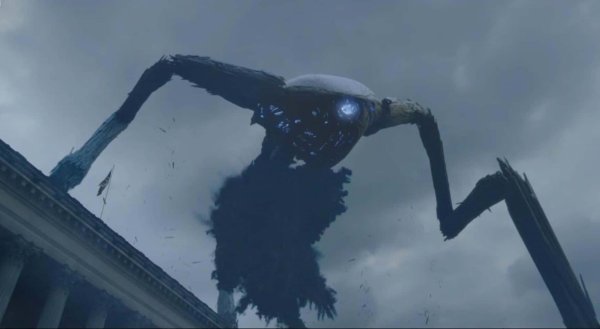
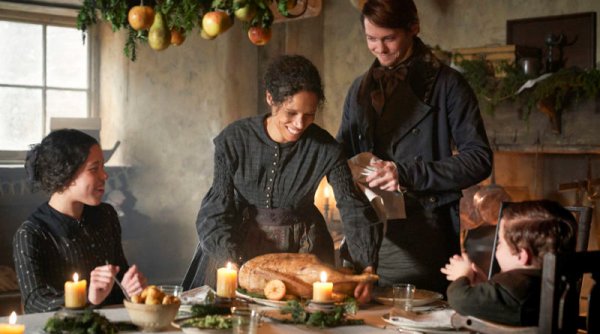
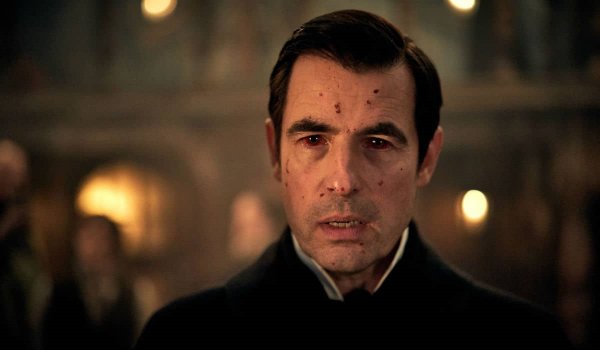
From late to 2019 to the beginning of 2020, the BBC aired three high budget, prestige television adaptations of classics of Victorian literature: A Christmas Carol, The War of the Worlds and Dracula. I had... mixed opinions on all three of them.

You can read my reviews of the Victorian telefantasies at Television Heaven by following these links:


Sunday, 11 November 2018

REVIEW: Slaugherhouse Rulez


It's a strange one, this. The first film to come from Stolen Picture, the new production company created by Simon Pegg and Nick Frost, Slaughterhouse Rulez is very much channelling the spirit of the Cornetto Trilogy. Shaun of the Dead came out a whole fourteen years ago and the belated third movie The World's End was back in 2013, and so a relaunch of the skewed universe of Pegg and Frost is perhaps overdue.

Except this isn't quite the same thing as the Cornetto films. Edgar Wright is not involved; Slaughterhouse Rulez is directed by Crispian Mills, formerly of Kula Shaker, who also co-wrote the script with Henry Fitzherbert. There are multiple shots that seem to deliberately reference well-remembered moments from the trilogy, but while Mills is a skilled director, he hasn't the sketchy flair of Wright. Credited as executive producers, Pegg and Frost's fingerprints are all over the script, but this no two-man adventure for the best buds. In fact, they barely interact during the run of the film.

No, this film belongs to the youngsters (I won't say kids, since the cast are mostly in their twenties, as is traditional for films set in schools). Set in the fictional country school of Slaughterhouse, named for its legendary founding by the slaughterer of a monstrous beast, this is a merciless send-up of the nightmare world of the British public school system, where children are sent by parents who either desperately want to better their standing, or simply have more money than familial love. It's a time honoured institution, where children are separated from their families and bullied mercilessly by their elders, earning the right to eventually bully the newbies should they survive into the Upper Sixth. At least Slaughterhouse admits girls, which is better than Eton College (although fagging officially no longer exists in modern public schools, and Eton employs a lot of female staff – Slaughterhouse only manages to have two women on its staff, one of whom has already quit and the other, the terrifying matron played by Jane Stanness, barely seems to qualify as human).

Young Don Wallace, played with considerable charm by Peaky Blinders' Finn Cole, is the unfortunate kid who gets drafted into Slaughterhouse by his well meaning mum (Jo Hartley). On the plus side, he shares a room with a decent chap named Willoughby Blake, played by the excellent Asa Butterfield (Hugo, The Boy in the Striped Pyjamas), and takes about ten minutes to fall madly in love with queen of the school Clemsie Lawrence (Hermione Corfield, terribly posh and all that). On the downside, he's sleeping in the bed of a boy who committed suicide, Willoughby insists on calling him Duckie, Clemsie is the definition of unattainable and the school corridors are stalked by the psychotic House God Clegg (Tim Rhys Harries – extremely posh, kind of sexy, utterly terrifying). Clegg wastes no time in making Don and Willoughby's lives a living hell. Don is the wrong sort of boy to be allowed into Slaughterhouse, while Willoughby dirties the school by being gay (public school life being at once intensely homoerotic and deeply homophobic, because only good straight boys can wank each other off).

Pegg plays Meredith Houseman, the terribly proper housemaster of Sparta, the specific prison of Don, Willoughby and Clegg, ageing cricketer and heart-broken ex-lover of former school nurse Audrey (appearing only on videophone and played by screen goddess Margot Robbie, a bit of a coup for Stolen Picture but chums with Pegg since Terminal). Martin Sheen is the school's headmaster, known by the boys as the Bat, for his florid swirling of his cape. Slaughterhouse Rulez could have been a perfectly good examination of the horrors of public school life, but is also a horror film and the most unsubtle environmentalist parable since Fern Gully. It's an outspoken anti-fracking script, which is absolutely correct of course, but god this is in your face. The Bat's connections and lust for extra cash and champagne lead him to inviting TerraFrack onto school grounds, led by an old Slaughterer played by Alex MacQueen (is it a coincidence that one of the actors to play the Master for Doctor Who is always accompanied by a theme involving four steady drumbeats?) A commune sets up camp in the woods in protest, led by Nick Frosts' ageing, drugged-up Slaughterhouse drop-out Woody, has little effect on operations, and before long, the lake is one fire and a gigantic sinkhole has opened up.
It's about halfway through the film that events lurch into horror mode, as demonic creatures living in caverns beneath the school escape to the overworld and begin noshing on students and teachers alike. The story becomes a race for survival, in which quite a lot of characters bite it, and while the focus is now on fear and desperation, these are actually the funniest scenes of the film. To be honest, the film as a whole isn't that strong as a comedy; there were no moments in the cinema when the audience broke out into a big laugh. It's more a film of little chuckles and sniggers than big belly laughs, but when hell breaks loose, the over-the-top massacre strikes a fine balance of horror and comedy. It's gory, but not too gory, so it stays on the right side of it. The monsters themselves are pretty well designed, although they'll never make it into the horror hall of fame: hairless hellhounds with huge, vicious teeth, sensibly kept mostly in the dark for maximum effect.
The romance between Don and Clemsy is nicely told, and once the horror begins, both their characters really come into their own: Don gets to be properly heroic, and Clemsy gets to be ballsy as hell. (It's always fun to hear a posh girl swearing, although Don can keep Clemsy; genius kickass chessmaster Kay (Isabella Laughland) is the girl for me.) It's Willoughby who's the heart of the story though, living with guilt and heartbreak and almost giving in.
Altogether, Slaughterhouse Rulez is a belting horror adventure, but a qualified success as a comedy. It might have benefited from being less obviously a descendant of the Cornetto films, but without the visibility of Pegg and Frost, would it have got the attention it deserves?

Tuesday, 27 February 2018

REVIEW: The Shape of Water

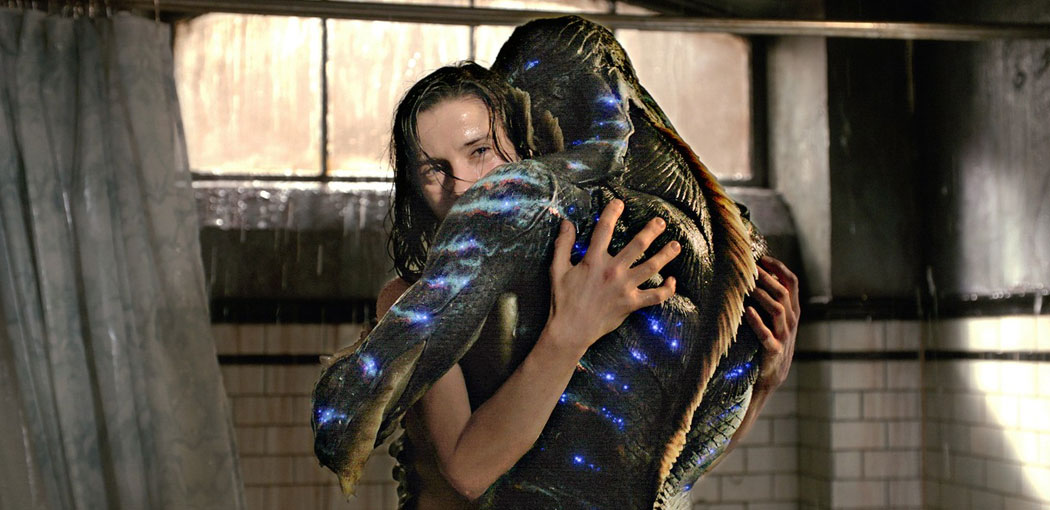
The trailers for this, the latest film by Guillermo del Toro, got a lot of his fans excited. For some, it looked like a return to the universe of Hellboy, featuring as it does an amphibious being with more than a passing resemblance to Abe Sapien. For others, it was a return to the aesthetically and emotionally strange worlds he had previously explored in El laberinto del fauno (Pan's Labyrinth) and El espinazo del Diablo (The Devil's Backbone), only this time in an English language film. For del Toro, however, it was a chance to finally make his own follow-up to The Creature from the Black Lagoon.

Del Toro was involved with Universal in early talks to direct a remake of Creature, but he insisted on a version of the film told largely from the Gill-man's perspective and wanted to see the heroine succeed in her romance with the monster. Universal weren't keen, and, well, you've seen the state of the Universal monster-verse. Perhaps they should have listened. This is the latest of many films that del Toro has made inspired by wonders and horrors from his childhood. However, unlike El laberinto and El espinazo, this is not an exploration of childhood fears but of adult concerns such as love, sex, allegiance and ambition. It's also one of his best and most beautiful films yet.

As with previous del Toro's films, The Shape of Water stars Doug Jones as its primary monster, following his roles as Abe in Hellboy and Hellboy II: The Golden Army, plus the Chamberlain and the Angel of Death in the latter; the faun and the Pale Man in El laberinto del fauno. Although the physical similarity to Abe is obvious, Hellboy's right hand fish is an especially verbose character. The Creature of The Shape of Water, shackled, wounded and mute, is more similar to the generally villainous characters for which Jones has portrayed through movement only (including the Pale Man, and the leader of the Gentlemen in Buffy the Vampire Slayer). Both visually and conceptually, the Creature here might be best described as the missing link between the bestial but passionate Gill-man and the cultured and magical Abe.


The true star of the film, though, is of course Sally Hawkins, who has rightfully been showered with praise for her performance as Elisa Esposito, the similarly mute cleaning woman who lives a life of subdued drudgery at the military facility in which the Creature is contained. While she communicates through sign language – a mix of ASL and BSL I am informed, and helpfully subtitled and/or interpreted for those of us who do not sign – some of the most illustrative moments in the film are without language whatsoever. Delicately directed moments explore a life that is unique yet ordinary: furtive masturbation during her morning bath, excitable moments of dance in front of the television, calmly eating her packed lunch between shifts. It's an achingly beautiful performance, with which Hawkins portrays a character trapped by her difference from those around her but surrounded by love, from her friends, neighbours and the mysterious Creature in the tank.

Which is not to say the rest of the cast are not given the chance to shine. The brilliant and under-appreciated Richard Jenkins plays Giles, Elisa's next-door neighbour and best friend, an ageing advertising artist who struggles to live a closeted life during the crushingly conservative America of 1962. Octavia Spencer is Zelda, Elisa's workmate and her closest confidante in the daylight hours, who serves as her voice in the workplace. While very different characters, they are linked in their clear love for Elisa, and by the marginal place they have in the society of the time. Indeed, it's a powerful statement to have the two main voices in the film – save the antagonist – be those of a gay man and a black woman.

That antagonist is Michael Shannon's Colonel Strickland, a loathsome creation and a pitch-perfect, pitch black portrayal of impotent white-man ambition. Strickland's desperate need to prove himself worthy to his superiors drives the film's plot, as he tortures the Creature and plans to tear him apart in a desperate attempt to learn something – anything – that he can present to his commanding officer to use in the fight against those damn dirty commies. He's thrown into sharp relief by his chief scientist Bob Hoffstetler – aka Dimitri Mosenkov – played with anguished heart by Michael Stuhlbarg. Again, making a Soviet spy one of the most heroic and sympathetic characters marks the film as a deliberate attack on the conservative right – a direct counter-narrative to the usual heroic square-jawed American point of view.

Indeed, this is the core of the film. As much as the story is about the plight of the outsider, the need to find someone to be alike and with, it's clear that del Toro really desperately wanted to follow up The Creature from the Black Lagoon (actually veering off partway through the sequel, Revenge of the Creature) by making it plainly clear once-and-for-all that the Western interlopers are the villains. Still, for all del Toro's sympathy for the original Gill-man, he was an aggressive being who tried to abduct the object of his desires. The Creature of Shape of the Water is an idealised version, capable of violence and clearly a wild animal, but far more intelligent, sensitive and compassionate.


Beautiful, strange, lyrical and sensual, The Shape of the Water is a remarkable film. Although the final twist is signposted clearly from the beginning, it nonetheless makes for a just and satisfying climax to a moving adventure.

Tuesday, 26 September 2017

Thoughts on IT (2017)

I'm not actually the biggest fan of Stephen King's work, and film adaptations have, over the years, been of very variable quality. (Although The Shawshank Redemption is, of course, one of the greatest films ever made.) The 1990 IT miniseries/TV movie hasn't got a good reputation, save for Tim Curry's legendary performance as Pennywise. I remember it scaring the crap out of me, but then I was about seven (I got to stay up late two nights in a row to watch it as a special holiday treat). I haven't ever found a reason to revisit it, to be honest. However, there's a reason the novel is considered a classic of horror, and if anything, it's surprising that it's taken so long for a proper cinematic adaptation.

This is IT: Chapter One officially, with the second installment coming in a couple of years and featuring the adult versions of the characters. I hope they find a way to include the kids again, even just in flashbacks, because the young cast really is very good here. The biggest praise must go to Sophia Lillis, who plays Bev, the sole girl in the Losers crew, who is just exceptional. Finn Wolfhard, the go-to kid for Stephen King-esque productions, is pretty hilarious as "Trashmouth" Tozier. All the kids are very good, though, with real chemistry that makes them a believable group of friends.

Some critics have said this wasn't a particularly good horror film, which I would not agree with, but that it was an excellent coming-of-age movie, which is definitely true. That was always the aspect of IT that worked best; incredibly brave kids who have to deal with shitty lives even before the bogeyman comes to eat them, coming together and helping each other through the most traumatic time of their lives. I'm just not as interested in them once they're messed up adults, and I suspect director Andy Muschietti and various screenwriters aren't either. Pretty much every adult who appears in the story is thoroughly horrible character, and the OK ones barely make an impact. King never shies away from depicting just how awful people are. Thankfully, the film isn't quite as horrible as the book, and doesn't feature any ill-judged or gross sex scenes. And there's no question that, at a thousand-odd pages, the book has plenty that can be left out even in two films. (Confession: never finished it. Life's too short.)

The film's going to succeed or fail on the strength of Pennywise itself, though, and thankfully, Bill Skarsgard is bloody brilliant. Very different to Curry's interpretation, even more unnerving, with an unsettlingly childlike aspect that masks something really horrible beneath. I love how unpleasantly physical his performance is, drooling and moving his own eyes in opposite directions, it would be deeply unpleasant even without any CGI or prosthetic effects. I like that there's a very physical creature just below the surface of the clown, breaking out when it's ready to feed or just can't contain itself anymore. And then, within that, there's the Deadlights, which we catch just a glimpse of before it cuts away (for the sake of our own sanity, naturally). Then there are the other aspects of the creature, including a truly stomach-churning leper and a twisted painting of a woman that walks around, misshapen face and all. Much more effective than werewolves etc. The balloons are still there though.

I can't help but feel that the second chapter is inevitably going to be weaker in comparison, but this was an excellent horror movie.


Tuesday, 29 August 2017

REVIEW: Grave Warnings

Ed. Bob Furnell, Robert Mammone and Jez Strickley


Pencil Tip Publishing is one of the newer small presses, and while it is so far known best for TV tie-in works, it is already expanding in a new direction: original horror fiction.

Grave Warnings is a compact, evocative book of horror stories, with five authors penning short, punchy tales of terror. Although the title and cover to the book would suggest that this is a collection of ghost stories, it's more varied than that. Although ghost stories do feature, the five tales cover an impressive array of styles and genres between them. If there is one thing that links the stories, it is that the true horror is often not at the hand of something supernatural, but is very human in origin.

The collection opens with “Deceased Estate” by Sarah Parry, a very effective story that sets the grim tone for the book. Parry cleverly shifts the storytelling from light and conversational to desperate and horrific, creating a chilling tale with a hint of a modern Lovecraftian vibe. In spite of the inhuman monstrosities it hints at, “Deceased Estate” is a warning on the perils of unchecked greed.

The theme of avarice continues with Craig Charlesworth's “The Dumb Show,” the most traditional ghost story in the collection. A fun pastiche of Victorian-era short stories, Charlesworth's story is a penny dreadful that sees money-hungry men try to use a haunting to their own financial advantage, even as one tries, or claims to try, to turn over a new leaf. The biting final scene proves that it is the living that present the most to fear.

The Specimen” by Jodie van de Wetering is a brief interlude between the heavier stories, and introduces a man whose unwholesome pastime leads to his becoming truly lost to nature. It's the shortest but most immediately potent story, simply and effectively told.

Hannah G. Parry presents “The Citizen,” an unassuming title for a disquieting and powerful story. Although it is a ghost story, “The Citizen” inverts the usual conception of a haunting in order to make her protagonist question his choices. It's an unsettling tale of cowardice and brutality, emotions so easily entwined, set against the very real, very human horror of revolutionary France, when Paris was, not for nothing, known as the Land of Fear. This story is my personal highlight of the book.

Finally, “Vacancy” by Hamish Crawford brings us back to seemingly ordinary life, with a story that makes us question the protagonist's sanity as he relates the story of how his life changed when he took in a new lodger. With only a hint at something supernatural, “Vacancy” draws on some of the same concerns as “The Citizen”: that we, as men, can commit acts we never thought we were capable of.

Grave Warnings is a a pleasantly unsettling set of stories, and I look forward to more.


Purchase as copy here.