Showing posts with label Guillermo del Toro. Show all posts

Thursday, 1 January 2026

2025 films of the year

It has been a bit of a year for me, and I haven't had the opportunity to see nearly as many new films as I'd have liked, let alone write up the ones I have seen. I've decided to run down through my top ten for the year, but there are plenty more films to catch that could shift the line-up, especially given the number of high-profile and acclaimed releases in late November and December. I may revisit this in another twelve months and see if it's changed. I'm going to appraoch these in order of lowest to highest rated, according to my own flawed opinions.

Honorable mention: Nosferatu (Robert Eggers)

Strictly speaking, Nosferatu is a 2024 film, but as it went on general release with only a week left of 2024, most of its run was in '25. A bleak and beautiful film, this updates the original Symphony of Horror into a vampiric epic. Lily-Rose Depp gives the star performance of a powerful cast, in a truly haunting production that's exquisitely realised. It loses momentum halfway and runs too long, and it's not nearly as strange as either the original or Eggers's best work, but it's still an exceptional film. If it had come out a week later it'd have sat at number three on this list. Full review here.

10) The Running Man (Edgar Wright)

I'm pretty sure this one wouldn't have made it into the top ten if I'd caught more films this year. This isn't a great film, but it is an entertaining one. The second film of the year based on a Stephen King novel with a title based on perambulation, The Running Man is the least stylish of all Wright's films, but still way more stylish than most action movies. The general consensus is that Glen Powell is miscast as the lead, and that's probably fair, but he's watchable enough to carry the adventure. There are occasional glimpses of Wright's unique style, and it's sure as hell better than the shitty 80s version starring Arnie. The film has a strong message against corporate greed and the rich's exploitation of the poor, but it's hard to swallow in a film that cost $110 million where the catering budget doubtless cost more than most people's annual salary.

9) Predator: Badlands (Dan Trachtenberg)

Amazingly, the second Predator film from Trachtenberg this year. Killer of Killers was better than I expected, but it was Badlands that I really enjoyed. We've had the popcorn movie approach with Predator before, with varying results, but Trachtenberg really has nailed three different takes on the concept in short order. This is Predator as a full-on comicbook-style action movie, with legions of CGI monsters. This should be crap, but it tremendously entertaining and surprisingly heartwarming film. Showing the film from the Predator's point of view was a bold move, but making him such a likeable goof makes the film. It's hard to say how much of Dimitrius Schuster-Koloamatangi's performance actually makes it through the CGI, but let's give him the benefit. Elle Fanning's the star, though, as both Weyland-Yutani androids Thea and Tessa. Tying the film so heavily to the Alien series without actually including the monster works brilliantly, as well.

8) Wake Up Dead Man (Rian Johnson)

The third film in the Knives Out/Benoit Blanc series is not, sadly, the hoped for Muppet version, but a stylish and highly personal crime story from Johnson. Although he was raised as an Evangelical Protestant, he chose Catholicism for its potent imagery. It's just as appallingly hypocrytical an institution, after all. There's a potent story here about the conflict between the comfort that faith brings and the damage done by indoctrination, with excellent performances from Josh O'Connor, Josh Brolin, Glenn Close and, of course, Daniel Craig. The rest of the cast don't get the chance to show how good they are, sadly, and the actual mystery at the heart of the story isn't original or confounding enough to live up to the rest of it. Compels me, though.

7) 28 Years Later (Danny Boyle)

The follow-up that 28 Days Later deserved, with Boyle returning to the post-apocalyptic Britain he created, (frustratingly only 22 years later). The exploration of how society has adapted to a world infected by the Rage, both the isolated community on Lindisfarne, and to a lesser extent, the rest of Europe on the other side of the quarantine line. I can't quite decide who gives the best performance: 14-year-old Alfie Williams as the courageous young Spike, who's never known any other world but this; or Jodie Comer as his dying, mentally-distressed mother Isla. Aaron Taylor-Johnson is also very good as dad Jamie, pushed to understandable extremes by the stresses of his life, as is the great Ralph Fiennes as the isolated Dr. Kelson. Also fascinating is gradual revelation that the infected remain, if not intelligent in a human sense, then clearly sentient, with the sport-like hunting of them even more disturbing as a result. Judging by the final scene, the second part, The Bone Temple, is going to be bizarre.

6) The Penguin Lessons (Peter Cattaneo)

Although this premiered in 2024, it didn't go on general release until '25, so it definitely belongs on this list. Based on the memoir of Tom Michell, this is the story of how he arrives to teach English in a school in Argentina, in the middle of the 1976 military junta. Steve Coogan is funny, sympathetic, and surprisingly hot as Michell, who ends up rescuing a penguin from an oil slick, in a desperate attempt to get laid on a break in Uruguay. Adopting the penguin - Juan Salvador - and smuggling him into the school, he is able to inspire his students and find some purpose, but the military's abuse of power soon comes out of the background and begins to impact him and those he has become close to. The comedy is gentle, but not the drama. Disturbingly more topical each day in its exploration of life under fascism, this is an undersung success.

5) Superman (James Gunn)

Gunn's relaunch of the Superman movie franchise and reboot of the DC Universe is quite unlike any Superman film that's come before, and yet is the most satisfying film for the character since Superman II over forty years ago. This doesn't feel much like a Superman film, but it does feel like a Superman comic, which makes a huge difference. Skipping the origin story is standard now, but this feels deep into its universe even as a first instalment. Clark is just one of many powerful beings working as heroes, yet stands apart from the metahumans, something that works far better than I would ever have thought. Having him and Lois already deeply in love and managing their relationship is another plus. Yes, this takes a few hints from the CW but in a vastly more cinematic way. Clark is the giant Boy Scout he always truly was, with David Corenswet giving a wonderful performance, while Rachel Brosnahan is actually perfect as Lois. Nicholas Hoult is remarkable as Lex Luthor, and a special shout-out goes to Edi Gathegi for stealing his every scene as Mr. Terrific. Amazingly, this film manages to both be a bold statement on today's genocide-steeped world, while still being a wholesome live-action cartoon featuring Krypto the Superdog.

4) Thunderbolts* (Jake Schreier)

The second of three MCU films out this year, and while Brave New World was better than I expected, and Fantastic Four: First Steps was decent if unremarkable, Thunderbolts* was a genuine surprise. I did not expect Marvel's answer to The Suicide Squad to be a powerful examination of depression and mental illness. Florence Pugh is the standout as Yelena Belova, dealing with the unbelievable trauma of death and resurrection as well as a truly horrific upbringing. While superhero films can get too serious for their own good sometimes dealing with trauma in a realistic way, in the right setting it works. It's an ensemble by its nature, but the other dominant performance is Lewis Pullman as Bob Reynolds, whose journey through mental illness is powerfully expressed through the allegory of his good and evil superhuman personae. It'll be interesting to see how Bob/Sentry will be used in the future, being essentially Marvel's deliberate Superman ripoff; based on Thunderbolts* alone, his character is one of the best things introduced to the MCU in a good while. 

3) Sinners (Ryan Coogler)

Vampire films are such well-trodden ground, it's incredibly refreshing when one as original and unique as Sinners appears. It's unsurprising that Coogler took some inspiration from From Dusk Till Dawn, but this is far and away the superior work in every way. The direction, music and visual effects are impeccable throughout, but what sets Sinners apart from so many vamp-fests is that it's actually about something. The indelibly racist history of America, the ongoing abuse of Black people and other minorities in the West, the cultural and binding power of music, the strengths and weaknesses of Christian belief, the kinship between Black and Irish... this is a dense film worthy of serious analysis. Michael B. Jordan is predictably excellent as gangster twins Smoke and Stack, with Hailee Steinfeld and Miles Caton (the latter, astonishingly, in his film debut) also giving powerful performances. The fact that half the costuming and period material was bought from Disney after Marvel stopped production on Blade is the icing on the cake. This is how you make a modern vampire film when you know what you're doing.

2) Frankenstein (Guillermo del Toro)

The film del Toro was surely born to make, the latest adaptation of Frankenstein blows so many others out of the water. While far from being a faithful interpretation, del Toro's script captures much of the spirit of Shelley's novel, with a strong focus on Frankenstein's selfishness and abandonment of his responsbilities. Oscar Isaac, one of today's great character actors, gives a riveting performance as Frankenstein, with able support from Mia Goth and Christoph Waltz. However, the real star of the film is Jacob Elordi as the Creature, giving a nuanced and powerful performance that is both deeply sympathetic and frequently terrifying. Del Toro remembers the oft-forgotten detail that the Creature was intended as a perfect example of human form, with the design and Elordi's performance elevating the monster to a thing of twisted beauty. Achingly sad in places and quite beautiful throughout, in its own gruesome way, this makes a perfect companion piece for Nosferatu as classic horror bookends for the year. It deserves a proper theatrical release, but at least having it on Netflix means plenty of people will watch it.

1) The Long Walk (Francis Lawrence)

In October I said this would be my film of the year, and I stand by it. I'll also likely never watch it again. The other Stephen King adaptation in this list, The Long Walk shares some notable themes with The Running Man, each story essentially being about the way the powerful exploit the masses through scraps of generosity, the promise of opportunity, and ever more twisted entertainment. It's a far more serious, brutal and emotionally honest story, though. Cooper Hoffman gives a strong lead performance as Ray, but it's David Jonsson, rapidly becoming my one of my favourite young actors, who is the heart of the film as Ray's friend Pete. A brutal production in both filming and presentation, The Long Walk is harrowing but a must-see. Full review here.

Tuesday, 3 January 2023

My Ten Best films of 2022


In an especially busy year, I haven't been able to catch as many new films as I would have liked, nor find time to fully review all the ones I have seen. Still, I did manage to see a fair few, including some that really stood out. Here, then, are my choices for the ten best films of 2022. (Alphabetically to begin with, with my choice for the film of the year at the end. Details I consider too spoilerific I've hidden, you can just highlight them to read them.)


The Batman

(Matt Reeves)

I did manage to review this one when it came out. Long story short, this film justified rebooting the Batman franchise yet again with a powerful and impactful take on the hero and his rogue's gallery, with excellent performances from Robert Pattinson, Zoe Kravitz, Paul Dano and and almost unrecognisable Colin Farrell as the Penguin. Naturally, there will be a sequel, but whether it can have the impact of this scathing attack on male obsession remains to be seen. Flawed, certainly, but one of the best movies to come out of DC/WB in a long time.

Where to watch: available as part of a NOW TV subscription, and available to buy on DVD/Blu-Ray, Amazon Prime Video, Google Play and YouTube.


Black Panther: Wakanda Forever

(Ryan Coogler)

Following up 2018's seminal Black Panther was never going to be an easy job, but to do so after Chadwick Boseman's tragically early death seemed impossible. Marvel's decision to focus on his legacy rather than recast the T'Challa is a wise one, and while Letitia Wright's Shuri was an obvious choice for his successor as Black Panther, she really does elevate this film from a solid sci-fi actioner to something really special.

She's ably supported by Lupita Nyong'o, Danai Gurira and the great Angela Bassett, who all give effortlessly classy performances, and while Michaela Coel and Florence Kasumba are underused, it's a great MCU debut for Dominique Thorne as Riri Williams. There's a risk with these films that putting the blocks in place for the next run of stories will overwhelm the one being told now, and Riri is here partly to set up Armor Wars and Ironheart, but she's is a perfect foil for Shuri, two engineering geniuses who happen to be young black women, but from vastly different backgrounds.

It's Tenoch Huerta Mejia who perhaps has the hardest job as Namor. While the mutant is one of Marvel's oldest and most important characters, he's also one who really skirts the line between super and silly, and it's to the credit of Huerta and Coogler as director that a man with tiny wings on his feet remains a serious and formidable presence on the big screen. While changing Namor's origin from Atlantis to an offshoot of the Mayan civilisation doubtless owes more to not wanting to be compared to closely to Aquaman, it works thematically, with both Wakanda and Talokan representing fantastic versions of cultures threatened by western imperialism. (Wonderfully, Huerta couldn't swim before this, learning specifically for the role.)

Martin Freeman's Everett Ross still seems out of place, and the film is at least half an hour too long, but it remains the best comicbook movie of the year, a thrilling and visually stunning story of two vastly powerful forces meeting explosively.

Where to watch: still out in cinemas, and coming to Disney Plus on 20th January.


Elvis

(Baz Lurhman)

One of two singer biopics in the list, although they couldn't be more different. Elvis sees Baz Lurhman regain his standing as the master of musical spectacle, but more importantly, restores the life of Elvis Presley to the legendary status it deserves. Presley's death long after his prime, and the decades of cultural familiarity since, has left him as an archaic figure for many, and a joke for many more. The film puts him back into the spotlight to remind us just how exceptionally talented he was, and how important he was to the history of popular music.

Austin Butler is truly exceptional in the lead role, and is definitely one to watch (a tenner says he's cast as Clark Kent in the latest Superman reboot), but holding much of the film together is Tom Hanks in a truly unforgettable turn as the self-serving Colonel Parker. While Presley comes off a little too innocent here – laying the blame for his addiction troubles purely at Parker's feet is unrealistic, and the film rapidly skirts over his preference for much younger girls – ultimately it's a largely accurate and heartbreaking look at one young man so swept up in his own success that he couldn't see how he was being exploited.

The decision to have Butler sing his own songs, untouched, in the early scenes, then to very gradually blend in Presley's own voice as the film progresses, was an ingenious one. The final scene, where Butler finally shifts into Presley himself in his final performance, is powerful.

Where to watch: available to buy on most streaming services, including Amazon Prime Video, YouTube and Google Play, and out on DVD/BluRay.


Glass Onion: A Knives Out Mystery

(Rian Johnson)

2019's Knives Out was a joy, and from the outset Johnson had hoped to continue Benoit Blanc's adventures in successive films. Setting it during the height of the Covid-19 pandemic should have made the film feel dated (a testament to our ability to pretend the damned thing isn't actually still happening), but by luck it's been released perfectly in time with Elon Musk's catastrophic self-own, making this tale of billionaire idiocy absolutely on point.

Edward Norton is a perfect choice for Miles Blon, the Musk-like antagonist, not least because apparently very few people actually like working with the guy. As obnoxious as Miles is, his hangers on are somehow worse, particularly men's rights activist Duke (the ubiquitous Dave Bautista) and the near mindless model and influencer Birdie (Kate Hudson). We've also got brilliant turns from Kathryn Hahn and Leslie Odom Jr, who play somewhat more balanced characters, but still just as amoral as the others. Janelle Monae is even more impressive, but I really won't spoilt why here, as this is a compelling mystery and to give any more way would spoil it. It's not quite on the level of the original Knives Out, but it has a re-watchability that means I'm certain to revisit it.

Daniel Craig, as well as being the best Bond ever (no, I will not change my mind), is a truly brilliant character actor. Benoit Blanc is an irresistibly watchable character, an Craig is clearly having a ball playing him. Netflix have bought the rights to one more Blanc film, but I could see the character continuing for years, or at least as long as the current vogue for murder mysteries lasts.

Where to watch: available on Netflix with subscription, with a limited cinema release coming.

Nope

(Jordan Peele)

Peele's third horror film, and perhaps the most divisive, not for its content but its style. Yes, it's undeniably slow to get going, but every element is so essential to the story and its themes that it's essential to pay close attention. Bizarrely, some commenters have struggled to identify the themes of the film or the need to include the flashbacks to the brutal events with the chimpanzee in the TV studio. The major theme of the film – that of exploitation and underestimation of animals – is so clearly written that it seems impossible to miss.

While there are other themes involved, such as the racial element, and the power of media exposure illustrated by various characters' obsession with getting footage of the creature, it's this that is the most essential. Animals, be it OJ's horses, the suddenly violent chimpanzee Gordy, or the mysterious and unearthly Jean Jacket, must be treated with respect and understanding, and to assume they can simply be used without such care leads inevitably to tragedy – for the human handlers and bystanders, and the animals themselves.

More than that, though, the film is an ingenious take on the UFO phenomenon, albeit not an entirely original one. Whether Jean Jacket is a previously unknown terrestrial animal (which seems to be the intention of Peele according to interviews) or an extraterrestrial organism (which was my interpretation – it's nature as a cloud-living creature and the prominently named “Jupiter's Claim” convinced me it's Jovian in origin) doesn't really matter.

Aside from a couple of moments, Peele has managed to create a horror film that is both full of spectacle and truly disquieting without being gory or over-the-top. It also works as a truly modern neo-western, with a thick atmosphere of isolation and hopelessness from the get-go. Daniel Kaluuya, Keke Palmer, Steven Yeun and Brandon Perea are all excellent in their roles.

Where to watch: available to buy on DVD/BluRay, Amazon Prime Video, YouTube, Google Play and Curzon home cinema.

Pinocchio

(Guillermo del Toro)

There are, somehow, three adaptations of The Adventures of Pinocchio out this year, and while I'm sure to watch both the Disney remake and the Russian animation at some point, this is the one that caught my attention and had to be considered a must-see. You know that any film from del Toro will be a visual extravaganza and a chilling fantasy, so yes, to some extent you know exactly what you're getting from a film marketed as Guillermo del Toro's Pinocchio. Yet the directions he has chosen remain surprising, with the story shifted from the late 19th century to interwar Fascist Italy to provide a historical lesson that has uncomfortable implications for the way politics is moving today.

The voice cast is excellent. Gregory Mann is a charming, mischievous Pinocchio, with David Bradley giving us a flawed but sympathetic Geppetto. Ewan McGregor gives a solidly entertaining performance as the cricket (Sebastian J. Cricket in this version), who is also our narrator. It wouldn't be a del Toro film without Ron Perlman turning up, but the most surprising casting is Cate Blanchett as abused performing monkey Spazzatura (“garbage” in Italian, the poor thing). She gets one chance to speak, as Spazzatura performs through puppets, and otherwise communicates in screams and grunts. It's a stop motion film that stars a puppet and other characters that talk through puppets, which has a certain surreal genius to it.

Tilda Swinton is haunting as the two main supernatural beings in the film, the Wood Sprite and Death. The former is still the blue fairy we'd expect, but rendered more as a terrifyingly Biblical angel, while Death is sort of sphinx or chimaera, who has many meetings with Pinocchio as he repeatedly dies and is resurrected. It's a quite astonishingly dark take on the story (although less terrifying than the Disney classic's donkey transformation scene), but one that is ultimately very beautiful and hopeful.

Where to watch: the cinematic run seems to be over, so on Netflix with subscription.


Prey

(Dan Trachtenburg)

I've never been the biggest fan of the original Predator, brilliantly done through it is; it's altogether too macho for my tastes. So this reworking of the central concept appeals to me greatly, with Amber Midthunder captivatingly cast as the Comanche hunter Naru. Having a woman in the central role gives the film an entirely different feel and verve to the previous instalments (including AVP, which was really just a huge videogame cutscene), and the period setting means that a forty-year-old franchise manages to feel fresh again. It's not the first time this has been tried (there are some extraordinary fanfilms out there), but it represents a different direction for the series on film proper.

Trachtenberg's direction is taught and nerve-wracking, and there is some truly gorgeous cinematography. Comanche/Blackfeet producer Jhane Myers was responsible for ensuring much of the historical accuracy of the script, and the resulting film is an intelligent discussion of traditional gender roles as well as the brutal treatment of Native populations by alien invaders (not just the Predator, but the dreaded French). Notably, this is the first feature film to be released in Comanche. Plus, there are some satisfyingly gruesome kills and a great update on the Predator design.

Where to watch: available to buy on DVD/BluRay, or to stream on Disney Plus with subscription.


Six Years Gone

(Warren Dudley)

Among all the big names and blockbusters, there's still room for indie films to make a huge impact. Six Years Gone might well have passed me by if I didn't have a fleeting connection to its star, Veronica Jean Trickett (my partner Suzanne was in the short film The World Can Wait with her). Trickett has risen from such shorts to starring in this multi-award-winning, Cannes Award Trophy-nominated drama, and she gives an astonishingly strong performance.

Written and directed by Warren Dudley, Six Years Gone is the unflinching story of Carrie, whose daughter disappears from outside school on day. Six years later, Carrie is in emotional and financial ruin. While the early scenes are a little clunky in terms of exposition and dialogue, the film rapidly tightens up to become a disturbingly real insight into loss and desperation. Carrie's life unravels as her situation worsens in a chain reaction of impossible choices, but there is, ultimately, some hope to be found. Powerful, upsetting and moving, largely down to Trickett's performance.

Where to watch: available to buy on Amazon Prime Video, YouTube and Google Play (only £3.49 in the UK).


Weird: The Al Yankovic Story

(Eric Appel)

Unusually bankrolled and released by Roku, Weird is a biopic presented the only way that Weird Al could do it: as an ingenious parody. Eric Appel co-writing, Yankovic has done something genuinely clever: taken as many liberties with the truth as acclaimed films such as Rocket Man and draw attention to them. The result is baffling and hilarious. Daniel Radcliffe, who has grown into the choice actor for weird roles, is perfect in the lead, while Evan Rachel Wood is a great choice for Madonna. The singer, who actually did suggest that Yankovic parody “Like a Virgin” with “Like a Surgeon,” has been the source of Weird Al rumours, including suggestions that she disapproved of his work and tried to get the single pulled. It seems fitting, then, that this film has led to a spate of internet searches to see if she and Yankovic really did have a relationship, when in reality they barely know each other. Madonna's real life opinions on being made into both the love interest and villain of this film remain unknown.

Where to watch: only via the Roku Channel, so you'll need a Roku device. However, there's no subscription needed. Alternatively, Weird Al himself has mentioned that there might be a TORRENT of alternative channels on the DOWNLOad.


Finally, my film of the year:


Everything Everywhere All at Once

(Daniel Kwan and Daniel Scheinert)

That rarest of things: a genuinely original film. While the multiverse is, of course, the in thing at the moment, Everything Everywhere is the first film I've seen that really runs with the concept and does something worthwhile with it. As much as I enjoyed Doctor Strange in the Multiverse of Madness and Spider-Man: No Way Home (which would have made the list if had been released a few weeks later), their use of the multiverse was primarily as a source of fan-pleasing in-jokes. Nothing wrong with that, of course, and No Way Home in particular married it to a meaningful story, but it's shallow water compared to this.

Michelle Yeoh continues to show that she's a true star of the modern era of film-making, with a subtle and very real performance as the unwitting heroine Evelyn combined with some spectacular martial arts. Originally it was conceived by the Daniels as a vehicle for Jackie Chan, and yes, I can totally imagine that, but he wouldn't have given it the depth that Yeoh does. And how amazing to have a sixty-year-old woman as the lead in an action movie?

It's also a joy to see Ke Huy Quan back on screen after so long, with a performance so assured you'd never think he took a decades-long break from acting. Really standing out is Stephanie Hsu as Evelyn's daughter Joy and her nihilistic alter ego Jobu Tupak, an absolutely stunning performance that elevates the long series of confrontations into something truly special. It's a treat to see Jamie Lee Curtis again, in a very different role to what we're used to – at 64 she's now allowed to be old, grim and frumpy, and she's still allowed a romantic subplot. Well, one iteration is anyway.

The film is a wonderful examination of Asian American identity, family dynamics, the agonising loss of hopes and dreams and deeply philosophical questions of reality and identity. It's also a surreal, truly unpredictable action comedy, which goes beyond the normal twists of parallel universe fiction to present some unforgettable images. You won't get hotdog fingers world out of your head for a while. A brilliant, affirming, hilarious, smutty, cosmic, ingenious adventure, an absolute must-see.

Where to watch: available to buy on DVD/BluRay, and on YouTube, Google Play and Curzon home cinema. It's currently included as part of an Amazon Prime Video subscription, but that could change to a paid ,purchase-only option at any time.


Tuesday, 27 February 2018

REVIEW: The Shape of Water

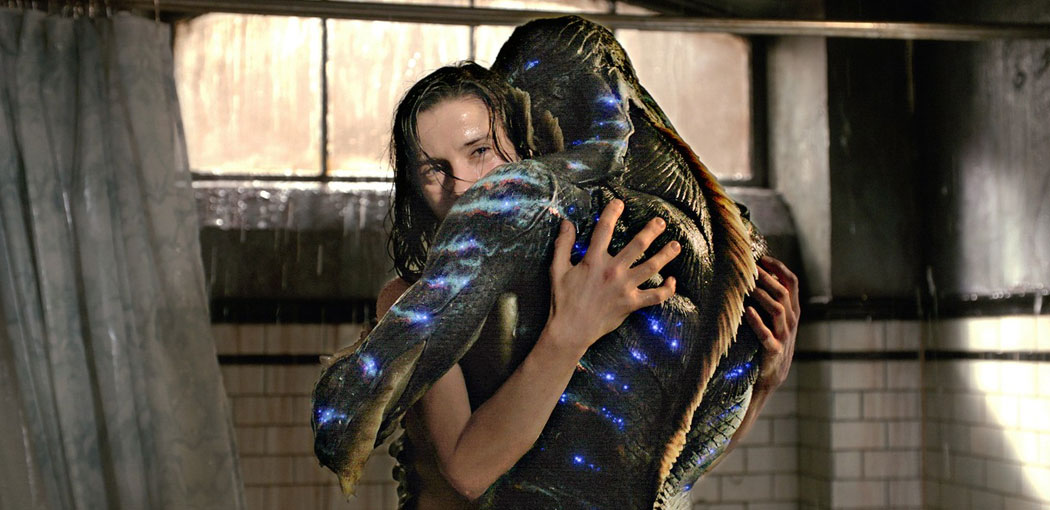
The trailers for this, the latest film by Guillermo del Toro, got a lot of his fans excited. For some, it looked like a return to the universe of Hellboy, featuring as it does an amphibious being with more than a passing resemblance to Abe Sapien. For others, it was a return to the aesthetically and emotionally strange worlds he had previously explored in El laberinto del fauno (Pan's Labyrinth) and El espinazo del Diablo (The Devil's Backbone), only this time in an English language film. For del Toro, however, it was a chance to finally make his own follow-up to The Creature from the Black Lagoon.

Del Toro was involved with Universal in early talks to direct a remake of Creature, but he insisted on a version of the film told largely from the Gill-man's perspective and wanted to see the heroine succeed in her romance with the monster. Universal weren't keen, and, well, you've seen the state of the Universal monster-verse. Perhaps they should have listened. This is the latest of many films that del Toro has made inspired by wonders and horrors from his childhood. However, unlike El laberinto and El espinazo, this is not an exploration of childhood fears but of adult concerns such as love, sex, allegiance and ambition. It's also one of his best and most beautiful films yet.

As with previous del Toro's films, The Shape of Water stars Doug Jones as its primary monster, following his roles as Abe in Hellboy and Hellboy II: The Golden Army, plus the Chamberlain and the Angel of Death in the latter; the faun and the Pale Man in El laberinto del fauno. Although the physical similarity to Abe is obvious, Hellboy's right hand fish is an especially verbose character. The Creature of The Shape of Water, shackled, wounded and mute, is more similar to the generally villainous characters for which Jones has portrayed through movement only (including the Pale Man, and the leader of the Gentlemen in Buffy the Vampire Slayer). Both visually and conceptually, the Creature here might be best described as the missing link between the bestial but passionate Gill-man and the cultured and magical Abe.


The true star of the film, though, is of course Sally Hawkins, who has rightfully been showered with praise for her performance as Elisa Esposito, the similarly mute cleaning woman who lives a life of subdued drudgery at the military facility in which the Creature is contained. While she communicates through sign language – a mix of ASL and BSL I am informed, and helpfully subtitled and/or interpreted for those of us who do not sign – some of the most illustrative moments in the film are without language whatsoever. Delicately directed moments explore a life that is unique yet ordinary: furtive masturbation during her morning bath, excitable moments of dance in front of the television, calmly eating her packed lunch between shifts. It's an achingly beautiful performance, with which Hawkins portrays a character trapped by her difference from those around her but surrounded by love, from her friends, neighbours and the mysterious Creature in the tank.

Which is not to say the rest of the cast are not given the chance to shine. The brilliant and under-appreciated Richard Jenkins plays Giles, Elisa's next-door neighbour and best friend, an ageing advertising artist who struggles to live a closeted life during the crushingly conservative America of 1962. Octavia Spencer is Zelda, Elisa's workmate and her closest confidante in the daylight hours, who serves as her voice in the workplace. While very different characters, they are linked in their clear love for Elisa, and by the marginal place they have in the society of the time. Indeed, it's a powerful statement to have the two main voices in the film – save the antagonist – be those of a gay man and a black woman.

That antagonist is Michael Shannon's Colonel Strickland, a loathsome creation and a pitch-perfect, pitch black portrayal of impotent white-man ambition. Strickland's desperate need to prove himself worthy to his superiors drives the film's plot, as he tortures the Creature and plans to tear him apart in a desperate attempt to learn something – anything – that he can present to his commanding officer to use in the fight against those damn dirty commies. He's thrown into sharp relief by his chief scientist Bob Hoffstetler – aka Dimitri Mosenkov – played with anguished heart by Michael Stuhlbarg. Again, making a Soviet spy one of the most heroic and sympathetic characters marks the film as a deliberate attack on the conservative right – a direct counter-narrative to the usual heroic square-jawed American point of view.

Indeed, this is the core of the film. As much as the story is about the plight of the outsider, the need to find someone to be alike and with, it's clear that del Toro really desperately wanted to follow up The Creature from the Black Lagoon (actually veering off partway through the sequel, Revenge of the Creature) by making it plainly clear once-and-for-all that the Western interlopers are the villains. Still, for all del Toro's sympathy for the original Gill-man, he was an aggressive being who tried to abduct the object of his desires. The Creature of Shape of the Water is an idealised version, capable of violence and clearly a wild animal, but far more intelligent, sensitive and compassionate.


Beautiful, strange, lyrical and sensual, The Shape of the Water is a remarkable film. Although the final twist is signposted clearly from the beginning, it nonetheless makes for a just and satisfying climax to a moving adventure.

Saturday, 5 October 2013

Guillermo del Toro enters the Treehouse of Horror

Yes, released a couple of days ago was the much anticipated opening sequence for this year's Simpsons Hallowe'en special, Treehouse of Horror 24. Watch through and see how many references you can get to classic horror movies, horror novels, old Simpsons gags and del Toro's own work.


Wednesday, 17 July 2013

MOVIE REVIEW: PACIFIC RIM


I guess the Pacific isn’t so deep after all. While it’s refreshing to see a blockbuster movie that isn’t a direct remake, sequel or adaptation of an existing property, Pacific Rim remains a hugely derivative film. Drawing on the Japanese cinematic traditions of daikaiju and mecha films, Pacific Rim takes as much as it can from these old school genres and dusts them off for a modern audience raised on Michael Bay explosion porn.

The movie is relentless in its pace, dispensing with much of its setup in a brief intro sequence in which we learn that mighty Kaiju have been ravaging the cities of the world since emerging from an interdimensional rift on the floor of the Pacific Ocean. Despite the opening info panel’s claims, kaiju most definitely does not mean ‘giant beast,’ – the best translation is ‘strange creature,’ or maybe ‘monster,’ – but the daikaiju genre of giant monsters battling and wrecking cities has become the primary source for the word in the West. Pacific Rim owes clear debts to the Godzilla series, mecha anime such as Evangelion and kiddie fare like Ultraman and his copycats. As the Kaiju rise to wreck the Earth and orthodox weaponry proves useless, mankind fights back with Jaegers, equally gigantic humanoid fighting machines.


One intriguing element that Pacific Rim adds into the mix is the need for two pilots to operate each Jaeger, sharing a neural link in a technique known as drifting. It’s a clever element that adds a little depth to the otherwise shallow characters, allowing us to explore their memories and see what made these lunatics want to strap themselves into giant droids and go fight monsters. The characters are, however, strewn from purest cliché: there’s the cocky jock who loses someone and has to prove himself fit for the job, the respected commander with a firm demeanour but a heart of gold, the delicate Asian woman with hidden strength, the salt-of-the-earth Ozzie and his bellend son, the overexcitable nerd… the scriptwriting leaves a lot to be desired.

Thankfully, the movie boasts a fine cast who do their best with the thin material. Idris Elba is, of course, excellent, bringing a real dignity to his role as the commanding officer, Pentecost. The lead male, Charlie Hunnam as Raleigh, does great work with what could have been a very shallow role, while his female costar, Rinko Kikuchi as Mako Mori, also does well, and the two share a good chemistry, which allows their scenes of drifting to really work. Of the supporting characters, Charlie Day does his best with the annoying science nerd Newt, and actually gets a decent sized chunk of the plot, as he develops a strange obsession with drifting with a fragment of Kaiju brain. Torchwood’s Burn Gorman does surprisingly well with a terrible part, Dr. Hermann Gottlieb, who, despite the German name, is a painfully clichéd English twit who says things like ‘By Jove!’ a lot. His comedy double act with Day gets wearing, but it is an effective way of getting the sciencey exposition over without it becoming tedious.

The star turn, however, comes from Ron Perlman, who plays black marketer Hannibal Chau, a lowdown crook who’s made it big selling Kaiju organs. The Hong Kong scenes involving Chau are among the film’s most effective, letting us see the effect of the Kaiju on the world at ground level, from buildings constructed around skeletons to the Kaiju attack shelter. While the HK scenes were probably included to add appeal to the lucrative Chinese market, but they are the only part of the film that really feels like the work of director-producer Guillermo del Toro.


The Kaiju battles are undeniably effective, hi-octane action scenes, but their relentless nature and the decision to add swathes of rain and ocean combat makes it very difficult to actually follow what is happening. The Kaiju themselves are impressive creatures, but they are frequently so difficult to see clearly that there’s no real chance to appreciate them. Wayne Barlow’s excellent creature designs are lost amid a haze of foam and rubble. The Jaegers are just as impressive, each construction echoing the styles of its nationality and wearing their dirt and dents with pride. Within the cockpits, the cast are frequently reduced to macho posing which, when filtered through the display units, makes whole sequences look like they’ve been lifted from an early Playstation game. Thankfully, some of these scenes are used well, bridging the drifting sequences that explore the characters.

The film’s not really about anything, though – the original Gojira personified the nuclear bombs that hit Japan in WWII, while the more recent American effort Cloverfield traded on the atmosphere of terrorist attacks. So, no, this is not a film with great depth. But it is great fun, a fine popcorn movie for monster fans and anyone who likes a decent actioner. It’s certainly extremely well made, and does what it sets out to do brilliantly – only in the final, climactic battle does the film overreach itself. It’s shallow, it’s clichéd, but it’s easy watching and there’s plenty of room for that in today’s cinema. It’s basically a big-budget Power Rangers, but it’s as fun as that sounds, and if nothing else it’ll sure sell a lot of toys.