Showing posts with label The Master. Show all posts

Sunday, 4 August 2024

WHO REVIEW: The History Between Us


I love that, after sixty years, Doctor Who is still inspiring so much creative fandom. New generations of fans come to the show, explore its history, have their imaginations fired up, and go on to create their own stories. Some of these stories go on to inspire other fans; some writers will even go on to create official Doctor Who. It's all rather wonderful. Admittedly, it's a bit strange for me to see a book full of authors and artists going by their online handles, but then, pseudonyms have a long history and, well, I guess I'm getting old.

The History Between Us is a collection of stories featuring the Doctor and the Master, from the 77 Years Team. This group previously published 77 Years itself, exploring the Dhawan Master's accidental exile alluded to in Spyfall (I've now bought the digital edition of this, so expect another review in the future). This volume, which I picked up on the reprint for the 60th anniversary and have finally had time to sit down and read properly, is more expansive, covering the two Time Lords' lives from their childhood on Gallifrey to their most recent run-in on TV, and beyond.

Fanthologies are nothing new, and nor is fiction exploring the relationship between the Doctor and the Master. Even the idea that they were once a couple, whose love has turned to an intense enmity that they've dragged out across time and space, isn't without precedent. Forcing them to sit down and talk to a marriage counsellor, though – that's a stroke of genius.

The first thing you notice when you pick up this book is just how gorgeous it is. Kris Merola's cover is absolutely stunning, and only the first of a selection of incredible illustrations in an array of styles. Then, of course, we have the stories themselves – one for each main Doctor, plus a framing story and an extra story at the very end, set some time in the future. (I won't reveal which Doctor and Master this one features, but they may have recently been brought into TV canon.) The stories explore their relationship and its fluctuating levels of friendship and enmity across the centuries. Any romance is included with a lightness of touch – the more intimate details of their relationship is kept to background and inference.

There's a very high standard to the writing here. Every story is strong, with the best being really quite excellent. I have some particular favourites. “On the Contrary Nature of Temporal Exobiology” by Ana M. explores the first meeting and growing friendship between the charismatic Koschei and the awkward Theta at the Academy. “Doctor Who and the Vortex Bloom” by Fennric explores the Third Doctor's life in exile, including the nature of his prisoner tattoo (in reality, Jon Pertwee's tattoo from his time in the Royal Navy, which has caused no end of fan debate). The story has a spot-on portrayal of the affectionate rivalry between the Third Doctor and the Delgado Master (and it's nice to see someone remember that sometimes the Three discarded his fancy clothes and got down to a T-shirt and jeans).

Taphonomia” by Soph features the Fourth Doctor and “Crispy” Master, on his last legs and desperate. It's a subtly chilling story with a touch of horror. Sariane's Fifth Doctor story “The Wandering Mind” is a fascinating exploration of the Doctor's subconscious. “Nothing but Time” by Red brings the Eighth Doctor and the War Master together, in a tremendously fun, time-twisting tale that handles the tricky business of fitting in with TV continuity better than Big Finish usually manages. The highlight of the modern Doctor-Master pairs is “Not a Vessel for Your Good Intent” by Jay, a thoughtful exploration of the Missy's imprisonment and the reasons she and the Doctor are going through with it.

While these were the stand-out entries for me, every story presents an intriguing take on the Doctor and the Master. Of course, not every Doctor met the Master on TV, and while most of their respective incarnations meet in order, there are some unexpected pairings. A truly masterful collection.

Physical copies of this book are no longer available, however, ebook and audiobook versions can still be ordered through the 77 Live Team website.

Thursday, 19 October 2023

WHO REVIEW: Once and Future 5 & 6

So, you may notice that I haven't reviewed the 3rd and 4th instalments of Big Finish's Once and Future anniversary series. This is because I haven't bought or listened to them. Release 3, A Genius for War, sees the Doctor shift into his seventh self, played by Sylvester McCoy, to face Davros at the height of the Time War. While that sounds like it might be a strong story, the Seventh Doctor vs. Davros and the Daleks again is just.. old hat. We've seen it before. So it didn't pique my interest.

Still, it sounds an awful lot more interesting than release 4, Two's Company. The Sixth Doctor, the Two (an earlier version of the Eleven), Lady Christina, Harry Sullivan and Jackie Tyler? Why? Whatever led anyone to put that random selection of characters together? Particularly Jackie, who seemed to be in almost every BF release in August. I assume Camille Coduri was at a loose end when these were recorded, and is presumably cheap.

So I may well have missed a couple of important points, but that's where the TARDIS Wiki, for all its eccentricity, is your friend. The important question answered: yes, the Doctor's clothes are regenerating (or degenerating) along with him, and in release 5, The Martian Invasion of Planetoid 50, we learn that even his screwdriver is changing with him. This story also reveals that the Doctor's degeneration is able to shift him into future incarnations, which is how Stephen Noonan's teeth-grating impersonation of the First Doctor is able to suddenly turn into David Tennant, as what I assume is the Tenth Doctor (but with all the Tennant Doctors running around, who knows?)

Given that to make the story work the Doctor's memory is shifting backwards and forwards, giving them knowledge seemingly at random, you've got to wonder why they didn't just set this series in the show's "present," instead of the Time War.

Anyway, Planetoid 50 is good fun. The Paternoster Gang are always good value, and it makes sense for them to be running around the invasion from The War of the Worlds, even if this isn't really London (it's not even Woking). I liked Hannah Genesius as the Doctor's one-off companion, the beautifully named Jessamy Moore. But the real draw of this episode is the inclusion of Missy, giving us the opportunity for Michelle Gomez to play against Tennant. They absolutely fizz together, with the gobbiest Doctor up against a version of the Master even more glib and self-obsessed than he is. 

It seems that the Master is suffering from the same degeneration issue as the Doctor (presumably they're actually in their Yana incarnation? I'm not sure anymore), and while Missy and the Doctor part company, it's not long before they're reunited in release six, Time Lord Immemorial. This episode sees the Doctor and the Master's unending frenemyship linked to an chaotic event that threatens the entire universe. So, the stakes are getting a lot higher.

The real draw here, though, and the reason I wasn't going to miss this release, is the team-up between Christopher Eccleston and David Warner as the Ninth and Unbound Doctors. The very last appearance of Warner for Big Finish, and, I believe, his last performance before he died last year, it's a significant moment, and having the Manc Doctors together is a treat. Yet, it's actually rather a sad listening experience. Warner is clearly unwell, his voice so altered he's almost unrecognisable at times, making this a very bittersweet experience.

Plus, we get our first chance to see the Ninth Doctor go up against the Master... and they decided they'd degenerate into the Lumiat. This is a bit of a bizarre choice, giving us the good version of the Master rather than the Doctor's archenemy for this historic event, but Gina McKee's incarnation actually works very well against Nine. (Eccleston, McKee and Warner have experience working together, and it comes across.) The Lumiat remains just as obsessed with the Doctor as when she was the Master, and her desperate need to get the mission done before she shifts back to a hostile incarnation adds something new to the story.

Solid as always is Nicola Walker as Liv Chenka, again, rather randomly included but providing a welcome dose of sanity to the proceedings. An odd choice is the hiring of Robert Powell as the eponymous Time Lord Immemorial; he's another acting legend, but his voice is modulated to the point he could be anyone. The cast is uniformly strong though, giving weight to some occasionally shonky dialogue.

All that's left now is for the Doctor to find The Union in the seventh release, where Paul McGann will once more take the lead alongside every Doctor BF can get their hands on, and finally discover what's actually going on in this peculiar series.


Notes: Strax reveals that he is familiar with the Eleventh, Twelft and Thirteenth Doctors ("A cheery 'boy' with yellow hair").

When the Ninth Doctor and Unbound Doctor find themselves face-to-face, they both assume the other is the future incarnation, before very quickly realising that they're from alternative universes. Makes you wonder why the conversation didn't go that way between Thirteen and the Fugutive.

For Liv, this is set before the Ninth Doctor Adventures adventure Hidden Depths: Flatpack, as she doesn't recognise the Doctor in his Eccleston incarnation. For the Paternoster Gang, I couldn't hazard a guess.

Saturday, 26 June 2021

WHOTOPIA #37 out now

 The new issue of the Canadian Doctor Who fanzine is now available for free download from whotopia.ca

This latest issue features two pieces by me: my review of "Revolution of the Daleks" and the latest (and presumably final, but who knows?) installment of my Master Who column, looking at Sacha Dhawan's incarnation.

As well as that, there are articles on the unmade serial The Masters of Luxor, The Return of the Cybermen,  the Children of Time, Doctor Who on film, the physics of time travel, authorship in the series, horror in Who and the mystery of the Timeless Children, plus the first chapter of a Cybermen comic strip.


Saturday, 3 April 2021

WHO REVIEW: Masterful


Finally got round to getting the special Big Finish release Masterful, released in January to celebrate the fiftieth anniversary of the Master's first appearance in Terror of the Autons in 1971. And a special it is – a three-hour extravaganza featuring no fewer than ten iterations of the Master, with five actors reprising their roles as the archvillain from TV, including the first ever appearance of John Simm as the Harold Saxon incarnation in a BF audio.

Following The Two Masters a few years ago and then the first double-Master story on TV with "Twice Upon a Time"/"The Doctor Falls," BF have gone a bit Master-mad lately, with multiple incarnations turning up in Doctor Who audios, The Diary of River Song and more. Before Simm, they managed to get Sir Derek Jacobi and Michelle Gomez back on board with their own series, and even sorted out the remaining rights issues that let them bring Eric Roberts onboard as the TV Movie incarnation of the villain (with his own box set just released as I write this). I haven't listened to all of these (money and time being something of a stumbling block when it comes to BF's gargantuan output) but it's hard to see how they could outo Masterful for sheer Masterly magnificence. There's a lot of Masters here so I'm going to go with Tumblr-style notation to tell them apart.

The basic idea is that Simm!Master invites as many of his past incarnations as he can reach to his big evil castle on his own planet at the edge of the universe, to announce that he's conquered reality and finally killed the Doctor (intriguingly, both he and Missy are familiar with the Thirteenth Doctor). He is joined by the incarnations played by Geoffrey Beevers (the crispy Master), Alexander Macqueen (BF's own resurrected Master), Roberts!Master, Jacobi's War Master, the Ainley!Master and even a teenaged incarnation, seemingly the very first, pre-regeneration iteration of the character, played by newcomer Milo Parker. Presumably this is an older version of the child Master we saw played by the William Hughes in "The Sound of Drums," who died tragically 2018, and will one day grow up to become the alleged "First Master" played previously for BF by James Dreyfus (notable by his absence since BF has ditched him for extreme TERFiness). Into this crashes Missy, who was very specifically not invited.

If you think the Doctor's incarnations rub each other up the wrong way, then sit down for the Master's inter-regenerational bitching. The character is so fuelled by a combination of arrogance and self-loathing that the different incarnations simply can't stand each other, and can't be trusted to not kill off their own past and future selves, regardless of the temporal paradoxes this would ensue. Notably, young Milo!Master, who has dreams of stamping his power-mad ideals on the universe, can't believe his future selves' callous disregard to life; the earlier Masters are all horrified by Simm!Master's sheer vicious brutality; and all the male Masters are utterly embarrassed by Missy, likening her to a "drunken aunt at a wedding," while Missy claims she's simply the first one to admit she'd mad and start enjoying it. Simm!Master is particularly furious to see Missy there, since he now thinks he's at the pinnacle of his existence and doesn't need to ever become her.

Things rapidly become more complicated. The Roger Delgado incarnation – the original, you might say – is conspicuously absent, which is a bizarre move in a production designed to celebrate his beginning this enduring character. I understand the deluxe version of this release includes a special audiobook featuring his incarnation, Terror of the Master, but his absence is sorely felt. Storywise, though, it's because he's just smarter and more cautious than most the others, and when the time scoop comes for him, he pushes Jo Grant in there instead. It then turns out that the Ainley!Master actually sent Kamelion in his place. When that lunatic is more cautiously sensible than you are, you've really got to rethink your approach. In both Kamelion and Master form he's voiced by John Sessions, who varies from parodic to spot-on depending on the line, but Ainley!Master really isn't all that important to things as they go on.

Of course, you should never trust the Master even if you're the Master, and it turns out that Simm!Master, in his desperation, has nearly destroyed the entire universe and almost killed himself in the process, and has brought his earlier selves here to feed on their regenerative energies. This is a bit of a fool's errand considering several of them are squatting in stolen bodies, or falling apart altogether, and will of course create universe-threatening paradoxes, but with reality falling apart anyway I don't suppose it matters. Missy takes control of both Kamelion and the time scoop and scatters everyone throughout time and space (although it turns out they're all in a fairly small area of chaos created by Simm!Master's machinations).

The success of this story is all in the interplay of the characters and iterations of said characters. For the most part, the Masters are paired off, but each thread treats them differently. The most effective, for me, was the thread following Beevers!Master. I'm not entirely certain where in his timeline this is intended to be – it could be the original incarnation between Delgado and Ainley, or a reverted version from after Ainley or even after Roberts – but it doesn't really matter. Beevers!Master finds himself stranded on a world almost abandoned, somehow fitted with a perception filter which gives him a normal, even handsome appearance and dulls the pain of his viciously injured body. He meets a woman named Kitty (Abigail McKern) who has her own secrets, but the two settle down together at her house and develop a real rapport that slowly develops towards love. Beevers gives an incredible performance that really makes you feel for this most sadistic of Master's, and makes it clear that his cruelty is his lashing out at a universe that has inflicted such terrible pain on him. It's a similar story to the seminal BF release Master, but with the addition that the Master knows exactly who he is and what he'll be going back to if he leaves. It's absolutely heartbreaking. Plus he calls himself Jeremy, which is hilarious. Into this precarious situation comes the Roberts!Master, slinking around and whispering seductively to Kitty, doing his best to gently turn her against his other self. It's a subtle performance by Roberts and one that makes me look forward to hearing more of him returning to his movie character.

Meanwhile, the Macqueen!Master finds himself in a desperate situation on a colony ship that's lost its way and is running dangerously low on food. It's great to his this camp smooth-talker again, after far too long an absence from BF, as he tries to turn things to his advantage but continually finds events working against him. It turns out the captain of the ship is the Milo!Master, and the two end up in a game against each other, trying to get and keep control of the ship – and it turns out that Macqueen!Master's more ruthless approach may actually be the best thing in the long run. The War Master and Simm!Master are forced to team up in a "Gridlock"-styled world that has been devastated by Simm!Master's interference. The interplay between the two successive incarnations – who amusingly start referring to each other as "dad" and "son" – is brilliant, with the War Master particularly disgusted by his near-feral future self. The War Master has been characterised by BF as the most sophisticated, and most humane of all the incarnations, which makes his turning to violence all the more disturbing when it happens. In comparison, Simm!Master seems barely in control of himself.

It's appropriate that of all the companion characters who could be included in this story, Jo Grant was chosen. She was, after all, there at the beginning of the Master's story in 1971. Katy Manning is always a treat to listen to, and she pairs up well with Culshaw's Kamelion, who takes the form of the Third Doctor for a time, giving the Doctor a presence in the story without actually involving them. Better, though, is later in the story when Jo teams up with Missy. It's a similar pseudo-companion relationship to Missy and Clara in "The Witch's Familiar," with the added element of a lot of history between the characters. Jo spends much of the time trying to get Missy to admit that, in spite of their enmity, she and the Delgado!Master were quite fond of each other, and that maybe there's something decent under the surface of the Master's angry and controlling demeanour.

Alongside all this is a side story with Mark Gatiss returning as the Unbound Master, happily ruling his own little universe and popping over to make sure the devastation sweeping the primary universe doesn't infect his own. His suave incarnation has some lovely, albeit rather incestuous interplay with Missy, and he begins by pretending to be the Doctor (something the Master seems to enjoy throughout his incarnations). He ends up saddled with Kamelion, but his storyline doesn't fully resolve or intersect with the rest so is a bit wasted. There's also an inevitable, but ultimately rather pointless, cameo by Gina McKee as the Lumiat, Missy's goodie-goodie successor.

While it's made by the bitchy interaction between different versions of the Master, who are considerably more different than each other than the Doctor's regenerations, there's a deeper story here. The Master's self-hatred becomes all the more apparent as the various incarnations turn on each other, with Missy's eventual revelation that she manipulated events so that her other selves had the opportunity to redeem themselves tying into this nicely. While this has to be before her redemption arc on the series proper, it's clear that Missy is already beginning to wonder if there's something more to her existence than evil and ambition. Combined with the revelations of the nature of the wave of destruction sweeping the universe, though, this makes the Master a tragic figure, doomed to play out the same pointless, self-destructive patterns of behaviour throughout their lives, never to find peace. While it's contractually impossible for BF to use the current Dhawan!Master, his reverting to furious evil and the seeming death wish he displays follow on perfectly from where we leave Missy at Masterful's catastrophic outcome. Inevitably this entire story disappears up its own paradox, being written out of reality like a time-travelling episode of Star Trek: Voyager, but the examination of its central character still hold. You'll come away feeling rather sorry for the old bastard.

Monday, 7 December 2020

WHO REVIEW CATCH-UP: Missy Vol. 2


Has there been too much of the Master lately? Big Finish, BBC Books and others have out out a hell of a lot lately, and the fans have too (hey, I've contributed to some of it). Missy's appearance on the TV series seems to have kicked off a fan obsession with the character, with the various iterations and regenerations appearing more often than ever before, with multiple multi-Master events as well. It could easily see the character becoming overused to the point of sickness, but for now, I'm enjoying the extra adventures for the character. (We've even got Eric Roberts back, although I'm way behind on the various releases.)

Of all the incarnations, it's Missy who's the easiest to imagine having her own adventures, as a sort of wicked pseudo-Doctor. I've not picked up the first boxed set from BF, but the second one was recommended to me as having some irresistible ideas. This is true, but the execution isn't quite there.

THE LUMIAT

The real draw of the set, "The Lumiat" sees Missy acting out her most vicious plans in an attempt to get the Doctor to pay her some attention. However, when a mysterious time-travelling woman turns up to fix things, it's not the Doctor at all, but someone calling herself the Lumiat, and she knows an awful lot about Missy and her plans. 

The big spoiler: the Lumiat is Missy's next incarnation, having come into existence when Missy utilised a desperate gambit to create a new life cycle when she was left for dead on the Mondasian colony ship in "The Doctor Falls." Sh'es a sort of anti-Valeyard, by her own admission, being all that's good from Missy manifested (incidentally, the way they talk about the Valeyard makes it sound like Missy's got a crush on him). Gina McKee puts in a good performance as the Lumiat, who's just similar enough to Missy to be believable as a future incarnation, but she does inevitably come off as a basic Doctor-clone sometimes too. 

To be honest, I'm amazed the Beeb signed off on this. The inference of the story is that the Lumiat is immediately prior to the Dhawan Master, although there's plenty of ambiguity, and there's also a get-out clause regarding the process of her regeneration disconnecting her causally. For now, at least, this is the official story for the Master. The episode itself isn't anything spectacular, but it does cast a fascinating light on Missy (here clearly prior to her appearance in series eight) and how she changes over the course of the programme.

 BRIMSTONE AND TERROR

A direct sequel to the first box, with Missy once again involved with two plucky Victorian schoolchildren for whom she had played governess. Of course, I haven't heard this, but the story itself lays everything out so it's very easy to follow. Missy as an evil boarding school headmistress is pretty irresistible, and she's relentlessly entertaining. The kids are fine, I guess, but there's only so much plucky well-spoken enunciation that I can enjoy. Dan Starkie is as fun as always as Strax, posing as "Mr. Strackie," and this episode apparently ties into one of the Paternoster audios. It's a nice tying together of the expanding Victorian era of the spin-offs. On the whole, pretty good fun.

TREASON AND PLOT

The strongest story of the set, "Treason and Plot" sees Missy stuck in London in 1605 in time for the great Gunpowder Plot, doing her best to unstick history so that the Time Lords will turn up to fix things, allowing her to make her escape. However, a probationary Time Agent named Rita Cooper turns up and does her utmost to keep history on track. It's a great runaround with the plot constantly twisting as Missy tries to divert history and Rita tries to put it back. The least continuity-laden of the episodes, it works better for standing alone. Ony Uhiara is great fun as Rita, and I could easily see her turning up in future audios.

TOO MANY MASTERS

On paper, this is a great idea. The Monk and Missy meeting up (for the second time after a previous adventure in the first set, and again, plenty of exposition here to bring me up to speed), each one trying to pin the Master's former crimes on each other. Rufus Hound is still brilliant as the latest incarnation of the Monk (the third? I'm really not sure) and he could honestly make the transition to the TV series. 

Unfortunately, this is also the latest of BF's recent obsession with the Ogrons, the worst possible aliens for lengthy dialogue on audio. Fair play to the actors involved for trying, but extended speeches by people doing painfully slow "I'm...not...thtoopid...I'm...just...an...Ogronnnnn..." voices becomes unbearable after about five minutes. Didn't get anywhere close to finishing this one. A really shoody end to an otherwise pretty entertaining boxed set.

Sunday, 1 March 2020

WHO REVIEW: 12-10 - The Timeless Children

So, has the whole of Doctor Who canon been blown open, irrevocably altered for ever so that nothing will be the same again?

Well, no, but it has been played with, enriched, and spun around. The thing is, Doctor Who has never really had a canon, per se. There's no specific, official edict as to what "counts," what is apocryphal, and what we should take as part of the "truth" of the story. Pretty much everyone agrees that if it's on TV, it's a part of "real" Doctor Who, although some still-angry fans refuse to accept anything since 2005, or even 1996. Even if we ignore the hundreds of books, audios, comic strips, video games, stage plays and sweet cigarette cards, there are still over eight hundred episodes broadcast over fifty-six-and-a-third years. The Doctor Who backstory has been rewritten and added to so many times it's barely coherent as it is.

SPOILERS FROM HERE

Sunday, 16 February 2020

WHO REVIEW: 3rd Doctor - Heralds of Destruction (Cornell, Jones, Hi-Fi)

HERALDS OF DESTRUCTION - written by Paul Cornell, art by Christopher Jones, colours provided by Hi-Fi Colour Design


Paul Cornell was never very fond of the Third Doctor, according to most accounts, which made it something of a surprise when Titan Comics announced he would be scripting a five-issue run set during the Pertwee years. This came out in 2016-17, and I've finally gotten around to picking up the trade and reading the story. In interviews, Cornell said he had an idea that could only work with the Third Doctor, and he didn't lie. Although it's just possible that the central conceit of this comic could work with another Doctor, it would have been a rough fit. (If you haven't heard the twist or read the comic and want it to remain a surprise, scuttle off and don't read the SPOILER below.)


No, there was only one way to make the return of Salamander work, and that was to have him invade the era that followed his own. It's an idea that could have been brilliant if they'd tried it on TV in 1974, although it's almost impossible that the BBC would have run with it. After all, most viewers would have only dim memories at best of 1967 story by the time it came round. Who fans, on the other hand, understand the significance of The Enemy of the World and Patrick Troughton's dual role in the story. The rediscovery and release of the serial a few years ago makes this a particularly good time to bring back what had been an important but fairly obscure villain.

The story proceeds as a follow-up to The Three Doctors, except that the Second Doctor is not actually the Doctor's previous incarnation, but the villainous doppelganger in disguise. While we've had Doctors meet people whose faces he'll later wear (due to Colin Baker and Peter Capaldi being cast in the lead after making guest appearances on the series), we've never had a Doctor bump into someone who looks like a previous self. (OK, there's the Curator, but since it's heavily implied he's the Doctor anyway, that doesn't really count.) The Doctor meeting his double is one thing, but meeting the double of a previous version of himself creates a whole new level of meta-commentary on the nature of the series. This is Doctor Who doubling back on itself and biting itself in the arse.

The dictator of the World Zones originates from the same period that the comic was actually released, adding yet another layer of timey-wimey stuff to the set-up (a phrase that is now revealed to have been invented by Jo Grant, which is pretty perfect really). Of course, there's a convoluted backstory to explain how he survived the events of The Enemy of the World, but when your thrown into the Time Vortex, anything can happen. Salamander is more of a comic supervillain than even the Master, making him absolutely perfect for the story. Pitting him against the Doctor, UNIT, and a tenuous alliance with the Master is just about the most ideal Doctor Who comics idea that could be set within the Pertwee era.

Cornell gets all the regulars spot-on, including the Doctor, but he doesn't go lightly on him. In fact, he absolutely savages him at points. He even introduces him in a gentleman's club, going on about his old mate Pol Pot ("Polly, I said..."), a biting and very fair attack on his similar name drops of Napoleon and Chairman Mao. (Of course, much later we learn he's best buds with Winston Churchill, who from many people's perspectives isn't far different.) Nonetheless, he gets his fair share of heroic moments and, as Cornell notes in his commentary, a characteristic "moment of charm." 

Christopher Jones is a fine choice of artist for the adventure, with a gently cartoony feel to his work that gives the story a colourful momentum perfectly in keeping with the era it pastiches. He delivers some brilliant set pieces, including a face-off between the Doctor and the Master and a voyage in the day-glo interior of Jo Grant's mind. I particularly enjoyed his depiction of Salamander in full-on supervillain costume, which makes him look a bit like one of the Dominators.

Cornell states in the commentary that this is his last Doctor Who story, and if that is the case, I'm pleased he stepped out of his comfort zone to provide a story for a Doctor we wouldn't normally associate him with. One thing that comes through very clearly is his love for the series, in any era. In fact, he's already bent his own rule by novelising Twice Upon a Time for Target, so maybe we'll be getting more original Doctor Who adventures from him after all.


Placement: Between The Three Doctors and Carnival of Monsters.

Monday, 6 January 2020

WHO REVIEW: 12-1 & 12-2: SPYFALL


Well, wasn't that a return to form? As much as I enjoyed series eleven - and I really did - there's no denying that it wasn't quite at the level we'd come to expect from Doctor Who. The writing is sharper, though hardly perfect - character's still explain what they're doing all the time, but at least the show is self aware enough to poke fun at itself while it's doing it.

But the confidence this year! We waited a full year between "Resolution" and Spyfall, Part One, the longest gap between episodes since the series returned in 2005, and then the very shortest, with only four days till part two. We needed a barnstorming return, and we got one. Episode one had scale, riffing on the Bond themes with a globetrotting series of locations, ridiculous spy tech and some serious guest casting. There's some guts in casting Stephen Fry as M - sorry, C - and then bumping him off that early, but he's always good value and it's a treat to finally have him on the series. (The TV series, that is. He's done Who before). Lenny Henry gives good villain here, underplaying the role of Daniel Barton to good effect. In spite of many years as a straight actor, he's still best known as a comedian, so this is a good reminder just how classy he can be when he wants to be.

The regular cast all get to show what they're capable of, all having material that's better suited to their characters than they often got last series. It's gratifying that Chibnall and his team have been listening to some of the complaints about series eleven and gone out of their way to fix them. There's over-the-top adventure for Thirteen and her fam, of course, but also a sense that the companions actually have lives, something that was forgotten so often last year. It's a small thing, but noting that Yaz's career has been hit by her recurrent "secondments," that Ryan's been making excuses to his mates but acquiring new skills, and that Graham needs to visit an actual doctor occasionally are all satisfying.

It makes throwing them all into the Bondian escapades all the more entertaining. Glitzing them up in their finest and sending them to the casino, and the ludicrously killer car chase where it's the car itself trying to kill them - all pure holiday season movie highlights. The show can't keep up this level of incident all the way through the series, but this is exactly what we needed for a season opener. There's mystery as well, of course, with a visually arresting alien race, conspiracies and an unknown realm all thrown into the mix.

It all builds up to that reveal, though. Sacha Dawan is another actor who seems like he should have appeared in Doctor Who years ago, especially considering his previous involvement with Mark Gatiss and other genre television, yet here he is as the likeable and handsome O. Then - my god! - how did they keep that secret? There's always a rumour that the Master will be back, but when it's true, it's usually spoilt. Everyone knew Yana and Saxon were likely to be the Master, and most of guessed Missy was as well, but this came right out of left field. Not that there weren't a couple of clues, but with the story belting along like this, they were very hard to spot. As always, the Master's patience and acting ability seems remarkable, but that's nothing new. It all pales with that reveal, and a stonker of a cliffhanger.

Part twos are never as good as part ones, but this one did come pretty close. It has the hallmarks of Moffat's classic two-parters, throwing in enough new elements and curveballing the story onto another path (and if that's not as mixed metaphor, I don't know what is). I absolutely love that the Master is using the Tissue Compression Eliminator again (I don't think we've seen that since 1984), and I had imagined that the Doctor had been shrunk. The alien realm did look rather like the fronds of a carpet, after all. But no, it was your common or garden alternative dimension. Bizarrely, we then meet Ada Lovelace and get transported with her to 1834. That's the sort of unexpected shift in location that we don't get often enough in the series these days.

Teaming the Doctor up with Ada Lovelace (a lovely performance by Sylvie Briggs) as part of the celebration of computer science is a wonderful idea, and quite right to include Charles Babbage but not allow him to overshadow her. From there we jump again to the 1943, to meet Noor Inayat Khan. Aurora Marion is especially good, although she doesn't get as much material as Ada. In some ways, this is an odd move - separating the Doctor from her companions only to give her two more - but as a celebration of two of the most incredible women in British history it's wonderful. Really, the only complaint is that either Ada or Noor Khan would have easily carried an entire story, not just a small part of one episode.

The Master pursues the Doctor through time, something that gives an air of desperation to the adventure. Given time to explore the role a bit more, Dhawan is brilliant as the Master. It's a shame, in a way, that Missy's arc has been cut off and forgotten about, but the Master was always going to come back and always going to become a villain again. It's been only two years since we last saw the Master (Masters, really) which is a very quick introduction for a new incarnation, but when the character is as entertaining as this, who cares? Dhawan's Master is a furious, hurt man lashing out at the Doctor and the world, and having fun doing it. Putting him in Nazi gear was a bit of a step - at least the script accepts that he'd never get into the SS looking like that, and came up with a bit of Time Lord magic to cover it up - and the episode's most tense moment, in Khan's house, came close to poor taste. Hell, it worked though. The WWII secret resistance brought in a new angle on the spy themes as well.

Meanwhile, 77 years later, the companions gets some strong material for themselves, showing that the best way to handle a large team is to split them up and actually give them something to do. Who'd have thought? The off-grid survival angle gives another side to the spy genre as well, more Bourne than Bond. Henry doesn't get nearly as much decent material in this episode, however. The aliens, named now as the Kasaavin, are as generic as they come, but essentially they're there to provide a threat and look cool while the humanoids do the plotting and talking.

The ending is a bit rushed, but the timey-wimey resolution works (both for the opening and closing of the episode), as long as you don't worry about the logistics too much. It's a fine line they're skirting, but Doctor Who has gotten away with more flagrant abuse of time travel before. Still, the Master, for all his contrived plotting, doesn't seem very prepared when he arrives back at the scene of the climax after several decades waiting around. I'm not entirely sure whether this story was in favour of information technology or not. While Barton lords it over the masses and blames them for allowing technology to infiltrate their lives, the Doctor hero-worships Ada and Noor Khan for their contributions to computing and coding. Before mind-wiping them, that is. She really hasn't learnt anything since she was played by David Tennant.

There's still time for that revelation about Gallifrey. Finally, the Timeless Child, after that one evocative mention in "The Ghost Monument" last series, is recalled. The Time Lords have been destroyed again, this time by the Master himself out of sheer rage at their lies. It's all very intriguing, and promises interesting things to come. Whittaker's best moments so far have been in this episode, either face-to-face with the Master or alone contemplating Gallifrey's fate, and I really hope she gets more of this sort of material. While I admire Chibnall's decision to spend his first series as showrunner focusing on the new, he failed to replace old monsters and concepts with anything equally memorable. After the Master, Gallifrey and the Daleks, there's more to come this year, and while there's a delicate balance to be found between the old and new, if it's presented with this verve it should succeed.


Time, Gentlemen: Both Stephen Fry and Lenny Henry have been involved with Doctor Who before, as Time Lords, no less. Fry played the Minister of Chance on the webcast Death Comes to Time in 2001, while Henry was the Doctor himself in his own 1986 comedy sketch - somewhere between the Doctor's sixth and seventh incarnations.

Maketh the Woman: Everyone looks great in black tie, but the Doctor's outfit is just perfect. It's not a tuxedo, whatever anyone says, but a light formal overcoat. Bringing back the bow-tie is a nice touch as well, and I love that she's still got the culottes and boots. She looks amazing.

Ethics is My Manor: The Doctor says she's a pacifist, but she's really, really not. She's just very bad at knowing when to use force. Her morals are all over the place here - she casually hands the Master over to the SS, while making sure they can see how Asian he looks. I mean, she probably figures he'll just kill them, and fair enough, but wow, that's jarring. Barton, on the other hand, seems to get away scot free.

Master-y: So, is the new Master after Missy, or from somewhere else in their convoluted timeline? I somewhat doubt he's from before Yana and Harry, but he could be between Harry and Missy. He could even be from an alternative timeline, but it's probably simplest to assume that "O" follows Missy and has reverted to type after, you know, being abandoned, dying, on a devastated starship and then discovering something nasty about the Time Lords.

I love how the Master gets beardier as his villainy goes on.

Links and references: The Master "apologises" for killing the Doctor at Jodrell Bank. Except it wasn't Jodrell Bank, it was the Pharos Project. It was just filmed at Jodrell Bank...

Missing Pieces: "O" met the Doctor in one of her earlier incarnations, all to ingratiate with her in his current plan. The Doctor apparently once lived in the Austrailian Outback for 123 years (when?!)

Patterns that aren't there: I had half convinced myself that the aliens were the Voord, if only because of the outline and the social network/search engine being called VOR. It would be willfully obscure of Chibnall to bring back such a little known monster, but it would have made them a bit more interesting.

Infinite Earths: I struggle to accept that the multiple images of the Earth represent different points in time and not different versions of the Earth. We haven't had a proper alternative reality story for ages.Unless you count the frog-verse.

Learn to talk: Chibnall doesn't know what "momentarily" means.

The Ratings War: OK, those overnights are not encouraging. 4.88 million for episode one, 4.6 million for episode two, both about 22% of the audience for the night. That's less than last year's New Year's special, but on the other hand, part one was the second most watched programme of the day, after Emmerdale, which only got 5m, and beating Corrie. Part two was the fifth most watched programme, but there still wasn't a great deal in it.

Clearly, people just aren't watching telly on the night anywhere near as much as they used to; the overnights have been dropping while catch-up and downloads have increased for some time. Nonetheless, I think it's clear that the move away from Christmas was not a clever one. Nice experiment, but it doesn't look like a New Year's launch works particularly well for the series, especially after a whole year's gap.

Sunday, 15 December 2019

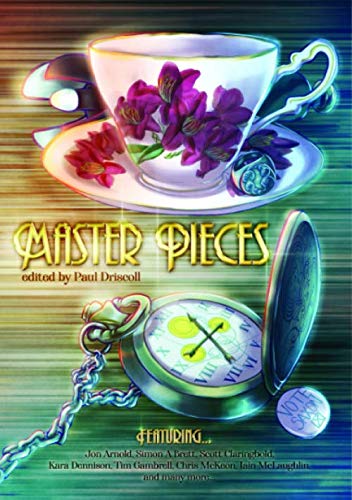
Master Pieces still available

Don't forget, you can still buy Master Pieces, Altrix Books' latest publication featuring the Master from Doctor Who in their many guises. Pop it on your Christmas list, there's still time. All profits from the sale of this book go to the Stroke Association.

The Altrix site has brief interviews with the authors of the book, including this one, where I talk about my story, "The Devil You Know."

Master Pieces is available from Amazon.

Saturday, 2 November 2019

"Master Pieces" out now!

The new Doctor Who fan anthology, Master Pieces, featuring no Doctors and lots of Masters, is now available in paperback form. You can get it from Amazon right now, with stories by Paul Driscoll, Chris McKeon, Jon Arnold, Rachel Redhead and more, plus a little something called"The Devil You Know" by me myself. All profits go to the Stroke Association.


An ebook version will be out soon.

Sunday, 20 October 2019

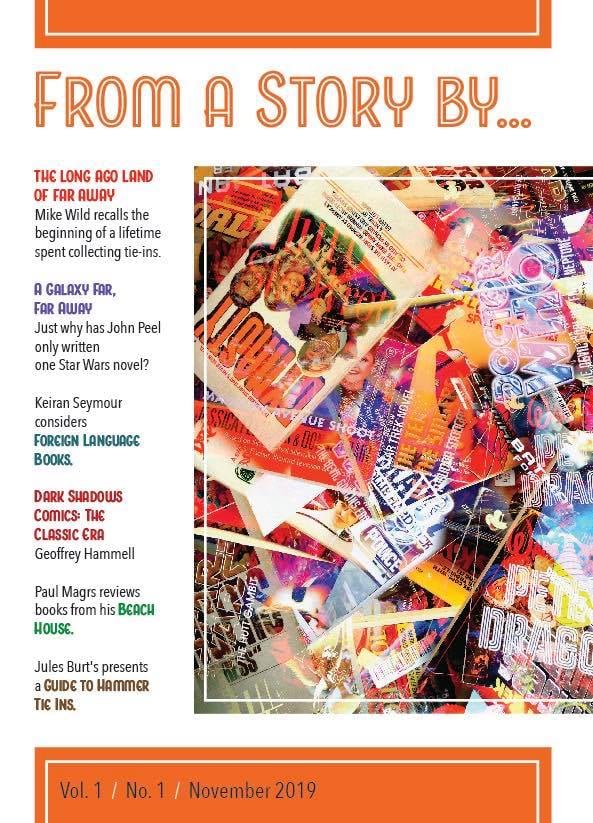
New magazines - Whotopia #35 and From a Story By #1

Two new issues of fanzines are now out, featuring my very own work.


Issue 35 of Whotopia is an Earth Reptile special, with reviews of the lizard-men's classic serials. I accepted the daunting task of viewing and reviewing 1984's fifth Doctor story Warriors of the Deep. I also provide the latest in my run of "Master Who?" articles, this time taking a side step to the Master's appearances on audio, something which has recently become a rather busy field. There are also articles on the nature of the Silurians and Sea Devils, on the portrayal of dyspraxia in the most recent series, the late, great Terrance Dicks and more, plus an exclusive comic strip.

To download the issue in digital form, simply click on the cover image to the right, or to purchase a physical copy, click on the link here.


Also available is the first issue of From a Story By... the first ever magazine devoted to tie-in fiction books. I take a look back at the four Red Dwarf novels of the 1990s by Rob Grant and Doug Naylor, while the issue also includes articles on Star Wars, Dark Shadows, Hammer Horror and much more. To purchase a copy of this paper-and-ink magazine, click here to be taken to the Obverse Books site.


Enjoy!

Sunday, 13 October 2019

Coming Soon...

I have two exciting announcements to make about forthcoming projects!

Firstly, Obverse Books have revealed the cover for issue one of From a Story By... This is a print magazine that has been gestating for some time, and will feature authors such as Paul Magrs, Kara Dennison and John Peel. From a Story By... is all about TV and film tie-in books, celebrating our love of the many weird and wonderful guides, novelisations and cash-ins that accompanied our favourite screen properties. There will be articles on everything from Star Wars to Dark Shadows, and I have written a piece on the four Red Dwarf novels by Rob Grant and Doug Naylor. It's not on the site just yet but with a November release date it is sure to be listed soon


Secondly, Altrix Books have revealed the cover for Master Pieces, the upcoming Doctor Who charity anthology starring multiple versions of the nefarious Time Lord, the Master. Ginger Hoesly has created this cover for the collection and it is a thing of absolute beauty. The anthology should be up for pre-order on the Altrix Books site very soon, and will feature stories by authors such as Chris McKeon, Scott Claringbold and myself.


Saturday, 27 July 2019

FANS WHO: "The Final Game" - Part One


Back in 1973, plans for afoot for the upcoming eleventh season of Doctor Who. The final serial would have seen Jon Pertwee and Roger Delgado face each other one last time as the Doctor and the Master. The Final Game would have served to write out the Master, revealing the secret of his true identity and might have also been the last serial for Pertwee's Doctor. Had The Final Game happened, the Master would have given his life for the Doctor in a grand send-off. The character would presumably not have been resurrected in the almost unrecognisable form played by Peter Pratt in 1976's The Deadly Assassin and Doctor Who history would have been very different.

Sadly, Delgado was killed in a road accident while filming abroad, and as such the story had to be scrapped. With his friend gone and several other cast members having left or being phased out, Pertwee made the decision to leave the series (by some accounts deliberately pricing himself out of the market so his contract wasn't renewed) so that the last serial of season eleven was confirmed as his last. The third Doctor regenerated at the end of Planet of the Spiders in 1974 and the third Doctor became the fourth.

Black Glove Studio - named for the Master's signature mittens - has been created with the purpose of bringing The Final Game to life. Chris McKeon, writer of a previous "lost story" -  the sixth Doctor regeneration novel Time's Champion - has taken the scant notes made by Robert Sloman for The Final Game and crafted his own version of the story, one that fits into the existing Doctor Who story. The essential part of the story remains: a final confrontation between the third Doctor and the original Master that we never had the chance to see.

With only part one so far available for preview, how the Master's story will play out is still a mystery until the serial is released in full on YouTube. Based on the first part, The Final Game has all the makings of a fine Doctor Who adventure, with an authentic late Pertwee era feel. This does mean it's a little slow in spots, but this was the case for many of the original serials, and there's a nice air of mystery concerning the Master's involvement in the story. The story includes an omniscient narrator, who uses a deliberately portentous style to sell the momentous nature of the story.

The performances in the story are generally good, with a selection of third Doctor era characters recreated for our listening pleasure. In most cases, the actors don't provide impersonations of the original cast, instead giving their interpretation of the characters. Sarah Wheatley's version of Sarah Jane Smith is a bit posher than the original but still has her confidence and humour, while Tony Fyler's clipped tones are perfect for the Brigadier. The vital roles of the Doctor and the Master are recreated excellently. Terry Cooper doesn't exactly sound like Delgado but reproduces the actor's delivery well, and convinces as the nefarious Time Lord. The biggest applause, though, has to go to Marshall Tankersley, who recreates Pertwee's Doctor with uncanny precision. He's better than Tim Treloar, who Big Finish have got to play the third Doctor in their own recreations of the era.

It's a fannish production with some characters who would been unlikely to appear in the serial as planned in 1973 but who are very welcome additions. It's a gorgeous celebration of the Pertwee era and I'm looking forward to the rest of the adventure.


At present, Black Glove Productions can be followed on Facebook. The serial will be released on YouTube when complete.

Saturday, 22 December 2018

WHOTOPIA issue 33 out now

The latest issue of the ongoing Doctor Who fanzine Whotopia is now available for download. This issue's overall theme is "Out of the Shadows." It looks at long lost characters' returns, and at moments when underutilised or underexplored characters and elements came into their own and realised their potential.

Amongst the many articles, on characters as varied as Adric, Mel and the Brigadier, is the latest column in my "Master Who" series. This time I look at Sir Derek Jacobi's quietly sinister incarnation of the villainous Time Lord. There's also a look at the latest series, the beginning of an epic trek through the entire series from 1963 onwards, and a farewell to Whotopia editor and top gent Jez Strickley.

Click on the link to download and read for free.


Sunday, 16 September 2018

Who Novelisation Quest 8: The Novel of the Film by Gary Russell

Officially titled, like its TV predecessor, simply as Doctor Who, this is one of a very few DW novelisations that was never published under the Target banner. This was the first Doctor Who novel to actually be published directly by the BBC, before even Virgin's licence had run out and the New Adventures were winding down. It was the first novel to star the eighth Doctor, and indeed, his first major appearance in the UK, being released shortly before the movie was aired by the BBC. Oddly enough, however, it was never officially published outside of Britain. It seems that with the recent revival of the Target imprint it would be a perfect opportunity to reprint the novelisation, but there are apparently rights issues preventing this (the TV Movie being something of a copyright minefield).

Despite my fondness for the movie, this is the first time I have read the novelisation. I did listen to Paul McGann's reading of it (on audio cassette!), but that was heavily abridged and reworked by the author to bring it more in line with the broadcast programme. As Russell points out in his opening to the book, this was adapted from an early draft of the script and based on limited visual information, and so in places differs wildly from the actual film. When he wrote the novel, Russell was still quite early on in his Doctor Who career, which is still going strong, and he is one of the stalwart writers of tie-in books material. I've always found his prose unchallenging but entertaining, exactly the sort of style that suits a novelisation. I get the feel that it was knocked out in something of a hurry, though; there are a few glaring typos, including one amusing moment when the Doctor is described as having "long back hair."

The differences between the novel and the film are, as with the best of Target's novelisations, a huge part of the appeal of the book. While the story is still breathless and strange, it actually hangs together rather better than what we got on screen, with some of the more howling plotholes filled in. There's also a lot more insight into the characters' lives than in the film, which really only found time to examine Grace and the Doctor. In particular, we learn a great deal more about Chang Lee's harsh childhood, giving us an understanding for why he would side with the Master (aside from the villain's obvious hypnotic abilities). He even gets a proper redemption, rather than simply being killed as soon as he turns on the Master.

The Master is far more like his old self here. While inhabiting the body of Bruce the paramedic, he still sounds much more like the verbose, eloquent Master of the Ainley and Delgado incarnations. He is also visibly decaying throughout, as was ostensibly the plan in the film before production difficulties reduced it so much it was scarcely noticible. By the time he captures the Doctor, his body is falling apart. The climax is especially different, with the Master almost managing to create a new body from the Doctor's life force, leaving him in a half-formed state, rather like the Watcher from Logopolis.

The relationship between the Doctor and Grace is more one-sided here, with the Doctor more overwhelmed with excitement when he kisses Grace rather than any real romantic interest. There's also a continual reminder of the Doctor's past in the form of his straw hat, mysteriously still in the Doctor's possession throughout and providing a link to his previous incarnation. Russell also peppers the story with little nods back to the New Adventures, making it feel rather more like part of that series than the BBC Books EDAs that were to follow.

The novelisation is a strong Doctor Who adventure, perhaps rather better a story than the film it's based on, and a good introduction to the eighth Doctor in prose that would slot in nicely between Lungbarrow and The Dying Days.

Data: 
First published by BBC Books in 1996
Based on Doctor Who, first broadcast in 1996
Audiobook read by Paul McGann

Monday, 21 May 2018

Whotopia Issue 32 available now

The latest issue of Whotopia magazine is now available for download or purchase as a physical magazine. This issue is dedicated to Doctor Who books, from the Target novelisations to behind-the-scenes tie-ins to the latest publications. I have no fewer than three articles in this one: an overview of the BBC Books Eighth Doctor Adventures; the latest in my "Master Who" articles focusing on the Master's appearances in print; and a review of last year's twelfth Doctor novels. There's plenty more as well, including the regular "Target Trawl," a feature on novel covers and episode reviews from Jon Arnold, Matthew Kresal and my bud James P. Quick.

You can download it here, but it's a big ol' PDF and may take a moment or two.


Saturday, 27 January 2018

WHO REVIEW: The War Master - Only the Good

BENEATH THE VISCOID by Nicholas Briggs

THE GOOD MASTER by Janine H. Jones

THE SKY MAN by James Goss

THE HEAVENLY PARADIGM by Guy Adams


With John Hurt sadly departed, Big Finish has to turn to other avenues to explore the Time War. The eight Doctor boxed set was planned early on, but has now expanded to become another four-box epic series. Gallifrey returns soon to see the Time Lords' efforts in the War. Most interestingly, though, we get to see what happened to the Master, resurrected to fight for Gallifrey, once the War had begun in earnest.

A four-story boxed set of the kind BF likes to make these days for their "event" titles, Only the Good feels like something of a testing ground for the concept of a Master-led series, in spite of wrapping up its own story quite neatly. The big draw is obviously Sir Derek Jacobi, one of our most beloved actors, stepping back into a role that he had for only moments on television. It's a most welcome opportunity to explore the least-known incarnation of Doctor Who's most persistent villain (except, perhaps, for Gordon Tipple). What's interesting with this incarnation of the Master is how much like his alter ego he is. Characterisation in both the writing and performance makes it clear that there's a lot of Yana in the Master, and vice versa. This is a version of the Master who revels in little pleasures and seems to genuinely enjoy the chance to play at being a good guy - even if it is all a means to an end.

The first instalment, Beneath the Viscoid, feels somewhat apart from the rest of the set. Set on the planet Gardezza, a world with a thick, viscous ocean that causes incredible difficulty for the Dalek force that occupies it. This unpleasant environmental feature is the only thing that gives the amphibian natives a sporting chance against the Daleks, but their days are still numbered. Fortunately for them, a Gallifreyan time capsule is found on the ocean bed, and inside is none other than the legendary Doctor.

Except, the Doctor isn't in this set. It's the Master, playing at being the Doctor in order to gain the natives trust and use it for his own ends. This is the second time that Jacobi has sort-of-played the Doctor, after his role in the Unbound story, Deadline, but here he gets to portray the character in a genuinely interesting way. He's incredibly charming and resourceful and full of admiration for the natives's ingenuity, but can switch to becoming cold and callous at a moment's notice. It's clear that the Master enjoys playing the role... until he tires of it, and will dispatch anyone who gets in his way. Jacobi's performance is what makes this episode work. The rest of the cast, although perfectly fine, aren't given much to work with as they play pretty generic aliens, so the episode never really flies.

The Good Master is stronger, and once again sees the Master playing at being the good guy and loving it. The planet Arcking is a safe haven in the War, due to a gravitational event creating a state of grace around the planet. The Daleks can't invade and it's virtually impossible to be harmed there. As such, it's become a hospital planet for those wounded in the War. The Master is there, posing as one Dr. Keller (nice callback to The Mind of Evil), a talented surgeon who takes pride in all the lives he's saved. However, he isn't simply hiding out. There's something on Arcking he needs...

The episode introduces Johnny Green as Cole, an injured pilot who becomes the Master's new companion. There's some excellent interplay between the two characters, and it's easy to see why Cole would join this supposedly trustworthy Time Lord, especially as he's on the Dalek's most wanted list. We know him better, of course, but it's interesting to see the Master doing the right thing, even if it is for his own selfish reasons.

The Sky Man is very much Cole's story. With the Master uncharacteristically citing Time Lord code and refusing to become too involved, he is swayed by Cole's insistence that he could maybe save just one world. Almost immediately we get a powerful scene in which the Master presents him with the impossible decision - of choosing one world among all those plagued by the War to single out for rescue. It's an incredible scene.

Nonetheless, a planet is found, and the Master and Cole make it their home for a time. A peaceful agrarian world whose inhabitants have deliberately shunned high technology to steer clear of the attention of the belligerents in the War, it is unfortunately still affected when some kind of temporal fallout causes illness to spread amongst the inhabitants.The Master basically takes a holiday and takes up viticulture, while keeping his eye on Cole. 

Cole, though, lives among the people he means to save, gaining respect and distrust in equal measures as he makes small improvements to their lives. He falls for a young woman named Elidh - played beautifully by Emily Barber. The actors give their characters very believable chemistry, and Cole's increasingly desperate attempts to save the locals from the effects of the fallout become more and more galling. Without wanting to spoil the story too much, his eventual solution calls to mind the creation of the Cybermen, an event with equal tragedy, only this time we see all of it through the eyes of the man who was inadvertently responsible. Thanks to some excellent writing and a wonderful performance by Green, the results are heartbreaking. The undisputed highlight of the set.

Finally, The Heavenly Paradigm brings events to a climactic, if rather unexpectedly stylised, end. It turns out that one of the greatest weapons in the Time Lords' arsenal, with the power to restructure whole timelines and shape reality to its bearer's will, is hidden in a house in the Stamford Bridge area in the seventies. Oh, and it's guarded by Nerys Hughes. Not quite how I expected one of the most significant events of the Time War to start.

While we might have believed the Master had developed some real affection for Cole in their time together, it certainly isn't enough to stop him using the boy for his own ends. You see, Cole is a temporal anomaly who should never have survived crashing on Arcking, and now, with a little direction from the Master, he's created even bigger, more devastating paradoxes of his own. This the Master can use to power the Heavenly Paradigm to such a degree that he can rewrite the entire universe, and end the Time War for good.

What's so satisfying about the Master's behaviour in this story is that, while he is utterly ruthless and opportunistic, he honestly thinks he's doing the right thing. After all, he doesn't want to see the Daleks dominate the universe of everything fall into hell, anymore than anyone does. This could be the only way out for the people of the universe. Unfortunately, he's bitten off rather more than he can chew, and things go badly wrong. Leaving the Time War somehow even worse than he found it, the Master powers up his chameleon arch and goes on the run, bringing the story to where we will pick it up, years later, in "Utopia." A satisfying conclusion to a set that proves that the Master can have diverting adventures even when the Doctor isn't around.

Wednesday, 16 August 2017

WHO REVIEW: Titan Eleventh Doctor comics - Year Two

A belated review of the most recent complete run of Doctor Who comics to feature the eleventh Doctor (I may cover Ten and Twelve later, we'll see). Titan Publishing's "Eleventh Doctor, Year Two" ran from late 2015 to the end of 2016, but I've been catching up via the UK reprints in Tales from the Tardis, which appear on stands about six or seven months later. The storyline has also been published in a series of trade paperbacks: The Then and the Now, The One, and The Malignant Truth, so there's no shortage of ways to read the story.

And a truly excellent story it is. The full "year" comprises a fifteen issue storyline, from "The Then and the Now, Part One" through to "Physician, Heal Thyself," charting an epic adventure that crosses the Doctor's timeline from the depths of the Time War to the high times of the eleventh Doctor. Written by Rob Williams and Si Spurrier, the series features a number of artists, although for me, Simon Fraser's idiosyncratic style suits the story best. Regardless, there's a consistency to the story's art in spite of the mix of artists, a rare feat for an ongoing strip with different artistic contributors. It's a story that deserves a strong visual style, as it demands that the story sticks in the mind.

If you're not a fan of the Time War mythos that has become so important in modern Doctor Who, you won't enjoy this series. Although the Time War was an essential part of the backstory of the ninth and tenth Doctors, the series moved on from it during the time of the eleventh, only for it to become the driving force of the fiftieth anniversary special. The comic series revives this focus, bringing the eleventh Doctor and his comic strip companion Alice Obiefune into contact with the his war crimes. The Doctor doesn't even remember the apparent genocide at his own hands, and it is most certainly impossible for elements to be spilling out from time-locked events into his relative present. Nonetheless, the Doctor and Alice are pursued through time and space by the eponymous Then and the Now, a warping ripple in humanoid shape that is both a bounty hunter and a walking temporal paradox.

It isn't only Alice that joins the Doctor. On the course of his travels he is joined by various other adventurers, not least of whom is Abslom Daak, Dalek Killer! Anyone who's read my reviews of the seventh Doctor comics will know that I'm not a fan of Daak. He's a one-note joke on the sort of macho 90s antihero that is unbearable unless written with considerable finesse. Thankfully, then, here he is written with finesse, becoming a far better foil for the eleventh Doctor than he ever was for the seventh. It actually works very well, since the eleventh Doctor can be just as manipulative as the seventh, and has no qualms in using Daak as a blunt instrument.


Another blunt instrument the Doctor is fond of is River Song, whom he breaks out of prison to ehlp him on his mission to track down the truth of his own past. Then there's the Squire, a frankly wonderful new creation. The Squire is an elderly space knight who supposedly acted as companion to the Doctor during the War. The Doctor, however, has no memory of her, and the truth behind his faithful companion's past is just one of the mysteries he has to explore.

Events conspire to drag the Doctor and his team throughout the continuum, from a Sontaran battlefield to the prison asteroid Shada. The current crisis is entwined with the Doctor's past, and two whole issues go by without the eleventh Doctor's appaearing at all. Alice is drawn back, in an apparently impossible manoeuvre, to the depths of the Time War, to come face-to-face with the War Doctor, who then leads the storyline until future and past catch up. The War incarnation is not alone, however. Needs must as the devil drives, and he has allied himself with the Master, here presented in a previously unseen incarnation that appears as dark-haired young boy, which is even more sinister than it sounds.

Where we find the Time War, we find Daleks, and this story presents the worst, most monstrous Daleks ever. The Volatix Cabal are an elite group of Dalek mutants created to fight the Time Lords, not unlike the Cult of Skaro, except that these Daleks have taken creativity and individuality to its extremes. Twisting their bodies and minds into horrific shapes, they have driven themselves insane, and seek to spread pain and fear throughout time, screaming "ExterminHATE!" wherever they go. They are an absolutely absolutely terrifying creation, and their distorted forms are the enduring image of this story. However, Abslom Daak was born to kill Daleks.

In a story that twists and turns into paradox after anomaly, the Doctor faces consequences of his hardest choices. I often felt during the early 21st century series that there was scope for more exploration of the fallout of the Time War and the Doctor's actions within in, and these comics are a perfect example of the stories this approach can generate. Showing the Doctor in his worst but most interesting light, Titan's "Eleventh Doctor, Year Two " is a superior Doctor Who comic.

Sunday, 16 July 2017

WHO REVIEW: 10.11 & 10.12

WORLD ENOUGH AND TIME

THE DOCTOR FALLS


“World Enough and Time” kicks off what is Doctor Who's best series finale since Matt Smith's inaugral run, perhaps even since the heady days of the Eccleston, Tennant and Piper. There is, however, a big flaw in the episode's presentation that comes about, not because of the episode itself, but because of the media surrounding its broadcast. Which is why I'm hiding the review after a page break, because I still know fans who haven't seen it and it really is best seen without spoilers.

Thursday, 15 June 2017

WHO REVIEW: 10-8 - "The Lie of the Land"


The final installment of the Monks Trilogy looks set to be a genuinely interesting bit of science fiction until about twenty minutes in. "You're stagnating," says the Doctor. "In fact, you're regressing." So it goes for the episode itself, which singularly fails to make the most of its many promising elements.

To begin with, it's 1984 all over again, with memory crimes as a thin cover version of thought crimes and the Doctor himself taking up the Big Brother position. The Monks have completely duped the human race into believing that they've lived alongside them as watchful guardians for the last however many millennia, and only a very few are (somehow) aware of the truth. In the era of fake news and alternative facts, it's a decent attempt at satire. Although, the situation presented, with a small group staying in power by peddling an obviously false history and violently crushing any voices of dissent sounds more like religion than any political regime currently in the headlines (although there are plenty of countries, such as Saudi Arabia and, increasingly, the United States, where the line between politics and religion has disappeared).

Pearl Mackie earns her keep on this episode alone, delivering a heart-wrenchingly strong performance as Bill clings onto her reality ever more desperately. She really is exceptional when given strong material to work with, and her horrified reaction to the Doctor's betrayal is only bettered by her stoic acceptance of the necessity of her sacrifice.

Almost as good is Capaldi, who shines as a manic, powerful Doctor, grinning terrifyingly out from omnipresent TV screens, blithely lying to the populace and calmly instructing people to inform on family members. He carries the pretense of the Doctor's defection so well that the viewer can truly believe he has sided with the aliens. After all, there is a strong argument to be made that humanity doesn't deserve free will, and after all the centuries of saving us from ourselves, the Doctor might finally believe that.

The problem is, it would have been much more interesting if the Doctor had been serious. It's fascinating that Bill turns on the Doctor so suddenly. After all, she sold out humanity in order to save him, on the strength of her faith in him, and it takes very little to finally shake that faith enough for her to gun him down. It's a tremendously powerful moment that is unfortunately wasted by the Doctor revealing the entire thing was a huge joke at her expense, a highly contrived way of testing to see if she was still on the side of truth and free will. It even includes a glimmer of faked regeneration energy, which seems to have been included solely to spice up the early season trailers.

From this point on, events plod on with a certain inevitability. Missy finally returns, and while Michelle Gomez is as delicious as ever, she's largely wasted as an exposition source in this episode. Revealed in her prison, playing piano and basically hammering home that the Sherlock finale was a dry run for this season of Doctor Who.

Missy claims that her life doesn't revolve around the Doctor - which is blatantly untrue in itself - but her claim to have defeated the Monks in an earlier adventure also rings false. Why would the Master care if the Monks have control of some planet? Far more likely that she once aided them in taking over a world, and she is relating how they were defeated. After all, the Monk's memory control technology isn't all that dissimilar to the hypnotic network the Master used back when (s)he became Prime Minister. And do we think, for a second, that Missy is really crying over all her many victims? Not on your nelly.

The cast are, by this stage, strong enough together to keep the episode watchable up until the end, but they're carrying all the work and the plot is doing nothing. It's fine having a serviceable resolution to a story, but this seems particularly uninspired. Bill remembering her mum to save the day through her emotional strength is far too much like Clara's "blown in on a leaf" story, which wasn't very convincing when they used it back in season seven. And then - it's all over, the Monks bugger off, and everyone forgets any of it ever happened, in another dissatisfying retcon. Although they've turned out as more style than substance, I hope the Monks do return to the series, because there must be something more interesting to be done with them than this.

Links and references: Nardole uses a "Tarovian nerve grip" to disable a soldier, blatantly riffing on Star Trek's Vulcan nerve pinch and also harking back to the Venusian martial arts favoured by the third Doctor. His jokey aside about his training and his new hand sounds very Doctorish, in fact. Imagine David Tennant delivering those lines as the Doctor and tell me it sounds any different.

Maketh the man: I really like the Doctor's new raggedy denim coat.

The Regeneration Game: So, the Doctor is now seemingly able to control his regenerations to such an extent that he can emit enough regenerative energy to put on a light show. Apart from the fact that this was rather pointless in story, seeing that Bill doesn't actually know what regeneration is yet, it raises some big questions about how much control has over his regenerations. If he can use the energy with such precision, why couldn't he just fix his eyes himself? Unless, of course, those weren't blanks when she shot him, and the Doctor has actually begun his regeneration, which would actually be a brilliant way to end the run.

Best line: I should probably choose the Doctor's rant against fascism and fundamentalism, but I can't help but love Bill to Nardole: "I'm gonna beat the sh-!"