Showing posts with label A Christmas Carol. Show all posts

Tuesday, 11 January 2022

REVIEW: A Christmas Carol (Alexandra Palace 2021-2)


A Christmas Carol is one of my absolute favourite stories of all time, and has had dozens, maybe hundreds of adaptations for audio, stage and screen over the centuries. Each version makes its own changes, some more faithful than others, and each focuses on a different aspect of the original.

One aspect that rarely gets enough focus, in my opinion, is the horror of the story. A Christmas Carol is, after all, first and foremost a ghost story, and Scrooge is terrified for much of it. Thankfully, if unsurprisingly, Mark Gatiss is of the same opinion, and his new stage adaptation of the classic ramps up the spookiness.

Suz and I managed to see this almost as late as we possibly could. First it was delayed by a year due to Covid, but had it not been we might not have had the chance to see it at all. We received the tickets as a Christmas gift from my dad but were away most of the festive season, we couldn't see it until January 8th, the last Saturday of its run at Alexandra Palace and the penultimate performance. Fortunately, it was a Christmassy enough production to get us feeling festive all over again.

Ally Pally is the perfect place to hold the play. The restored theatre in the BBC's old flagship building is a wonderful venue for a Victorian play, suitably atmospheric. We were also lucky to get front row stalls, and although our seats were actually missing when we arrived, they were some of the best in the house once they were returned to their correct location. It's not surprising to see Gatiss tackle A Christmas Carol, after multiple adaptations of Victorian classics including Sherlock and Dracula, sundry Christmas ghost stories for the BBC and, of course, one of my favourite episodes of modern Doctor Who, “The Unquiet Dead,” which saw Dickens himself beset by extraterrestrial ghosts on Christmas Eve. I wouldn't be at all surpised to learn that he chose the venue specifically as well, after he had the Doctor scale the transmission tower at Ally Pally in the following season's “The Idiot's Lantern.” But I digress.

Anyone else adapting the story and starring in it would cast themselves as Scrooge himself, but Gatiss instead plays Jacob Marley, who was, as we all know, dead to begin with. Except in this version he isn't, in fact, thanks to a prologue scene in which Scrooge and Marley enjoy a jolly game of humbug one-up-manship, one Christmas Eve before Marley conks it at his desk. The book's biting sense of humour is present throughout, not least Scrooge quickly extinguishing Marley's candle noting “Waste not, want not.”

Nicholas Farrell of The Crown and Chariots of Fire makes an excellent Scrooge, decked out in ragged and archaic dress even by the standards of 1843. He's as cruel and miserly as they come to begin with, but there's always an undercurrent of humour that makes his gentler, earlier self, and his new beginnings, believably hidden beneath. It's not long before the phantoms make themselves known, with Gatiss manifesting a flamboyant and undulating Marley to deliver upon Scrooge his warning. Elements of the story that are so often often forgotten are included in this production, including the parade of spirits that sweep Marley away. The various ghosts of the production are given shape by a brilliant mixture of techniques: holography, puppetry, lighting trick and remotely-operated props. As is the tradition, most of the actors take on multiple roles, with Gatiss appearing as sundry grotesques including Scrooge's schoolmaster and even the Ghost of Christmas Future, revealed as Marley once more beneath the cowl.

Before this, of course, we get the two other main festive spirits. Christmas Past, so often visualised as a young girl or occasionally an old man, is in the original story a fluid, complex being manifesting at all ages and genders simultaneously. Such a good move then, to cast the charismatic non-binary actor Jo Eaton-Kent (recently seen in The Watch and probably the best thing in it), as comfortable playing cockney butchers and sailors as they are a genderless spirit. Towering over Scrooge and as threatening as they are angelic, the Ghost of Christmas Past dominates their scenes even as we see Scrooge's past brought to life vividly. The set, spartan but beautifully crafted, shifts to accommodate the changing times and places.

The Ghost of Christmas Present is portrayed by Joe Shire, who you may recognise from Witness for the Prosecution or heard in a number of Big Finish's audioplays. For integrity's sake I have to say, I do know Joe a little, and so was particularly looking forward to seeing him in the role. He is perfect as Christmas Present, balancing the ghost's jolly persona with his underlying anger and judgment. Another rarely included aspect, the lesser ghosts of Want and Ignorance, are manifested under his robe, by way of two creepy puppets operated by the youngest members of the cast. As well as the ghost, Joe plays the ebulliant Fezziwig, leading a raucous festive dance, along with various other parts of great range.

As perfectly realised as the ghosts are, the whole cast is excellent and make every scene captivating. Edward Harrison of Wolf Hall is a charming Bob Cratchit, with Sarah Ridgeway almost stealing the scene as Mrs Cratchit among other roles. James Beckway is a forthright and cheerful nephew Fred, as well as portraying the younger Scrooge, the up-and-coming businessman. Zak Ford-Williams plays several roles as well, including Tiny Tim and the younger Marley, impressively channelling the optimism of the former and the grasping greed of the latter with equal ease. The great Christopher Godwin (Amadeus) acts as narrator, bringing essential parts of Dickens' prose to life, and the eventual reveal of his actual identity is a beautiful touch.


Heartwarming and chilling in equal measure, this was one of the best adaptations of the story I have been fortunate enough to see.

Tuesday, 29 December 2020

It's still the Christmas season, and on Television Heaven you can enjoy two new reviews of classic Christmas TV films: there's The Flint Street Nativity from 1999, and the wonderful Lost Christmas from 2011.


Plus, you can still read these Christmassy pieces from before:

The Porridge Christmas Specials (1975 &1976)

The Good Life - "Silly, But It's Fun" (1977)

Blackadder - the Specials (including Blackadder's Christmas Carol, 1988)

A Christmas Carol (2019)

Sunday, 19 January 2020

Victorian Nightmares

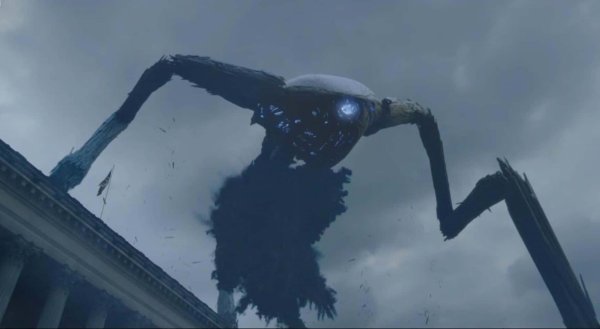
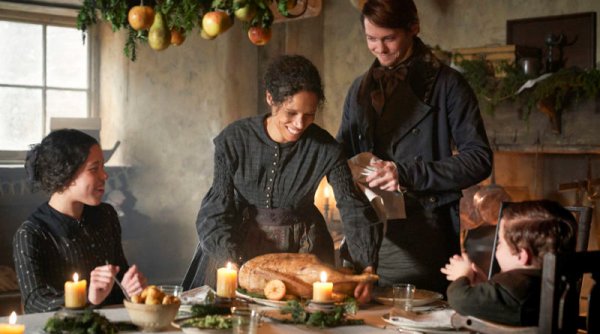
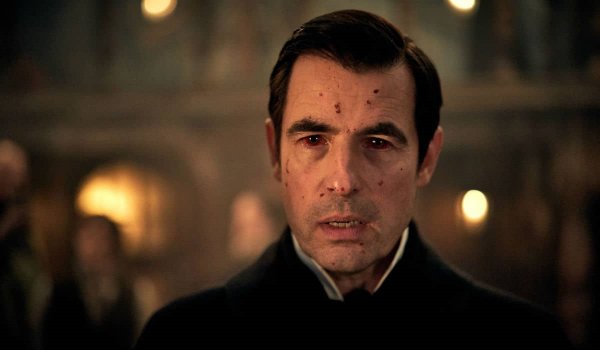
From late to 2019 to the beginning of 2020, the BBC aired three high budget, prestige television adaptations of classics of Victorian literature: A Christmas Carol, The War of the Worlds and Dracula. I had... mixed opinions on all three of them.

You can read my reviews of the Victorian telefantasies at Television Heaven by following these links:


Thursday, 21 December 2017

Xmas Marks the Spot


Every cartoon series has a Christmas special (well, most of them). They are, mostly, pretty terrible, churned out with little thought to what might make them different to all the others. A few stand out, though, and one has stuck with me from my earliest years. That most special of Christmas specials is “Xmas Marks the Spot,” the last episode of the first season of The Real Ghostbusters.

RGB has stood the test of time as my favourite animated series, and arguably my favourite children's programme (that depends on how you categorise Doctor Who). For the first couple of years – the first season and then the long run in syndication – RGB featured genuinely witty, well-written scripts, some surprisingly creepy moments and some of the most memorable monster designs in telefantasy. Yes, it became dumbed down as it went on further and ended as a shadow of its former self, but to begin with, it was a truly brilliant show.

“Xmas Marks the Spot” is not my favourite episode of the series (that's the baseball episode, “Night Game – every American show needs a baseball episode too), nor is it the most remarkable or unique (for my money, that has to be the truly surreal “Chicken, He Clucked.”) It is, however, one of the most memorable, most effective and cleverest episodes of the series, one that takes a ludicrous concept and runs with it for twenty ingenious minutes.

Written by chief scriptwriter J. Michael Straczynski – better known now as the creator of Babylon 5 – the RGB Christmas special takes a not uncommon route for a festive episode. Yes, it's a take on Charles Dickens's classic A Christmas Carol. Now, pop cultural takes on the classic Christmas novella would make for an article in itself. The Muppets have done it, Doctor Who has done it, even The Flintstones have done it. It doesn't matter. It's a more interesting, more potent way of doing a Christmas special than just having the characters give each other presents or going on a winter vacation. There's scope for the episode to actually be about something.

Peter Venkman (played by the original and best voice artist, Lorenzo Music) doesn't hate Christmas, but to him, it's just another day. Christmas is no fun when your wheeler-dealer dad is always out of town, and so, over the years Peter has managed to convince himself that he doesn't care about the holidays. He needs a lesson in Christmas spirit... fortunately, some Christmas spirits are available to teach him.

The episode has a more contrived set up than most. Usually, there's a spectral menace that needs dealing with in or around New York. This time, however, the 'busters have to abandon their faithful hearse Ecto 1 when they are stranded in a snowstorm, only to be whisked through time and space to 19th century London. It all seems fairly unlikely, but it gets even more so when the 'busters immediately stumble upon the home of one Ebenezer Scrooge. (The episode end makes it clear that there are forces at work ensuring this all happens, so it isn't purely down to a cosmic coincidence.)

The four heroes are too late to stop the ghost of Jacob Marley from escaping back into the spirit world, but they are just in time to encounter three more spirits... “big, powerful,” and heading straight for Scrooge's place. It's the Ghostbusters to the rescue, storming in and immediately busting the three Ghosts of Christmas. It's one of those ideas that's just inspired. Of course, Scrooge isn't keen to give up his hard-earned cash to pay the Ghostbusters, but after some negotiation, they go on their way, and are swept back through the time slip.

Scrooge (guest voice Peter Renaday), inspired, sits down to write his memoir, A Christmas Humbug. It's the story of how he bested the Ghosts of Christmas (all by himself, of course). Meanwhile, 150 years later, the 'busters return to New York to find the book a perennial bestseller. So influential, in fact, that now no one celebrates Christmas at all, and people are incredible arseholes to each other all the time (just like in New York most of the time). “We've really done it this time,” says Ray, (the great Frank Welker) “we've just killed Christmas.” Or, as my good friend Jim put it, “They've gone and fucked Christmas royally in the A!” But then, he's always had a way with words.

From then (and this is after only about ten minutes runtime) the narrative takes two tracks. Peter, Ray and Winston go back to the time slip in an attempt to convince Scrooge of the error of his ways. This involves the three of them taking the place of the ghosts, with Peter dragging up as the very feminine Ghost of Christmas Past. As a nice nod to the blazing light of the ghost in the book, he's equipped with a set of blinding magnesium flares. What follows is an unforgettable sequence in which Venkman tries to convince Scrooge that he's flying through his past by running him in circles in a wheelchair with a ViewMaster on his face. The question of where he got ViewMaster slides of Scrooge's schoolhouse remains unanswered.

In the 20th century, Egon resolves to enter the containment unit and rescue the three ghosts. Now, we'd had a glimpse into the inside of the unit in the Hallowe'en episode, “When Hallowe'en Was Forever,” but this is something else. Egon (Maurice LaMarche, who also voices Bob Cratchit and the Ghost of Christmas Present) constructs a sort of environmental suit that “demolecularises” him, while another lash-up opens a crack in the containment field. He has one hour to get in and out, or he'll be permanently spectral and trapped inside forever. And so he enters the otherworldly interior of the unit, a strange pocket dimension in which the ghosts are imprisoned after capture.

While these two epic threads are playing out, Janine (the faithful secretary, voiced by Laura Summer) is of course convinced that Christmas is nothing but humbug, but agrees to help out of her love for Egon. She is assisted, sort of, by Slimer (Frank Welker's other great role in the series), although he mostly gets himself into trouble and is nearly pulled into the containment unit. Now, one thing we never found out is who or what Slimer was the ghost of. Fan lore is that he's the ghost of John Belushi, but the backstory for the films suggests that he was summoned into existence by arcane rituals, as a being of pure appetite. You might say that there is more of gravy than of grave to this ghost.

In 1837, Winston (Arsenio Hall) tries his luck as the Ghost of Christmas Present, while Ray gets robed up as the Ghost of Christmas Future. In 1986, Egon manages to find the three Christmas Spirits, but there's trouble: the other ghosts have figured out what's going on. Cue every ghost captured in the run of the series so far, including the Sandman, the Winged Puma, Samhain the spirit of Hallowe'en, Big Ugly, the fat blue sleepy ghost... all coming after him at once. After a breakneck chase out of the unit, Egon escapes with the three ghosts in the nick of time.

In the end, of course, everything works out fine. The three Ghosts of Christmas are returned to their proper time to give Scrooge a slightly more convincing lesson, and Christmas is saved for futurity. While defending Christmas to the old miser, Peter has realised just how much he's missed by shutting himself off from it all, and resolves to appreciate it in the future. Subtle it isn't, but then it's Christmas. We don't want subtle, we want hammered home platitudes.

It's a tremendous episode packed with incident and Christmas spirit (literal and figurative). I watch it every year, sometimes several times. It's a classic.


“Merry Christmas to all – and to all, a good night!”

Monday, 18 December 2017

REVIEW: A Christmas Carol - Jack Thorne, The Old Vic

I adore A Christmas Carol. I read it pretty much every year. And so I was thrilled to have the opportunity to see the latest stage version at the The Old Vic in London, scripted by Jack Thorne and starring Rhys Ifans as Ebenezer Scrooge. It was, in a word, wonderful.

The stage in central to the theatre, constructed from cash boxes beneath Victorian street lanterns. The stage is simplistic but ingeniously operated, the world of the play made up from doorframes, sound effects and faux snow. The frontmost rows of the audience are practically on the stage, and by the boisterous, glorious finale, Scrooge is running amongst the aisles, the entire theatre brought into the production.

The best adaptations of classical material are frequently those that take the greatest liberties with the source text, and this newest version of A Christmas Carol is a good example. While it is true to the spirit of the novel (pardon the pun), it has been heavily rewritten, with only the best remembered and most essential lines retained. The events that are visited through Scrooge's past, present and future vary significantly from what we see in the novel, although there are also elements retained that are usually forgotten. The strength of the production lies not only in the new script, but in how vividly and powerfully it is brought to life.


Ifans is astonishingly good as Scrooge, taking his place as one of the very best. His Scrooge is hairy, unkempt, clad in threadbare robes and physically aged, but full of life. It is a very bitter sort of life, though, making him the loudest, coursest, most intimidating version of Scrooge I've seen, shouting, bullying and spitting his way through the performance. (Really, I felt for those people in the front row.) As he is taken back through time, we see him as a young boy (played well by Jamie Cameron), but soon Ifans steps into the role, straightening up and taking on a youthful vigour as Scrooge relives the essential moments of his life.

Most adaptations give greater significance to Belle than the novel does, making her a major factor in his callous outlook, rather than merely a victim of it, and this version in particular follows her further in her life than is usual. In this version, Belle is the daughter of Fezziwig, streamlining the backstory somewhat, and is charmingly played by Erin Doherty. A major change from the usual storyline is the attention given to Scrooge's home life as a boy and young man, giving him a hypocritical hatred of his penny-pinching father (Alex Gaumond, who also portrays a desolate and distraught Marley). These scenes also give a lot of time to Scrooge's sister, Little Fan, later mother of his nephew Fred, who is portrayed with great spirit and sympathy by Melissa Allan.

Almost every member of the cast takes at least two roles, most of them taking on duties as group narrators, and several of them taking on two major roles in the story. Particularly good are John Dagliesh as a likeable, open-faced Bob Cratchit, Alastair Parker as an especially ebullient Fezziwig, and Golda Rosheuvel as Mrs. Fezziwig and the Ghost of Christmas Present.

It's always fascinating to see how the three Ghosts of Christmas will be portrayed, especially on stage when special effects and visual trickery are limited. Here, unusually, we have an all-female role call of festive phantoms (Marley notwithstanding), who appear as part of the same class of spirit, rather than the strange assembly we have described in the novel. Initially, the Ghost of Christmas Future is visualised by the entire extended cast, veiled in black, swarming Scrooge, before a single character from his past is brought back to stand for the ghost in one of the most effective changes to the story.

Tiny Tim is played by four different children, each one taking turns of different performances. When I saw it, Grace Fincham played the youngest Cratchit. She gave an absolutely beautiful performance that put me to tears. Even as Tim's fate - far more immediately portrayed here than usual - affects Scrooge terribly, he remains defiant in the face of the ghosts for a long time. Perhaps the most effective change is to Scrooge's funeral, where, instead of being empty, sees people from his life attend to read eulogies and declare that they do indeed hold love for him, in spite of his attempts to push them away. I'm tempted to say it improves upon the original in this regard, making a powerful and positive effect on Scrooge's attitude rather than frightening him with something negative. When it comes to the climactic finale, Scrooge really is a changed man, Ifans taking the aggressive energy from before and channelling it into a joyful, exuberent, Doctorish performance. The entire audience is invited to his "invasion" of the Cratchits' home, before everything quietens down for the final, beautiful moments. 

My All-Time Top Five Christmas Movies

In reply to my friend @kayjoon 's blog post, here are my top five Chrimbly films. His list is very good, and his choice of National Lampoon's Christmas Vacation is fine and good, but he shall forever disagreed with for not putting the Muppets at the very top.

5. Gremlins (1984)

Perhaps the grimmest, certainly the nastiest Christmas movie that isn't an out-and-out horror, although it comes close. It came out in the middle of summer, something that went down poorly with writer Chris Columbus and director Joe Dante, but it is undoubtedly a Christmas film, being not only set at Christmas but very much about it. People have argued for years about who or what the gremlins are meant to represent, but for me it seems clear that they stand for the crass commercialism of the modern Christmas and the potential damage it can do to a true family Christmas.

Spielberg got the film made, and his influence toned down the horror elements and made it into a just-about-family-friendly movie, albeit one that helped reconfigure the film ratings system (along with Indiana Jones and the Temple of Doom, Spielberg used it to campaign for a new rating between PG and R, which led to the adoption of PG-13 in the US and the UK rating 15 in its stead). The original script had cute little Gizmo turn into the murderous monster; instead he produces already pretty nasty offspring that become worse after their transformation. The film loses some of its point because of this, but it's unlikely it would have been the same hit if the one cutesy and marketable character became a demonic killer. Still, they did manage to keep in Phoebe Cates's horrible soliloquy about her character's tragic history with Christmas, which Dante fought with Spielberg to keep. It's the indicative moment that combines the joy and misery of family to blackly comic effect.


4. The Nightmare Before Christmas (1993)

OK, this is as much a Hallowe'en film as a Christmas one, and was released as such, but it provides the perfect intro to the Christmas' movie marathon. Both festivals are the modern evolutions of ancient pagan festivals that ushered in the dangerous winter months, so they go together, and ghosts always work well at Christmas (see below). Nightmare might also be taken as an attack on the commercialism of Christmas, on how it doesn't matter if you get the look and trappings right, if the spirit isn't there (Christmas spirit, not Jack Skellington).

Although one of the most Tim Burton-esque films, people tend to forget it was Henry Sellick who directed it, and the stop motion style is absolutely perfect for the childishly spooky setting. The songs are pretty brilliant too  - the opening song "This is Hallowe'en" is clearly the best, but "Oogie Boogie's Song" works very well too, and is eminently coverable. Nightmare was perfectly designed to appeal to nine-year-old me, with just the right level of monsters and ickiness. Christmas isn't Christmas unless you feel a bit sick once it's over.


3. Trading Places (1983)

The eighties really were a good time for darkly comic Christmas movies. Basically a modern take on the 19th century novel The Prince and the Pauper - something so much part of American literary culture that even Mickey Mouse starred in a version, as with A Christmas Carol (see below). Trading Places has Dan Aykroyd's up-and-coming Harvard graduate Louis Winthorpe cast out of his home and job, while Eddie Murphy's street-living beggar Billy Ray Valentine is given his old position, all as part of a social experiment by the money-grabbing Duke Brothers. Aykroyd and Murphy are great, but the film belongs to the side cast, with Ralph Bellamy and Don Ameche the stand-outs as money-grabbing modern Scrooges the Dukes. Jamie Lee Curtis plays her most likeable character in Ophelia, Winthorpe's unlikely love interest, and Denholm Elliott is perfect as manservant Coleman. Often overlooked, though, is Kristen Holby, who is utterly spot-on as Winthorpe's snooty, icy fiance Penelope.

Winthorpe's descent into social hell culminates in his taking a desperate position as the most wretched Santa Claus ever committed to film, very nearly ending in violence, suicide and stolen smoked salmon. It's on the edge of being a Christmas film, general social commentary, particularly racial stereotyping and privilege being its main concerns, but setting it in the run up to Christmas and New Year makes the cruelty all that stronger. Also, it's got more tits in than the rest of this list.


2. Scrooged (1988)

Frank Cross is Bill Murray's second greatest role (the first being, of course, famous parapsychologist and date rapist Dr. Peter Venkman, and no, Ghostbusters II is not a Christmas film, it is a New Year's film). The second greatest screen version of A Christmas Carol, Scrooged is brave enough to give a genuinely modern take on the story, albeit one that is now overdue for another treatment. You could easily remake Scrooged with updated settings every twenty years or so. Making the Scrooge analogue a heartless TV exec was a stroke of genius. Murray and director Richard Donner did not get along at all well, but this tension reflects well in the production and there's even a hint that Murray carried some of Donner into his performance.

The subject of Frank's callous disregard for human life is low-level team member Bobcat Goldthwait (whatever happened to Bobcat?); Scrooge's nephew becomes Frank's brother James, played by Bill's real-life brother John Murray; John Glover makes a memorably fake and vacuous "LA slimeball" after Frank's position. Karen Allen has her best role as do-gooder Claire, the Belle figure of this Scrooge's life, albeit one who isn't so lost to him as in the original. Most affecting, of course, are the always brilliant Alfre Woodard as the Cratchit figure Grace, and her mute son, played silently Raphael Harris in the potential future and almost silently in the present by Nicholas Philips. If you're not buoyed up when he says, "God bless us, everyone," you have a heart of stone.

Then there are the ghosts. With even the deliberately obscure Ghost of Christmas Past often portrayed in similar ways on screen, and the Ghosts of Present and Future being straightforward, we often know what we're getting with the ghosts. Not with Scrooged, which from John Forsythe as the ghost of his boss (Lew Hayward, the man who invented the miniseries!) take new, imaginative, hilarious and terrifying forms. David Johansen of the New York Dolls is the revoltingly unlikely Ghost of Christmas Past, Carol Kane is truly brilliant as the gleefully violent Ghost of Christmas Present, and the Ghost of Christmas Future is the most terrifying ever put to screen (with the exception of Mickey's Christmas Carol). For all the cynicism on display, the story moves to a rousing and moving conclusion, and there should not be a dry eye in the house. Thanks to Scrooged, "Put a Little Love in Your Heart" will forever be a Christmas song, and we'll always know the name of the ship that took them all to Gilligan's Island.


1. The Muppet Christmas Carol (1992)

Hands down, the greatest Christmas movie, the greatest screen version of A Christmas Carol, and the only film on this list which would be on my overall top five. Although made by Jim Henson Productions, this was made after Jim Henson's death by his son Brian and from the initial idea by Bill Haber, who saw the original novel as the greatest story ever and one ripe for adaptation. As with previous Muppet movies, the decision to make it as a mixture of human actors and puppets must have led to all sorts of logistical problems, but works brilliantly. The greatest respect has to go to Michael Caine, who gives a career-best performance as Scrooge, acting with Muppets without blinking an eye and absolutely selling the character's transformation. Casting Muppets as legendary characters, such as Kermit the Frog as Bob Cratchit, could have failed badly, yet somehow fits perfectly. It's best not to think too much about a world where frogs and pigs sit down to eat roast goose, and vegetables can sing.

Surprisingly, this adaptation is among the most faithful to the original text, not least because Charles Dickens is a character, thereby allowing his voice as narrator a part in the film. The fact that Dickens is played by Gonzo the Great is neither here nor there. The new Muppets created to be the ghosts are remarkable, not least the ethereal spirit that appears as the Ghost of Christmas Past, realised by filming a puppet in a tank of oil/water mixture and superimposing the footage, translucent, onto the film. The greatest idea, however, has to be making Statler and Waldorf the brothers Marley ("It's good to be heckling again!" "It's good to be doing anything again!"), so that somehow, "The Marleys were dead, to begin with," sounds perfectly correct and natural.

The songs are perfect to sing along to, the lines are endlessly quotable, and if you ever get the chance to watch it with Gonzo and Rizzo's commentary, I recommend it. It's a truly uplifting film, perfect for the whole family, at any time of the year - because wherever you find love, it feels like Christmas.  Although I do suspect the entire thing came about so that they could use the Fozziwig gag.


Honorable mentions:

As mentioned above, National Lampoon's Christmas Vacation narrowly missed out and is an absolute classic of the often poorly realised Christmas comedy genre. Mickey's Christmas Carol was left out for not really being a feature film, at only twenty minutes long, but my, it's an epic twenty minutes. I'd be remiss if I didn't mention Die Hard, but it's never going to make my top movies list, however good an actioner it is. I have fond memories of the Dudley Moore vehicle Santa Claus: The Movie, but I recognise that this is nostalgia and it is in no way a good film. The 1991 Raymond Briggs film Father Christmas also deserves a mention - it's far superior to The Snowman, although both are TV films and not really applicable to this list. The 1999 ITV production The Flint Street Nativity would probably top my Christmassy TV movies list.

Wednesday, 25 February 2015

Monochrome Marvels 1

I've long been a fan of old TV and film, and one of the wonderful things about it is how much more there always is to still discover. Nosing around on the internet can reveal all sorts of gems, free to view.

A Message from Mars (1913)


The poster advertises Hawtrey's involvement but shows Clark.
The first feature length science fiction film made in the UK, A Message from Mars was released by the BFI at the end of last year, restored and returned to its original colour tints. I've only just got round to watching it, but after a hundred years I'm sure a couple of months can't hurt. A silent film, it has only a few text inserts, the story mostly being told through the acting. It's a beautiful work, largely down to its star, Charles Hawtrey (not that one). Hawtrey was born in 1858 and was the leading comic stage actor of his generation. It was towards the very end of his career that he began to perform in silent films, using his expressive physicality to put across his characters' emotions. The cast also includes Hubert Willis, who was most famous as Doctor Watson alongside Eille Norwood's Sherlock Holmes.

A little research tells me that the film was based on an earlier version released in New Zealand in 1903, now lost, and itself based on a play by Richard Ganthony. It's essentially a spacey version of A Christmas Carol, with Hawtrey's character Horace shown the error of his selfish and miserable ways not by a series of ghosts but by Remiel, a Martian sent to Earth to prove his own abilties. I love E. Holman Clark's performance as Remiel; his expression of sheer indignation when he is given his earthly assignment. The Martian setting of his origin scenes might as well be heaven or some fantasy realm, but interplanetary romances were in vogue in that era. You can stream it on the BBC website.

Next : The Adventures of Captain Marvel (1941)