Showing posts with label Christmas. Show all posts

Saturday, 28 December 2024

WHO REVIEW: 2024 Christmas Special - "Joy to the World"


Christmastime again already. After a hell of a year, it's nice to sit down and enjoy the traditional Doctor Who extravaganza. It's our first sober Christmas and our first with a child who can actually talk and demand things, so new experiences all round. She'd worn herself out by the time Who was on (probably all that boisterous shouting of “Rudolph the Red-Nosed Reindeer”) so we were able to enjoy this fairly unharrassed.

Some firsts on-screen, too: this is the first Christmas special not written by the showrunner, as RTD was too busy with Season Two/Series 15. Moffat therefore remains ahead in the number of Christmas specials he's helmed. It's the first time Gatwa leads an episode without Millie Gibson at his side (although she gets a cameo, naturally) and therefore his first episode with a one-off companion (although what constitutes a companion these days is highly debatable).

Behind-the-scenes info suggests this one went through a few wildly different drafts, and you can tell. There are plenty of great ideas, but they're a bit haphazardly thrown together. Nonetheless, it works. This episode is, if you'll pardon the pun (intended, always intended) a joy to watch. It's fun, silly, moving when it needs to be. Gatwa is superb throughout, leading one of the best guest casts we've had in a long time, even if not everyone gets as much focus as they deserve. It's very Moffat as well, full of the timey-wimey stuff and heavy-handed emotional beats we've come to expect from him, but toned down for a potentially less involved Christmas Day audience.

The cold open was rather spoiled by being over-played months before the event, which made more of the jumping between timezones than we actually got (an element that was reportedly more significant in an earlier draft), but it works well when it's actually attached to something. I can't help but want to see more of the old couple in Blitzed London (the gent maybe implies he knew Vastra and Jenny) and Niamh Smith's wonderfully intriguing lady on the train (called Sylvia Trench in the credits, after the very first Bond girl).

The opening was essentially a series of loosely linked vignettes, and that's pretty much the case for the whole plot. The Time Hotel is a wonderful idea, and it's one that allows for this approach, dropping the Doctor in an array of different times and places (although that's also the basic concept of the series as a whole, to be fair). Unlike “Boom,” Moffat is really writing for Gatwa's Doctor here. I can easily enough imagine “Boom” as an Eleventh or Twelfth Doctor story with little in the way of changes, but “Joy to the World” simply wouldn't work the same way. Sure, the plot itself could stay the same, but the delivery would be different with any Doctor but Fifteen. Gatwa walks into a hotel in his dressing gown, nicks their coffee, and immediately owns the situation through sheer charisma. I loved the “what did I notice?” scene, as he finds himself preparing for investigation subconsciously. Again, it's easy to imagine other Doctors doing this, but the delivery would be so entirely different. Gatwa sells the allure of adventure with one broad smile.

The story is full of characters I want to see more of. At just under an hour, there isn't time to give them all due attention, yet while they're sketched in, the sketches are beautiful. Joel Fry is wonderfully watchable as the adorable, inept Trev, while Jonathan Aris makes his Silurian hotel manager both endearing and classy. Both are killed off far too soon, yet while it should be too soon to have formed a real attachment, both deaths hurt, thanks to slick characterisation by both writer and actor. Yes, they each get a moment as the interface for the starseed, but even that is fleeting.

The standout of the episode is Steph de Whalley as Anita. Unflappable and professional, she's a very real character amongst a larger than life cast. Her initial moments are just for scene-setting and comedy, and she excels at the latter in particular, but the sideplot of her and the Doctor living and working together for a year is the highlight of the whole story. The Doctor actually spending an extended period without access to time travel, with no further alien invasions of world-threatening schemes to occupy him, is remarkably new to the TV series. It casts a whole new light on the Fifteenth Doctor and the Doctor in general, forcing him into domesticity and a straightforward friendship based on simply liking someone's company, not on their shared adventure or esprit du corp.

And yet it's entirely unnecessary. There's no need for the bootstrap paradox to have a whole year's duration; it could have been a week, a day, or an hour. It also makes a mockery of the Fourteenth Doctor's ongoing rehabilitation. We don't actually get to see him live out a normal(ish) linear life, we only hear it's happening in passing. This plot thread honestly makes the two contemporaneous Doctors harder to swallow as a concept; not only could Fifteen pop over to his earlier self's house and borrow his TARDIS, sidestepping the entire problem (barring technobabble about a TARDIS trip not allowing for the paradox to work) but his clear psychological problems on display give lie to the idea that Fifteen is a clean slate after Fourteen's years of recuperation. Not that this is a bad thing, nor is it unfeasible that wounds have been reopened for the Doctor lately. It does, however, make the bi-generation look increasingly silly.

The big problem with the episode, though, is how it handles Joy. After Nicola Coughlan's character was built up over half a year, the episode named after her, and her prominence in promo images, she's scarcely in it. Part of this is the result of the changes in focus in the drafts and the last-minute name changes – working titles being “The Time Hotel” and “Christmas Everywhere All at Once” - which place more emphasis on Joy than she actually achieves in the story. After her arrival, she more-or-less disappears until the second half, so her story is rushed. Coughlan and Gatwa share some great chemistry, but there isn't enough time to show it off. It also makes it hard to accept how quickly Joy forgives the Doctor's outright cruelty to her, in spite of the justification of saving her life. I love it when the Doctor's a bastard – and again, it hits differently with Fifteen, who's otherwise so relentlessly charming and generally nice to be around – but there isn't time for Joy to go from reluctantly accepting his explanation for his behaviour, and endearingly calling him her “funny little Doctor.” He and Anita had a year, even if we only saw bits of it over ten minutes. He and Joy had ten minutes.

Yet, it gives us the absolutely blistering scene where Joy, rightly, tears into the Doctor, and into the bastards who abused their positions in the pandemic. That came out of nowhere and stung, and it stung so much because so many of us were affected like that. For me, that was about my Nan, and millions of viewers will have someone dear to them to suffered or died alone because of rules that were flouted by those who should have known best. I hope Boris Johnson sat down to watch this with whoever he's currently cheating on his wife with and choked on his overpriced champagne, the platinum ballbag.

It's the scolding burn of this that let's the episode get away with its ludicrously saccharine ending, just as the successes of the episode let it get away with its flaws. The use of Villengard is always going to be topical, sadly, but they remain a defeated enemy and are barely an enemy at all here (another shadow of multiple rewrites – Moffat has said that in the first couple of drafts there was no villain at all). Making Joy the Star of Bethlehem will no doubt piss off some hardcore Christian viewers, assuming any hardcore Christians even watch Doctor Who, but it's pretty harmless (it took me a stupidly long time to realise that's where they were going). It could have been made more of, though. I get that it's Christmas, so you can get away with a fluffy story that doesn't quite hold together. But when the enemy is a rapacious arms company with no concern for human life, and the episode ends on Bethlehem, a town that has now been reduced virtually to rubble by military-backed settler violence, there was an opportunity to really say something.

Still. That would be a bit much to hope for, at Christmas and on the BBC, and we should grateful they even let the level of political commentary we got be broadcast. Overall, “Joy to the World,” for all its flaws, works. It's a bit of a mess, the timing's all over the place and it ends with too much sweet stuff. The Doctor Who equivalent of a Christmas dinner, and exactly what we need on Christmas day.


Settings: The Time Hotel, London, 4202; the Sandringham Hotel, London, 2024-25; briefly, London in the 1940s, Mount Everest, a train journey in the 1920s, and somewhere at the end of the Cretaceous, c. 65 million BC.

Historical context: I love it when the importance of a line changes between filming and broadcast. A month ago, very few of us would have had a favourite assassination.

Prehistorical context: I'm enjoying the recent series' tendency to throw dinosaurs into the mix for no particular reason other than because they can.

Maketh the Man: The Doctor's main outfit is his brown leather hero coat over a yellow striped top and brown checked trews held up by some chunky braces. We also get to see him in a very Arthur Dent dressing gown, and during his year working at the Sandringham Gatwa gets to show off his arms and nips in a tight blue T-shirt.

Down on Festive Road: Mr Benn has an outlet at the Time Hotel. A cute reference, but does this shop just sell historically-appropriate outfits? Or is the Hotel's time-door technology based on Mr Benn's original miraculous shop? 

The Name Game: For that matter, how is Anita linked to this? According to the credits, her surname is Benn. The credits also confirm that Joy's surname is Almondo, so I will assume the very blonde, Irish woman either has an Italian male-line ancestor a long way back, or got it from her stepfather.

Real-life links: The sherpa on Everest, Tenzing Norgay, is played by Samuel Sherpa-Moore, his real life grand-newphew.

Flood Warning: The missus is convinced Anita is Mrs Flood, and I think she might have something there. Steph de Walley and Anita Dobson look alike enough for it to convince, and now Anita has access to time travel it opens all sorts of options.

Tuesday, 2 January 2024

WHO REVIEW: 2023 Christmas Special - The Church on Ruby Road


Doctor Who
returns with its first Christmas special since 2017, also serving as a second relaunch of the programme following the sixtieth anniversary specials. While The Church on Ruby Road has a more magical, fantastical feel than most of Doctor Who previously, and the show has been modernised since Russell T. Davies first revived the programme in 2005, it still feels very much like his recognisable style of Doctor Who.

Ncuti Gatwa finally gets to have the role of the Doctor to himself in his first full episode, and he absolutely owns the role. Of everything in the episode, it's his Doctor that stands out as a new and exciting element. I can't say I'd ever expected to see the Doctor dancing with abandon in a club, but it fits Gatwa's version of the character, one who simply throws himself into every experience. It tells us that this is a brand new Doctor, unlike any we've seen before. (William Hartnell did go to a club back in 1966 in The War Machines, but he wasn't twirling around in his vest.) The new Doctor is charming, passionate, sexy, and full of the joy of exploration and discovery. As with “Rose” all those years ago, though, we learn about the Doctor through an ordinary girl, with the Time Lord kept at a distance for much of the episode until the plot cranks up a notch (the pacing is, admittedly, a little sluggish for the much of the runtime, with a great deal of time spent on Ruby's introduction and the Doctor's flitting about on the sidelines).

Millie Gibson (Coronation Street) is excellent as Ruby Sunday, our new companion. She's immediately a very likeable character, someone we're happy to spend time around on Christmas. Her character might have come across as a somewhat generic “plucky assistant” were it not for the additional detail of her status as an orphan and foundling, which itself could have been twee had it not been written and performed with such realism and nuance. A baby left outside a church on Christmas Eve is fairytale stuff, and while this fits with festive setting and the magical nature of the adventure, it wouldn't have worked if Ruby's life wasn't so mundane and believable. Not that this translates as dull: her adopted life is clearly busy and very happy, but it's not the fantastical story her origins might suggest, and her tears when she learns there's no trace of her birth mother speaks volumes as to a deeper sadness she's hiding.

For all the claim that he was now over his baggage following The Giggle, the Doctor is also barely hiding a deep loneliness and isolation that comes out when he reflects on his origins. Davies continues to make a virtue of Chris Chibnall's new mythology of the Timeless Child, with the Doctor confiding in Ruby that he, too, was adopted after having been found, an important link between them that is bound to be explored further in the upcoming series. As both of them are searching for more truth about their origins, it's Ruby who we'll no doubt learn more about, with the identity of her mother and the reason she was abandoned surely to provide an ongoing mystery for the upcoming season. All of this secondary, though, to the immediately tangible chemistry shared by Gatwa and Gibson when they're on screen together, and it's this that makes the episode work.

Making a gaggle of goblins the enemy for the special is in keeping with RTD's more fantasy-based direction for the series, picking up on hints dropped in The Giggle that all manner of things will be finding their way into the universe. The idea of goblins being behind accidents, nudging their prey into sequences of coincidence to bind them and season them, is a fascinating one, that at once feels straight out of folklore and part of Doctor Who's peculiar, time-bending universe. The goblin plot is very much a combination of classic fantasy films, with elements of Labyrinth and Gremlins (itself a Christmas favourite), although the Goblin King, in this version, is less David Bowie and more Jabba the Hutt. The goblins themselves are a stunning creation, a horde of creatures rendered with CGI and physical performances where required, while the King himself is a huge, physical puppet with real presence, a truly loathsome creature. The goblins' ship is a thing of beauty, straight out of the highest fantasy but no more ridiculous than physics-defying spaceships. For all the Doctor enthusiastically refers to this as a new kind of science, Ruby's right when she calls it magic, and perhaps at this stage, there's really no difference.

Then we come to the most controversial element of the special: the Goblin Song. The inclusion of a festive song goes back to Davies's earliest Christmas specials, but then they were background rather than central to the action. Christina Rotondo provides the gorgeous voice of the wonderfully-named Janis Goblin, singing the gruesome song of baby-eating with goblins excitedly dancing around her. It's a show-stopper, and easily the most Labyrinth-like part of the episode (although the lyrics are a bit more Mighty Boosh). It also fits with the goblins own brand of magic, where story and rhythm seem to be the driving force. So it makes perfect sense that the Doctor, having learned the language of the goblins' science, launches into a song-and-dance number himself to fight them. Frankly, when you've actors who can sing and move like Gatwa and Gibson, you want to make the most of them, but it works with the kind of story Davies is telling this time round.

The supporting cast is largely strong. Michelle Greenridge (Afterlife, It's a Sin) is very good as Ruby' adoptive mother Carla, but the stand-out is Angela Winter (EastEnders, Death in Paradise) as Cherry, Ruby's bloody-minded, bedridden, wonderfully flirtatious grandmother. It's clear that they make Ruby's life a happy one, with Carla, foster mother extraordinaire, the rock on which the family is anchored.

All this shifts when the newest foster child, baby Lulubelle, is rescued from the goblins and Ruby is taken instead, written out of time as the creatures use the web of coincidence to go back and snatch her away as a baby. The episode shifts from Labyrinth-cross-Gremlins to It's a Wonderful Life, as Ruby's absence entirely alters the dynamic of the Sunday family's lives. The effect is immediate, with even the colouring in the scene shifting as their home becomes less vibrant and comforting. We don't see much of Cherry in this scene, but she's clearly deteriorating. It's Carla, though, who's most visibly changed, having shifted from foster mum to 33 to the reluctant carer for “five or six,” all her happiness and enthusiasm lost. Greenridge really is excellent in this scene, showing a complete change in her character who is just as forthright and outspoken, but now embittered and aggressive.

Of course, the Doctor goes back in time and puts it right, dealing with the goblins in a rather brutal fashion (he's lucky he doesn't kill the baby with his actions – or are the rules of storytelling and coincidence such that he knows his aim will be true?) Again, the pacing is odd here, with the story slowing down considerably, and while there's an emotional heft to these scenes in Ruby's past, it feels like an epilogue, rather than the climax to the story.

Some inclusions in the episode don't entirely work. Anita Dobson (EastEnders) gives a broad if entertaining performance as outspoken neighbour Mrs Flood, but her character is so obviously written as “the big mysterious guest star” that it's awkward overall. Already everyone is talking about who she's going to turn out to be, and how she knows what a TARDIS is. The best answer is that she's just a busybody who's seen Time Lords comes and go in London over the decades – it's not as if the Doctor or any of the other renegades have ever been subtle in their travels. Davina McCall's inclusion is an oddity. While Davies has spoken about her series Long Lost Family as being a partial inspiration for the episode, her involvement as a fictionalised version of herself is clunky, and her acting ability is way behind everyone else in the production. Equally clunky is the scene with Barney Wilkinson as a policeman, which is clearly there because Gatwa was kept out of the main events for too long. It's a rather sweet scene, though, and worth including.

Mark Tonderai's direction is excellent, and the effects are uniformly impressive (you can see where that Disney money is going). While the pacing issues do impact it, there's plenty of incident and excitement, and yes, while it's often silly, it's Doctor Who on Christmas Day – silliness is the point. Altogether, it's a very fun introduction to our new Doctor-companion team. Based on this, they're going to be a lot of fun to watch together, which is the single most important thing to get right in this show. 

Observations:

  • Controversial theory to piss everyone off: Lulubelle is the Timeless Child and will one day grow up to be the Doctor. She was a little black girl in her first incarnation, after all, and the Doctor did say he loved the name.
  • Good to see the trans representation continuing, with Mary Malone playing Ruby's mate Trudy.
  • The episode was the third most-watched programme on Christmas Day according to the overnights, and the most-watched drama.
  • A tenner says we meet a younger Cherry in the upcoming sixties episode and she's after the Doctor.
  • The other goblins in the goblin band are apparently called Pixie Not, Bryan Fairy and Gob Dylan.
  • The mavity thing is still going. While I suspect it'll be dealt with at some point in the upcoming series, it'd be funnier if they just called it that from now on and never commented on.
  • The Doctor talks of his "long, hot summer" with Houdini. The Thirteenth Doctor had mentioned a "wet weekend" with Houdini, but as far as I recall, the Doctor's earliest reference on screen to having met Houdini was the Third Doctor in Planet of the Spiders. So it was the Pertwee Doctor who shagged Houdini.
  • This isn't Davina McCall's first appearance on Doctor Who. She provided the voice over for the futuristic Big Brother in "Bad Wolf." Given that absolutely everyone knows what Big Brother is, and Long Lost Family has run for over ten years yet I, and no one I know, had heard of it till now, shows how far her public image has faded. RTD's first run was aggressively on-the-minute, while now he seems to be lagging behind pop culture.
Maketh the Man: We've heard already that the Doctor will be wearing a new outfit in every episode, but he actually gets through three-and-a-half in this one alone, beginning with the brown checked jacket and trousers with orange jumper from the initial promo shots, followed by an orange vest and a kilt (with and without black leather jacket), and for most of the episode, the signature look of a long brown leather coat, orange-and-striped top and blue trousers, with a final change of top at the end. Looks like this main colours will be brown and orange, but everything gets a turn here.

Saturday, 23 December 2023

Doctor Who: The Christmas Specials


Available now is my overview of all thirteen Christmas specials from 2005 to 2017, featuring the Tenth, Eleventh and Twelfth Doctors, each one rated for story strength and Christmassy-ness. A nice bit of nostalgic festive rewatching before Doctor Who returns to the Christmas Day schedules with the Fifteenth Doctor.

Read it now at Television Heaven.

Tuesday, 11 January 2022

REVIEW: A Christmas Carol (Alexandra Palace 2021-2)


A Christmas Carol is one of my absolute favourite stories of all time, and has had dozens, maybe hundreds of adaptations for audio, stage and screen over the centuries. Each version makes its own changes, some more faithful than others, and each focuses on a different aspect of the original.

One aspect that rarely gets enough focus, in my opinion, is the horror of the story. A Christmas Carol is, after all, first and foremost a ghost story, and Scrooge is terrified for much of it. Thankfully, if unsurprisingly, Mark Gatiss is of the same opinion, and his new stage adaptation of the classic ramps up the spookiness.

Suz and I managed to see this almost as late as we possibly could. First it was delayed by a year due to Covid, but had it not been we might not have had the chance to see it at all. We received the tickets as a Christmas gift from my dad but were away most of the festive season, we couldn't see it until January 8th, the last Saturday of its run at Alexandra Palace and the penultimate performance. Fortunately, it was a Christmassy enough production to get us feeling festive all over again.

Ally Pally is the perfect place to hold the play. The restored theatre in the BBC's old flagship building is a wonderful venue for a Victorian play, suitably atmospheric. We were also lucky to get front row stalls, and although our seats were actually missing when we arrived, they were some of the best in the house once they were returned to their correct location. It's not surprising to see Gatiss tackle A Christmas Carol, after multiple adaptations of Victorian classics including Sherlock and Dracula, sundry Christmas ghost stories for the BBC and, of course, one of my favourite episodes of modern Doctor Who, “The Unquiet Dead,” which saw Dickens himself beset by extraterrestrial ghosts on Christmas Eve. I wouldn't be at all surpised to learn that he chose the venue specifically as well, after he had the Doctor scale the transmission tower at Ally Pally in the following season's “The Idiot's Lantern.” But I digress.

Anyone else adapting the story and starring in it would cast themselves as Scrooge himself, but Gatiss instead plays Jacob Marley, who was, as we all know, dead to begin with. Except in this version he isn't, in fact, thanks to a prologue scene in which Scrooge and Marley enjoy a jolly game of humbug one-up-manship, one Christmas Eve before Marley conks it at his desk. The book's biting sense of humour is present throughout, not least Scrooge quickly extinguishing Marley's candle noting “Waste not, want not.”

Nicholas Farrell of The Crown and Chariots of Fire makes an excellent Scrooge, decked out in ragged and archaic dress even by the standards of 1843. He's as cruel and miserly as they come to begin with, but there's always an undercurrent of humour that makes his gentler, earlier self, and his new beginnings, believably hidden beneath. It's not long before the phantoms make themselves known, with Gatiss manifesting a flamboyant and undulating Marley to deliver upon Scrooge his warning. Elements of the story that are so often often forgotten are included in this production, including the parade of spirits that sweep Marley away. The various ghosts of the production are given shape by a brilliant mixture of techniques: holography, puppetry, lighting trick and remotely-operated props. As is the tradition, most of the actors take on multiple roles, with Gatiss appearing as sundry grotesques including Scrooge's schoolmaster and even the Ghost of Christmas Future, revealed as Marley once more beneath the cowl.

Before this, of course, we get the two other main festive spirits. Christmas Past, so often visualised as a young girl or occasionally an old man, is in the original story a fluid, complex being manifesting at all ages and genders simultaneously. Such a good move then, to cast the charismatic non-binary actor Jo Eaton-Kent (recently seen in The Watch and probably the best thing in it), as comfortable playing cockney butchers and sailors as they are a genderless spirit. Towering over Scrooge and as threatening as they are angelic, the Ghost of Christmas Past dominates their scenes even as we see Scrooge's past brought to life vividly. The set, spartan but beautifully crafted, shifts to accommodate the changing times and places.

The Ghost of Christmas Present is portrayed by Joe Shire, who you may recognise from Witness for the Prosecution or heard in a number of Big Finish's audioplays. For integrity's sake I have to say, I do know Joe a little, and so was particularly looking forward to seeing him in the role. He is perfect as Christmas Present, balancing the ghost's jolly persona with his underlying anger and judgment. Another rarely included aspect, the lesser ghosts of Want and Ignorance, are manifested under his robe, by way of two creepy puppets operated by the youngest members of the cast. As well as the ghost, Joe plays the ebulliant Fezziwig, leading a raucous festive dance, along with various other parts of great range.

As perfectly realised as the ghosts are, the whole cast is excellent and make every scene captivating. Edward Harrison of Wolf Hall is a charming Bob Cratchit, with Sarah Ridgeway almost stealing the scene as Mrs Cratchit among other roles. James Beckway is a forthright and cheerful nephew Fred, as well as portraying the younger Scrooge, the up-and-coming businessman. Zak Ford-Williams plays several roles as well, including Tiny Tim and the younger Marley, impressively channelling the optimism of the former and the grasping greed of the latter with equal ease. The great Christopher Godwin (Amadeus) acts as narrator, bringing essential parts of Dickens' prose to life, and the eventual reveal of his actual identity is a beautiful touch.


Heartwarming and chilling in equal measure, this was one of the best adaptations of the story I have been fortunate enough to see.

Tuesday, 29 December 2020

It's still the Christmas season, and on Television Heaven you can enjoy two new reviews of classic Christmas TV films: there's The Flint Street Nativity from 1999, and the wonderful Lost Christmas from 2011.


Plus, you can still read these Christmassy pieces from before:

The Porridge Christmas Specials (1975 &1976)

The Good Life - "Silly, But It's Fun" (1977)

Blackadder - the Specials (including Blackadder's Christmas Carol, 1988)

A Christmas Carol (2019)

Saturday, 30 December 2017

WHO REVIEW: 2017 Christmas Special - "Twice Upon a Time"

That was a very unusual Christmas special. Over the years we've had OTT Christmassy trimmings, explosions and bombast, and comedy silliness, often all three. This year, after the extraordinary two parter that ended series ten, we have a much gentler, much quieter affair that acts as an epilogue more than a story in its own right. I might question the wisdom of making the Christmas Day episode - the episode most likely to attract casual viewers - a follow-on from the previous episode and a sequel to 51-year-old black-and-white story, but Moffat seems to have pulled it off. I have to say seems to, because I can only view this from the perspective of someone who's steeped in this stuff. Of course I loved it, and most of my friends who are fans but not diehard Who nuts enjoyed it too. What it must have meant to someone who's taking a punt and has never seen the show before is beyond me.

In spite of the risk of starting something with a flashback to 1966, the opening is one of the best things about the episode. "709 episodes earlier..." states the caption, and shows us a scratchy bit of black-and-white footage of William Hartnell. This is a tricky thing to pull off, not least because you're about to see someone else take on the same role, but the segue from Hartnell to Bradley works beautifully. The move from lo-res monochrome to HD colour makes the differences in their appearance and voice less obvious, not more. It's almost saying, "and here's how it really looked." It also provides context for the fannish indulgence that helps makes sense for newer viewers. Most people who've heard of Doctor Who will know that the actor changes once in a while, so the obvious inference was that there was a first. This is his special comeback.


It's perhaps a little unfair on Capaldi to have him share his swansong with another actor in the same role. He's already going to face the inevitable overshadowing the moment his successor appears, so to have a guest star come in and pretty much steal every scene he's in is a bit harsh. But, we know he's enjoying this. It was Capaldi's idea to bring the Mondasian Cybermen back, and it was apparently his idea to get Bradley to play the first Doctor. This is as much an exercise in indulgence for Capaldi as it is for Moffat, two overexcited fanboys giving themselves one last treat before they go.

What did I love? Capaldi's was excellent throughout, as always. He brings any material up a notch. Rachel Talalay's direction was superb, as it always is, really lifting the scenes which could have dragged as just a bunch of people talking isn't the most visually exciting spectacle.Murray Gold's music was especially good, full of little callbacks to his earlier episodes (the Eccleston theme was a lovely touch). Seeing that he's going as well, it's only right that he should get to give himself a little send-off after twelve years of composing for the series.

Bringing Bill back was the right move. It's slightly baffling that Moffat creates one way to bring her back from the dead, has the character reference it, and then creates a completely different way to bring her back again. No character's safe now, the Testimony could bring anyone back for a cameo. It works though, because not only does Bill really need to be on hand to wave the twelfth Doctor goodbye, she also provides a perfect illustration of how times have changed since the series started, which is what this episode is all about. There barely were any black actors working for the BBC in the 60s, we certainly wouldn't have got an openly gay character, and it the contrast feels right. The little cameos from Nardole ("Aw, cuddle,") and Clara worked well too, although they probably would have played better reversed.

Mark Gatiss was absolutely perfect. Casting his buddy in a major guest role smacks of Moffat indulgence again, but he's so excellent as the war-fatigued Captain that it's entirely forgiveable. Gatiss really is astonishingly good at these "stiff-upper-lip" roles, bringing enormous pathos to a character that in other hands could have fallen very flat, in spite of the fine dialogue. I was waiting for him to be revealed as a Lethbridge-Stewart, and it was a moment that brought a little cheer when it came. Again, more fannish indulgence, but it's such a little thing that it didn't seem intrusive.

But yes, the big star of the episode was David Bradley. His version of the first Doctor is quite different in many ways from the original, but it's an interpretation of a character that convinces and Bradley becomes his own Doctor, much as Richard Hurndell did when they tried something similar back with The Five Doctors. He has just the right mix of grumpiness, compassion and humour, and for all the retconning, it's a fine exploration of the character. It makes perfect sense that the Doctor would resist his first regeneration - the idea would be terrifying! It was even part of earlier drafts of the script for The Tenth Planet. On the other hand, Hartnell's Doctor was never that sexist or pig-headedly old-fashioned. I understand why some fans are put out by this, but I see it as more of a comment on the time the series was created than the character itself. Sexist old first Doctor illustrates that yes, times have changed - after all, it doesn't make much sense that a time-travelling alien would reflect the mores of contemporary Western society, but he always has, so why not lampshade it? It works well, mainly because Bradley's performance of the lines, and Capaldi's cringing reaction to them, makes it so funny. And the "jolly good smacked bottom" line is a direct quote. We should probably be grateful he didn't start going on about Arabs.

For fans, the stronger contrast is between the "early days" first Doctor, who still wasn't quite the heroic figure we now know, even in his final few stories, and the brash superhero that the Doctor has become. Since David Tennant's first episode, the Doctor has been proclaiming that he's the protector of the Earth and threatening aliens with how awesome he is, and it's good to see this approach taken down a peg a little. Moffat is well aware of what works in the modern series, but isn't afraid to send up his own material and call back wistfully to times gone by. It's a tricky balance, but it works.

I love the idea of making the seemingly alien threat a very human, compassionate scheme, especially as the twelfth Doctor is left at a loss when there's no evil plan to defeat. Indeed, everything that happens in this episode is the Doctor's (and the TARDIS'), fault. The most powerful and affecting part of the episode, though, was the Christmas Day armstice. It would have been bizarre not to visit this, if we're doing a Christmas story involving WWI, and it's somewhat surprising that the series hasn't done so in the past, because it seems like such a perfectly Doctorish moment in history. I'm very glad they resisted any temptation to make the Doctor responsible for it, though. It's a truly wonderful moment in our history that needs to be treated with reverence.

The not-so-good? Well, the diversion to see Rusty the Dalek was a bit of an oddity, even though I guessed it was him pretty early on. It's an effective sequence, but it feels out of place in the episode and messes with the, already languid, pacing. Overall, it's a very talky episode and that's perhaps not the best idea for a Christmas extravaganza, so at least the Dalek mutants and laser blasts should have regained some of the kids' attention. As previously said, Capaldi misses out by having to share the limelight here, so it's only fair that he gets a long monologue to say goodbye to the character. That's what these farewell speeches are, of course - it's the actor's chance to say goodbye, not the Doctor's. It's beautifully performed, but my, it does go on a bit, doesn't it? I kind of miss the days when it was all over in a flash.

Altogether, though, this was just lovely, a cosy, reassuring little adventure for a winter's day that bids a fond farewell to Capaldi, Moffat and Gold. It's the biggest shake up since 2010, and even then, the music was still consistent. I'm a big fan of Moffat, but he's been running the show for seven years now - a couple of years longer than he even wanted to do - and it's time for a change. Speaking of which...

Number Thirteen:

I love regeneration episodes. The feeling of sadness as a Doctor leaves moving to excitement for the first few moments of the new Doctor. I have no time for people bitching about Jodie Whittaker's performance because of thinly-veiled reactionary sexism, and nor do I have much time for people gushing over here saying "OMG she's gonna be my favourite!" She has said two words. As with all the Doctors after their first few seconds, it's too early to judge her performance. Calm down! That said, I like her delivery of those two words, I love her smile, and I'm pleased she's kept her West Yorkshire accent.


Sunday, 24 December 2017

Yuletide felicitations to you all

One final pre-Christmas festive review: it's "The Good Life" Christmas special, courtesy of Television Heaven.


Thursday, 21 December 2017

Xmas Marks the Spot


Every cartoon series has a Christmas special (well, most of them). They are, mostly, pretty terrible, churned out with little thought to what might make them different to all the others. A few stand out, though, and one has stuck with me from my earliest years. That most special of Christmas specials is “Xmas Marks the Spot,” the last episode of the first season of The Real Ghostbusters.

RGB has stood the test of time as my favourite animated series, and arguably my favourite children's programme (that depends on how you categorise Doctor Who). For the first couple of years – the first season and then the long run in syndication – RGB featured genuinely witty, well-written scripts, some surprisingly creepy moments and some of the most memorable monster designs in telefantasy. Yes, it became dumbed down as it went on further and ended as a shadow of its former self, but to begin with, it was a truly brilliant show.

“Xmas Marks the Spot” is not my favourite episode of the series (that's the baseball episode, “Night Game – every American show needs a baseball episode too), nor is it the most remarkable or unique (for my money, that has to be the truly surreal “Chicken, He Clucked.”) It is, however, one of the most memorable, most effective and cleverest episodes of the series, one that takes a ludicrous concept and runs with it for twenty ingenious minutes.

Written by chief scriptwriter J. Michael Straczynski – better known now as the creator of Babylon 5 – the RGB Christmas special takes a not uncommon route for a festive episode. Yes, it's a take on Charles Dickens's classic A Christmas Carol. Now, pop cultural takes on the classic Christmas novella would make for an article in itself. The Muppets have done it, Doctor Who has done it, even The Flintstones have done it. It doesn't matter. It's a more interesting, more potent way of doing a Christmas special than just having the characters give each other presents or going on a winter vacation. There's scope for the episode to actually be about something.

Peter Venkman (played by the original and best voice artist, Lorenzo Music) doesn't hate Christmas, but to him, it's just another day. Christmas is no fun when your wheeler-dealer dad is always out of town, and so, over the years Peter has managed to convince himself that he doesn't care about the holidays. He needs a lesson in Christmas spirit... fortunately, some Christmas spirits are available to teach him.

The episode has a more contrived set up than most. Usually, there's a spectral menace that needs dealing with in or around New York. This time, however, the 'busters have to abandon their faithful hearse Ecto 1 when they are stranded in a snowstorm, only to be whisked through time and space to 19th century London. It all seems fairly unlikely, but it gets even more so when the 'busters immediately stumble upon the home of one Ebenezer Scrooge. (The episode end makes it clear that there are forces at work ensuring this all happens, so it isn't purely down to a cosmic coincidence.)

The four heroes are too late to stop the ghost of Jacob Marley from escaping back into the spirit world, but they are just in time to encounter three more spirits... “big, powerful,” and heading straight for Scrooge's place. It's the Ghostbusters to the rescue, storming in and immediately busting the three Ghosts of Christmas. It's one of those ideas that's just inspired. Of course, Scrooge isn't keen to give up his hard-earned cash to pay the Ghostbusters, but after some negotiation, they go on their way, and are swept back through the time slip.

Scrooge (guest voice Peter Renaday), inspired, sits down to write his memoir, A Christmas Humbug. It's the story of how he bested the Ghosts of Christmas (all by himself, of course). Meanwhile, 150 years later, the 'busters return to New York to find the book a perennial bestseller. So influential, in fact, that now no one celebrates Christmas at all, and people are incredible arseholes to each other all the time (just like in New York most of the time). “We've really done it this time,” says Ray, (the great Frank Welker) “we've just killed Christmas.” Or, as my good friend Jim put it, “They've gone and fucked Christmas royally in the A!” But then, he's always had a way with words.

From then (and this is after only about ten minutes runtime) the narrative takes two tracks. Peter, Ray and Winston go back to the time slip in an attempt to convince Scrooge of the error of his ways. This involves the three of them taking the place of the ghosts, with Peter dragging up as the very feminine Ghost of Christmas Past. As a nice nod to the blazing light of the ghost in the book, he's equipped with a set of blinding magnesium flares. What follows is an unforgettable sequence in which Venkman tries to convince Scrooge that he's flying through his past by running him in circles in a wheelchair with a ViewMaster on his face. The question of where he got ViewMaster slides of Scrooge's schoolhouse remains unanswered.

In the 20th century, Egon resolves to enter the containment unit and rescue the three ghosts. Now, we'd had a glimpse into the inside of the unit in the Hallowe'en episode, “When Hallowe'en Was Forever,” but this is something else. Egon (Maurice LaMarche, who also voices Bob Cratchit and the Ghost of Christmas Present) constructs a sort of environmental suit that “demolecularises” him, while another lash-up opens a crack in the containment field. He has one hour to get in and out, or he'll be permanently spectral and trapped inside forever. And so he enters the otherworldly interior of the unit, a strange pocket dimension in which the ghosts are imprisoned after capture.

While these two epic threads are playing out, Janine (the faithful secretary, voiced by Laura Summer) is of course convinced that Christmas is nothing but humbug, but agrees to help out of her love for Egon. She is assisted, sort of, by Slimer (Frank Welker's other great role in the series), although he mostly gets himself into trouble and is nearly pulled into the containment unit. Now, one thing we never found out is who or what Slimer was the ghost of. Fan lore is that he's the ghost of John Belushi, but the backstory for the films suggests that he was summoned into existence by arcane rituals, as a being of pure appetite. You might say that there is more of gravy than of grave to this ghost.

In 1837, Winston (Arsenio Hall) tries his luck as the Ghost of Christmas Present, while Ray gets robed up as the Ghost of Christmas Future. In 1986, Egon manages to find the three Christmas Spirits, but there's trouble: the other ghosts have figured out what's going on. Cue every ghost captured in the run of the series so far, including the Sandman, the Winged Puma, Samhain the spirit of Hallowe'en, Big Ugly, the fat blue sleepy ghost... all coming after him at once. After a breakneck chase out of the unit, Egon escapes with the three ghosts in the nick of time.

In the end, of course, everything works out fine. The three Ghosts of Christmas are returned to their proper time to give Scrooge a slightly more convincing lesson, and Christmas is saved for futurity. While defending Christmas to the old miser, Peter has realised just how much he's missed by shutting himself off from it all, and resolves to appreciate it in the future. Subtle it isn't, but then it's Christmas. We don't want subtle, we want hammered home platitudes.

It's a tremendous episode packed with incident and Christmas spirit (literal and figurative). I watch it every year, sometimes several times. It's a classic.


“Merry Christmas to all – and to all, a good night!”

Monday, 18 December 2017

REVIEW: A Christmas Carol - Jack Thorne, The Old Vic

I adore A Christmas Carol. I read it pretty much every year. And so I was thrilled to have the opportunity to see the latest stage version at the The Old Vic in London, scripted by Jack Thorne and starring Rhys Ifans as Ebenezer Scrooge. It was, in a word, wonderful.

The stage in central to the theatre, constructed from cash boxes beneath Victorian street lanterns. The stage is simplistic but ingeniously operated, the world of the play made up from doorframes, sound effects and faux snow. The frontmost rows of the audience are practically on the stage, and by the boisterous, glorious finale, Scrooge is running amongst the aisles, the entire theatre brought into the production.

The best adaptations of classical material are frequently those that take the greatest liberties with the source text, and this newest version of A Christmas Carol is a good example. While it is true to the spirit of the novel (pardon the pun), it has been heavily rewritten, with only the best remembered and most essential lines retained. The events that are visited through Scrooge's past, present and future vary significantly from what we see in the novel, although there are also elements retained that are usually forgotten. The strength of the production lies not only in the new script, but in how vividly and powerfully it is brought to life.


Ifans is astonishingly good as Scrooge, taking his place as one of the very best. His Scrooge is hairy, unkempt, clad in threadbare robes and physically aged, but full of life. It is a very bitter sort of life, though, making him the loudest, coursest, most intimidating version of Scrooge I've seen, shouting, bullying and spitting his way through the performance. (Really, I felt for those people in the front row.) As he is taken back through time, we see him as a young boy (played well by Jamie Cameron), but soon Ifans steps into the role, straightening up and taking on a youthful vigour as Scrooge relives the essential moments of his life.

Most adaptations give greater significance to Belle than the novel does, making her a major factor in his callous outlook, rather than merely a victim of it, and this version in particular follows her further in her life than is usual. In this version, Belle is the daughter of Fezziwig, streamlining the backstory somewhat, and is charmingly played by Erin Doherty. A major change from the usual storyline is the attention given to Scrooge's home life as a boy and young man, giving him a hypocritical hatred of his penny-pinching father (Alex Gaumond, who also portrays a desolate and distraught Marley). These scenes also give a lot of time to Scrooge's sister, Little Fan, later mother of his nephew Fred, who is portrayed with great spirit and sympathy by Melissa Allan.

Almost every member of the cast takes at least two roles, most of them taking on duties as group narrators, and several of them taking on two major roles in the story. Particularly good are John Dagliesh as a likeable, open-faced Bob Cratchit, Alastair Parker as an especially ebullient Fezziwig, and Golda Rosheuvel as Mrs. Fezziwig and the Ghost of Christmas Present.

It's always fascinating to see how the three Ghosts of Christmas will be portrayed, especially on stage when special effects and visual trickery are limited. Here, unusually, we have an all-female role call of festive phantoms (Marley notwithstanding), who appear as part of the same class of spirit, rather than the strange assembly we have described in the novel. Initially, the Ghost of Christmas Future is visualised by the entire extended cast, veiled in black, swarming Scrooge, before a single character from his past is brought back to stand for the ghost in one of the most effective changes to the story.

Tiny Tim is played by four different children, each one taking turns of different performances. When I saw it, Grace Fincham played the youngest Cratchit. She gave an absolutely beautiful performance that put me to tears. Even as Tim's fate - far more immediately portrayed here than usual - affects Scrooge terribly, he remains defiant in the face of the ghosts for a long time. Perhaps the most effective change is to Scrooge's funeral, where, instead of being empty, sees people from his life attend to read eulogies and declare that they do indeed hold love for him, in spite of his attempts to push them away. I'm tempted to say it improves upon the original in this regard, making a powerful and positive effect on Scrooge's attitude rather than frightening him with something negative. When it comes to the climactic finale, Scrooge really is a changed man, Ifans taking the aggressive energy from before and channelling it into a joyful, exuberent, Doctorish performance. The entire audience is invited to his "invasion" of the Cratchits' home, before everything quietens down for the final, beautiful moments. 

My All-Time Top Five Christmas Movies

In reply to my friend @kayjoon 's blog post, here are my top five Chrimbly films. His list is very good, and his choice of National Lampoon's Christmas Vacation is fine and good, but he shall forever disagreed with for not putting the Muppets at the very top.

5. Gremlins (1984)

Perhaps the grimmest, certainly the nastiest Christmas movie that isn't an out-and-out horror, although it comes close. It came out in the middle of summer, something that went down poorly with writer Chris Columbus and director Joe Dante, but it is undoubtedly a Christmas film, being not only set at Christmas but very much about it. People have argued for years about who or what the gremlins are meant to represent, but for me it seems clear that they stand for the crass commercialism of the modern Christmas and the potential damage it can do to a true family Christmas.

Spielberg got the film made, and his influence toned down the horror elements and made it into a just-about-family-friendly movie, albeit one that helped reconfigure the film ratings system (along with Indiana Jones and the Temple of Doom, Spielberg used it to campaign for a new rating between PG and R, which led to the adoption of PG-13 in the US and the UK rating 15 in its stead). The original script had cute little Gizmo turn into the murderous monster; instead he produces already pretty nasty offspring that become worse after their transformation. The film loses some of its point because of this, but it's unlikely it would have been the same hit if the one cutesy and marketable character became a demonic killer. Still, they did manage to keep in Phoebe Cates's horrible soliloquy about her character's tragic history with Christmas, which Dante fought with Spielberg to keep. It's the indicative moment that combines the joy and misery of family to blackly comic effect.


4. The Nightmare Before Christmas (1993)

OK, this is as much a Hallowe'en film as a Christmas one, and was released as such, but it provides the perfect intro to the Christmas' movie marathon. Both festivals are the modern evolutions of ancient pagan festivals that ushered in the dangerous winter months, so they go together, and ghosts always work well at Christmas (see below). Nightmare might also be taken as an attack on the commercialism of Christmas, on how it doesn't matter if you get the look and trappings right, if the spirit isn't there (Christmas spirit, not Jack Skellington).

Although one of the most Tim Burton-esque films, people tend to forget it was Henry Sellick who directed it, and the stop motion style is absolutely perfect for the childishly spooky setting. The songs are pretty brilliant too  - the opening song "This is Hallowe'en" is clearly the best, but "Oogie Boogie's Song" works very well too, and is eminently coverable. Nightmare was perfectly designed to appeal to nine-year-old me, with just the right level of monsters and ickiness. Christmas isn't Christmas unless you feel a bit sick once it's over.


3. Trading Places (1983)

The eighties really were a good time for darkly comic Christmas movies. Basically a modern take on the 19th century novel The Prince and the Pauper - something so much part of American literary culture that even Mickey Mouse starred in a version, as with A Christmas Carol (see below). Trading Places has Dan Aykroyd's up-and-coming Harvard graduate Louis Winthorpe cast out of his home and job, while Eddie Murphy's street-living beggar Billy Ray Valentine is given his old position, all as part of a social experiment by the money-grabbing Duke Brothers. Aykroyd and Murphy are great, but the film belongs to the side cast, with Ralph Bellamy and Don Ameche the stand-outs as money-grabbing modern Scrooges the Dukes. Jamie Lee Curtis plays her most likeable character in Ophelia, Winthorpe's unlikely love interest, and Denholm Elliott is perfect as manservant Coleman. Often overlooked, though, is Kristen Holby, who is utterly spot-on as Winthorpe's snooty, icy fiance Penelope.

Winthorpe's descent into social hell culminates in his taking a desperate position as the most wretched Santa Claus ever committed to film, very nearly ending in violence, suicide and stolen smoked salmon. It's on the edge of being a Christmas film, general social commentary, particularly racial stereotyping and privilege being its main concerns, but setting it in the run up to Christmas and New Year makes the cruelty all that stronger. Also, it's got more tits in than the rest of this list.


2. Scrooged (1988)

Frank Cross is Bill Murray's second greatest role (the first being, of course, famous parapsychologist and date rapist Dr. Peter Venkman, and no, Ghostbusters II is not a Christmas film, it is a New Year's film). The second greatest screen version of A Christmas Carol, Scrooged is brave enough to give a genuinely modern take on the story, albeit one that is now overdue for another treatment. You could easily remake Scrooged with updated settings every twenty years or so. Making the Scrooge analogue a heartless TV exec was a stroke of genius. Murray and director Richard Donner did not get along at all well, but this tension reflects well in the production and there's even a hint that Murray carried some of Donner into his performance.

The subject of Frank's callous disregard for human life is low-level team member Bobcat Goldthwait (whatever happened to Bobcat?); Scrooge's nephew becomes Frank's brother James, played by Bill's real-life brother John Murray; John Glover makes a memorably fake and vacuous "LA slimeball" after Frank's position. Karen Allen has her best role as do-gooder Claire, the Belle figure of this Scrooge's life, albeit one who isn't so lost to him as in the original. Most affecting, of course, are the always brilliant Alfre Woodard as the Cratchit figure Grace, and her mute son, played silently Raphael Harris in the potential future and almost silently in the present by Nicholas Philips. If you're not buoyed up when he says, "God bless us, everyone," you have a heart of stone.

Then there are the ghosts. With even the deliberately obscure Ghost of Christmas Past often portrayed in similar ways on screen, and the Ghosts of Present and Future being straightforward, we often know what we're getting with the ghosts. Not with Scrooged, which from John Forsythe as the ghost of his boss (Lew Hayward, the man who invented the miniseries!) take new, imaginative, hilarious and terrifying forms. David Johansen of the New York Dolls is the revoltingly unlikely Ghost of Christmas Past, Carol Kane is truly brilliant as the gleefully violent Ghost of Christmas Present, and the Ghost of Christmas Future is the most terrifying ever put to screen (with the exception of Mickey's Christmas Carol). For all the cynicism on display, the story moves to a rousing and moving conclusion, and there should not be a dry eye in the house. Thanks to Scrooged, "Put a Little Love in Your Heart" will forever be a Christmas song, and we'll always know the name of the ship that took them all to Gilligan's Island.


1. The Muppet Christmas Carol (1992)

Hands down, the greatest Christmas movie, the greatest screen version of A Christmas Carol, and the only film on this list which would be on my overall top five. Although made by Jim Henson Productions, this was made after Jim Henson's death by his son Brian and from the initial idea by Bill Haber, who saw the original novel as the greatest story ever and one ripe for adaptation. As with previous Muppet movies, the decision to make it as a mixture of human actors and puppets must have led to all sorts of logistical problems, but works brilliantly. The greatest respect has to go to Michael Caine, who gives a career-best performance as Scrooge, acting with Muppets without blinking an eye and absolutely selling the character's transformation. Casting Muppets as legendary characters, such as Kermit the Frog as Bob Cratchit, could have failed badly, yet somehow fits perfectly. It's best not to think too much about a world where frogs and pigs sit down to eat roast goose, and vegetables can sing.

Surprisingly, this adaptation is among the most faithful to the original text, not least because Charles Dickens is a character, thereby allowing his voice as narrator a part in the film. The fact that Dickens is played by Gonzo the Great is neither here nor there. The new Muppets created to be the ghosts are remarkable, not least the ethereal spirit that appears as the Ghost of Christmas Past, realised by filming a puppet in a tank of oil/water mixture and superimposing the footage, translucent, onto the film. The greatest idea, however, has to be making Statler and Waldorf the brothers Marley ("It's good to be heckling again!" "It's good to be doing anything again!"), so that somehow, "The Marleys were dead, to begin with," sounds perfectly correct and natural.

The songs are perfect to sing along to, the lines are endlessly quotable, and if you ever get the chance to watch it with Gonzo and Rizzo's commentary, I recommend it. It's a truly uplifting film, perfect for the whole family, at any time of the year - because wherever you find love, it feels like Christmas.  Although I do suspect the entire thing came about so that they could use the Fozziwig gag.


Honorable mentions:

As mentioned above, National Lampoon's Christmas Vacation narrowly missed out and is an absolute classic of the often poorly realised Christmas comedy genre. Mickey's Christmas Carol was left out for not really being a feature film, at only twenty minutes long, but my, it's an epic twenty minutes. I'd be remiss if I didn't mention Die Hard, but it's never going to make my top movies list, however good an actioner it is. I have fond memories of the Dudley Moore vehicle Santa Claus: The Movie, but I recognise that this is nostalgia and it is in no way a good film. The 1991 Raymond Briggs film Father Christmas also deserves a mention - it's far superior to The Snowman, although both are TV films and not really applicable to this list. The 1999 ITV production The Flint Street Nativity would probably top my Christmassy TV movies list.

Wednesday, 28 December 2016

WHO REVIEW: 2016 Xmas Special - The Return of Doctor Mysterio


It's been a desolate year for Doctor Who fans. A whole 365 days to wait between episodes, the longest gap we've had since the series was revived back in 2005. All we've had to fill the void in the meantime was the disappointing spin-off Class and the animated release of the fan favourite The Power of the Daleks. (At least, that's the case onscreen. Doctor Who has been exceptionally well-presented in other media this year, with six incarnations heading their own Titan comicbook series and a whopping eleven in Big Finish audios.) Still, we do have the now-traditional Christmas special, now such a mainstay that its absence from the BBC schedules is unthinkable.

The Return of Doctor Mysterio (named for the series' Mexican title, a name Peter Capaldi reportedly adores) is a straightforward adventure, light of complexity and high on fun. It doesn't feel particularly “special,” although its status as the only episode of the year gives it a little more clout. It isn't even especially Christmassy, with the festive trappings limited to the opening scenes. Still, after the exceedingly festive Last Christmas in 2014, a couple of years of less snow-covered adventures is no bad thing. It's an episode with nothing more sophisticated to say than “look, it's Doctor Who does superheroes!” and that's fine. I don't understand the view of some fans who attack this idea. Yes, it's derivative, but Doctor Who has often been at its best when it was copying other things. Do fans complain about The Brain of Morbius being “just Doctor Who does Frankenstein” or The Enemy of the World being “just Doctor Who does Bond?”

Specifically, this is Stephen Moffat's love letter to the Richard Donner/Christopher Reeve Superman films, although there are nods to other properties. Moffat has spoken at length about how Clark Kent is his favourite superhero, specifically the man behind the Superman, and it's easy to see why. Lois and Clark is a timeless story that asks us to accept a ludicrous premise – that a woman can't recognise a man in two different guises – in order to play a farcical love story. It's exactly the sort of thing that's up Moffat's alley, and Doctor Mysterio plays out pretty much as you'd expect it to. It's perhaps an oversight, though, to more or less ignore the modern superhero movie genre, something that is ripe for its own parody. Nonetheless, it makes sense for a Christmas Day treat; Superman – The Movie is exactly the sort of feelgood family film people sit down to watch together on the day.


As always, success hangs on the writing and the cast, which come together to produce a very enjoyable hour. As is traditional, the American characters are not played by American actors; Justin Chatwin is Canadian and Charity Wakefield is from very near my bit of England. They both inhabit their roles perfectly. Chatwin plays Grant as a kind, witty if unconfident gent, very Clark Kent indeed, although his mannerisms (and costume) as the Ghost are more Batmanesque, all steely earnestness and deadpan delivery. His power set is, however, 100% Superman, and this remains the main basis for the character. Wakefield embodies her pseudo-Lois Lane just as well, someone so focussed on certain aspects of her life that it's jut about believable she can miss something “too stupid to be allowed to continue.” Of course, a nanny is just about the worst possible job for a part-time superhero to take on, but that's all part of the conceit, and Moffat's script enjoys poking fun at these small absurdities.

The casting of Grant's younger selves is absolutely spot on, with Logan Hoffman and Daniel Lorente working perfectly as the boy and teen versions respectively. They share some excellent chemistry with Capaldi, who is finally being allowed to use his natural flair for kids in his performance as the Doctor. The high school scene is a particularly lovely little scene, but it's kid Grant who'll stick in my memory most. With that much comicbook art on his walls and a very snazzy set of dinosaur jammies, he's the coolest kid ever to appear on Doctor Who.

It's a very nice touch correlating the absence of Doctor Who with the Doctor's twenty-four year time-out with River. The real surprise here is how well Nardole works. As I've said before, I like Matt Lucas, but he was wasted in The Husbands of River Song with a stupid, one-note comedy character that wasn't very funny. This is isn't quite the revamp that Donna Noble got, but the refined new Nardole actually works very well as a companion. The comedy moments work better, and Lucas adds a real pathos to the serious moments. Nardole acts rather like a low-key agent in this episode, who keeps the Doctor focussed and points out his errors. I'm not convinced he can work well throughout a whole season, but we'll see how it runs.

There's a nice about-face regarding the villains of the episode. Adetomiwa Edun (another Brit) plays Mr Brock, blatantly set up to be the grand, Lex Luthor-esque villain, before the alien/German (delete as applicable) Dr Sim (Aleksander Jovanovic) pulls his brain out. It was a surprise to see the head-splitting aliens from last year's special return, but it was written right there, in the name Harmony Shoal. This is, of course, about three thousand years before the previous episode, making it even more of an expected and skewed two-parter. Also, I had hoped the brain aliens would be the Morpho brains from The Keys of Marinus, but that's ridiculously obscure. That'd be like bringing the Movellans back, or something.

Saturday, 26 December 2015

WHO REVIEW: 2015 Christmas Special - The Husbands of River Song


We sorely needed a light-hearted runaround after the heavy drama of the recent series of Doctor Who, and this certainly delivered that. It's hard to call this anything particularly remarkable for Doctor Who. It's hard to make a Christmas special feel special when it's only been about three weeks since the last series finished; Doctor Who is very concentrated into the last few weeks of the year now, which does suit the spooky direction we've gone in lately, but does reduce its overall impact on the screens.

In any case, this was good fun, if nothing spectacular. A ludicrously over-the-top sci-fi story with more than a hint of Hitchhikers to it, with the broad comedy set-up used as a background for River and the Doctor to play together. The conceit of bringing River back, yet again, but pitting against a Doctor without the boyish looks of her previous Time Lord boyfriends is a good one, and having River unaware that this is the Doctor at all is a great idea. As the Doctor says, it's a chance to see what River is like the rest of the time, having her own adventures, playing up how flirtatious, amoral and downright dangerous she is. The script flirts with the idea that River is just using the Doctor as a handy ride in times of trouble, but swivels and has her declare her love for him in an astounding speech. Either way, she is revealed to be enormously dependent on him, even as she lives a long and elaborate life of her own.

It has to be said, Greg Davies and Matt Lucas, although both pretty funny here, are wasted in the roles of Hydroflax and Nardole (a particularly unfortunate little character, he really gets put through the ringer). As is Game of Thrones's Nonso Anozie, who provides the booming voice of the robotic body that carts the various characters' heads around. It's really a showcase for Capaldi and Kingston, who play things mostly straight while the farce carries on around them, displaying admirable comedic skills and great chemistry with one another.

Both of the main settings for the episode have potential, but neither is explored in any kind of detail. This is a pity; the horrific reign of King Hydroflax could have been a mine of material, but perhaps Hydroflax is just too straightforward a villain for modern Doctor Who, suitable only as a vague threat and comic relief. Another potential source of villainy and adventure is the starship Harmony and Redemption, the misnomered cruise liner for the worst scoundrels and despots in the Galaxy (having committed genocide in the past, the Doctor would have no trouble booking a cabin). A shipful of supervillains could provide a series' worth of material, but it's little more than a throwaway gag here. There's a lot more that could have been done with this setting.

What made the episode for me was the ending, beginning with River's impassioned speech (and the Doctor's merciless teasing of her for it), and moving into their, we presume, final adventure together. Bringing back material Moffat wrote for River when he first created the character, it puts a different perspective on the Doctor. The man who doesn't like endings - who refused to even countenance the idea of Clara dying - finally has the courage to accept this is the beginning of the end for them. Having put off the fateful trip to Darillium for so long, he and River share what seemed to be their final moments together in front of the Singing Towers. It's utterly beautiful, shows Capaldi and Kingston at their absolute best, and ends with a doozy: they've actually got twenty-four years to spend together in their one, final night. Although the comedy nonsense was fun, this is where the strengths of both performers and the writer lie.


Sunday, 28 December 2014

WHO REVIEW: 8-13) Last Christmas

Christmas is a time of mixed emotion, when joy, love and frivolity are tempered by loss, heartache and inequality. The best Christmas stories have this bittersweet balance. Christmas is also a time for ghost stories, a tradition that has risen again in recent years. So Doctor Who should be perfect for Christmas, and the status of the annual Christmas special as a modern-day tradition would support this. However, as many of the Doctor's festive adventures have been mediocre as have been fantastic, and even the best, (which is, clearly, A Christmas Carol), are rarely as good when watched at other times of the year. With its tenth Christmas special, however, Doctor Who delivered a genuinely gripping, moving, frightening and funny adventure, one that will surely stand up just as well when watched when the nights have grown shorter and Christmas indulgence is far from our minds.


Last Christmas follows on very closely from the main run of Series Eight. It is, after all, mere weeks since the Doctor faced down the Mistress and Clara lost Danny, so to play this as a separate event would have seemed off. The events of Death in Heaven were uniquely traumatic for both the Doctor and Clara, and to shrug that off in favour of a festive knees-up would have felt false. It's Christmas; people who love each other get together and have arguments. Perhaps Clara and the Doctor overcame their mutual lying a little too quickly, but the underlying tension of their parting, and the reasons behind it were still simmering, most prominently with the unexpected presence of Danny Pink.


A classic sci-fi base-under-siege story that riffs on Alien while chucking in layers of dreams and fantasies and has Father Christmas as its special guest star is not something many series could get away with. Indeed, it's not something that Doctor Who could have got away with until recently. The Santa-robots from the first two Christmas specials felt silly enough at the time. It's hard to imagine the series actually running with a full-on Santa episode even as recently as two years ago. Last Christmas does see Steven Moffat using his usual clever tricks and tropes to craft a spooky story, with “Don't blink!” now having evolved into “Don't think!” and monsters you cannot look at instead of ones you must. However, by taking a tried-and-tested approach to Doctor Who as its foundation, it's free to go off in wilder and more ridiculous ways than ever before. Certainly one thing this last year of Doctor Who has had in abundance is confidence. They might not have pulled everything off, but the production team have had some guts in trying bold and strange new things, particularly since the halfway point of the series was reached. Last Christmas sees them at their most confident yet.


It's also very hard to this episode working as well with another Doctor. Eccleston could have pulled it off, if it he could have taken it seriously, but both Tennant and especially Smith would have been completely unsuited to it. They would have been thrilled to see Saint Nick, bouncing around the set and telling him how brilliant and beautiful he was. No, this needed the most grounded, most bad-tempered and most cynical Doctor to make it work. As well as the seething rivalry between these two fantastical old men, the twelfth Doctor makes Father Christmas work as a character by taking him seriously (well, just seriously enough). With Capaldi giving him credence, we can sit back and accept that Santa is part of this episode. And sure, it's great seeing grumpy-faced Twelve growl at Santa Claus and piss on everyone's parade when they think they're free, just as it's a joy to see him give in to the nonsense and fly the sleigh. (I have to admit, while I'm getting more and more Twelve-like as I get older, I'm still an overexcited Eleven when it comes to Christmas. I just sleep through more of it than I used to.)


Telling a story that's almost entirely set in dreams is a risky approach, of course, and it's hard not to make the audience feel that they've been cheated. This is precisely the problem that affected the previous episode to try this, Amy's Choice, but where that failed, Last Christmas succeeds because it maintains its threat. Indeed, the dream itself is the threat, linked precisely to the slow death of the characters as the Dream Crabs digest their brains. This is supported by some genuinely unpleasant nightmarish imagery, not least the flickering tentacles of the Crabs themselves, or their slimy carapaces covering their victims' faces. Indeed, this might be a little much for 6.15 on Christmas Day, when young children are still fully charged on festive excitement. I sat down to watch this with my best friend's six-year-old son, and he lasted about fifteen minutes before declaring he was bored and wandering off. It was only the next morning that he confessed that he was too scared to watch it. It only took a little reassurance that none of it was real, of course, and that it's fine to be scared and it can be fun, but even so, I do wonder if perhaps this was a little strong for its slot.


On the other hand, it has Nick Frost as Father Christmas. While trailers did suggest that jolly Saint Nick might potentially be the villain of the piece, happily this was not the case, and while Frost is indeed a gobby and confrontational Santa, he is also a courageous and reassuring one. The storming of the polar base by Santa and his trusty elves, their entrance heralded by a phalanx of slinkies and toy robots, has to be one of the most audaciously absurd and wonderful in Doctor Who's history. And anyone who thinks the joke with Rudolph's nose isn't funny is a misery. That was bloody hilarious. Still, none of this could have worked without Nick Frost (truly the perfect name for the man behind Father Christmas), along with Nathan McMullen and Dan Starkey (finally recognisable outside of his Strax makeup). Frost is capable of standing up to Capaldi's Doctor while balancing the humour and threat of the scenes he appears in. No mean feat.


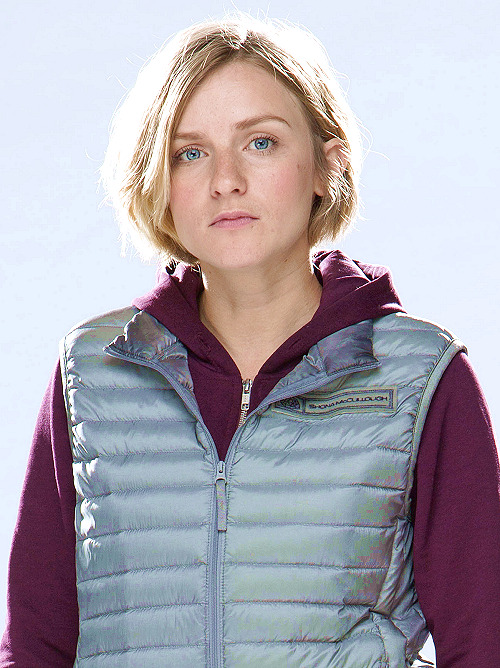
All of the cast are excellent here, though, from Natalie Gumede's no-nonsense head scientist Ashley to Maureen Beattle as the pragmatic elder Bellows. It's lovely to see Michael Troughton finally appear in his father's show, after many appearances by brother David, even if his character does get the short end of the stick when it comes to brains and decorum. (Now, let's get Sean Pertwee in series nine, yeah?) Samuel Anderson provides a truly beautiful coda for Danny, far better and more moving than the misjudged angel moment in Death in Heaven. It is, however, Faye Marsay who steals the episode. Shona is cute, silly and not particularly competent, and feels so real that she absolutely grounds this fantasy-based episode and all that it features. Having spent the bulk of the episode making us adore her, and desperately trying to get the other characters to like her, she wakes up in a scene of heartbreaking loneliness. It's the scene that best embodies that bittersweet quality of Christmas and it's the one that has stuck with me long after the Dream Crabs have lost their creepiness. Judging by the reaction on the interwebs, there hasn't been such a call for a character to be raised to companion status since Carey Mulligan appeared as Sally Sparrow. Let's hope we see her again. (IMDB also informs me that it's Marsay's birthday on the 30th of December Happy birthday Faye!)


As of yet, though, there's no vacancy for a companion. I'm of two minds concerning Clara's staying on. Clara's character has improved enormously over the last year, now that she is free of the “impossible girl” baggage, and this in turn has allowed Jenna Coleman to improve her performance. She has been genuinely excellent throughout Series Eight, and I'm looking forward to seeing how Clara and the Doctor develop their relationship in the ninth series. On the other hand, he has been part of the show for a long time now, and there's a real risk of it becoming stale. Especially considering that Clara has been living her own life this year, she would perhaps work better as a Martha-style occasional companion. Last Christmas boasts some of her best performance, particularly her finally bidding fairwell to Danny. It is, however, that beautiful scene with the Doctor that shows both Coleman and Capaldi at their best. The Doctor finally returning to Clara, sixty years too late, not even registering her age but helping her celebrate on last Christmas... it's truly beautiful, and perfectly reflects the inverse scene in The Time of the Doctor, right down to the Doctor helping Clara pull a cracker. It works so perfectly that it's hard to imagine that Clara's eventual departure will work anywhere near as well. In fact, the episode really should have ended there, however well the final rug-pull works. Indeed, I think it's pretty clear that in the initial treatment this was how it ended, bookmarking Clara's story, but after Coleman's last minute decision to stay a rewrite was necessitated.


Despite this, Last Christmas is one of the best Christmas specials Doctor Who has produced, and also a damned fine episode of the series as a whole. It may not be the end that Clara deserves, but it could be a great new beginning.


Friday, 31 October 2014

A Legend Lost

It was a bit bizarre yesterday, with Burgess Hill hitting the national and then global news twice. In very sad news, John Moore, the Coca-Cola Santa Claus, has died.

For better or worse, the Coke adverts are part of Christmas for a lot of us. It's a bit like hearing Slade for the first time in the year - once you've seen the Christmas Coke ad, you know it's properly Christmas time. The thing is, I had no idea that the legendary Coca Cola Santa, who appeared in many of those adverts over the years, lived in my town. I must have seen him in his his other jobs as a barman and driver. I may even have seen him as Father Christmas in his local appearances. And yet I never knew such a widely seen face made his home here.

The gods have seen fit to grant a pleasant day for the funeral. My thoughts to his family and friends.

Friday, 27 December 2013

WHO REVIEW: 2013 Christmas Special: The Time of the Doctor


The ninth Christmas special, the eight hundredth broadcast episode, the end of the eleventh Doctor and the finale of a four-year-long twisty-turny war through time. New characters, old characters, a multitude of monsters, the fallout from the anniversary special, the resurgence of the Time War and a regeneration. Oh, and Christmas dinner. Steven Moffat chose to pack a hell of a lot into one hour's worth of festive television, and while it was a brave attempt, the ultimate result was, perhaps inevitably, disappointing.


The beginning of The Time of the Doctor is very wonky indeed. The most ineffectual Daleks ever, intercut with Clara's Christmas dinner preparations, before the episode started proper. Then it moves onto some very misjudged comedy involving a naked Doctor and holographic clothes, a joke which outstayed its welcome and wasn't actually very funny in the first place. Fluffing the beginning so badly was a very poor move, with the episode having to play catch-up for its remaining runtime. The first half of the episode is oddly paced – not necessarily a bad thing, but with only an hour's runtime to cover so much, the story sagged in the middle. Somehow, a ground war between Daleks, Silents, Cybermen and Sontarans managed to come across as a little boring, which is no mean feat.


Which is a pity, because there is so much to enjoy here. All of the best moments of the episode are character beats, with more attention being paid to them than to the pyrotechnics and plot developments. This, again, is not bad thing, particularly when the majority of the characters are so well-explored and well-acted. But this is the Christmas episode, and it requires a certain amount of bangs and flashes to keep dozy post-dinner viewers engaged. There's a tricky balance to be met, and this production missed it.


While it's a nice touch to get back to ordinary, contemporary life for a moment after all the cosmic angst we've seen recently, the sequences with Clara's family could have been cut completely. What a miserable bunch. With the exception of her gran, played by Benidorm's wonderful Sheila Reid, I'd happily never see that lot again.


On the other hand, we have Trenzalore and the Papal Mainframe, a curious mix of ordinary people and a cosmic convent. Orla Brady deserves particular praise in this episode. Talented, gorgeous, and pretty much wasted on a character who turns into little more than a River Song stand-in, Brady makes us care for a character who we have no reason to care for. There's no indication that the Doctor and Tasha Lem have any connection – we're just told that they do. She's dropped into the story with a tag saying “Old mysterious friend of the Doctor.” Considering how many elements of the past were drawn on, why not just give us a character we actually know the Doctor has a past with, someone we've seen before? As it is, it's entirely down to Brady that Tasha is a successful character at all. And really, a sexy space nun with a bed in the shape of an altar? Moffat, go and have a wank and come back to the script with a clear head.


I love Christmas Town though, and the whole set-up. It's the scenes set in Christmas that really work. From the beginning, when we meet the cheerful couple (good to see Only Fools' Tessa Peake-Jones again at Christmas), the quaint human colony where lying is impossible is a wonderful setting. God knows how a village in a perpetual winter, with no crops or livestock apparent, on a planet surrounded by an impenetrable force field, actually survives, but at least it provides a pleasant backdrop. It's the sort of place one can imagine the Doctor actually settling down; somewhere nice and simple, that reaffirms his faith in humanity, but still has a constant threat for him to fight.


The best moments are the quiet ones between Clara and the Doctor, with both Matt Smith and Jenna Coleman shining throughout the episode. Smith, in particular, is exceptionally good. It's a wonderful idea to have the youngest of the Doctor's grow old defending one group of people, actually settling into a home. Smith has always focused on the old man nature of the Doctor, to contrast his youthful appearance, and here, bolstered by some effective ageing make-up, he steals the show as an aged Doctor. It's a completely believable performance. The scenes with the people of Christmas, displaying Smith's incredible way with children, are beautiful, but it's the quiet moments with Clara that are most effective. Clara gets the Rose Tyler treatment, tricked into going home in the TARDIS, and gets back to the Doctor with much less snivveling and without ripping the Vortex apart.


The most moving scene of the episode is not the regeneration, but Handles' death scene. Only the Doctor could rip the head off a Cyberman and become friends with it. Handles has been praised as the new K-9, but he's rather better, with Kayvan Novak managing to sound endearing and monotone at the same time. The poor, battered piece of kit, the one constant friend the Doctor has had throughout his long, long life on Trenzalore, manages to be the most emotionally engaging element of the episode.


So, the big plot: four years worth of mystery and confusion regarding the Silence, Madame Kovarian and the cracks in time are wrapped up in a couple of sentences, clearing the decks in the most undramatic and unsatisfying way imaginable. The quest for the Time Lords is brought to a head with astonishing haste, the Doctor spending centuries protecting them on the other side of their time rift while they continually ask his name as confirmation of his identity. It's powerfully effective stuff, even if it doesn't hold up to much scrutiny. Again, it's plausible to imagine the Doctor sticking around for this. After all this time, what he really wants is a home. Unfortunately, after the triumphant bombast of The Day of the Doctor, this episode was always going to struggle to make an impact, and following it up directly like this doesn't help its case.


And, after all of that, with the Doctor on his last legs, Clara whispers to the Time Lords, who promptly change their centuries' long game plan and bugger off, giving the Doctor a full new regeneration cycle as a Christmas present. Quite why the eleventh Doctor has been bumped up to the thirteenth version is anyone's guess. While it makes perfect sense, it is entirely of Moffat's making. He introduced the missing Doctor played by John Hurt, making Smith the twelfth version, and he could easily have ignored the middle-regeneration taken by David Tennant. After all, it has not, until now, been established that it “counted” as a full regen. Instead, Moffat hinges the plot on it. (I did love the Doctor confessing to “vanity issues at the time.”) I can only imagine that, with the thirteen-lives limit approaching, Moffat decided that it was best if he sorted it out while he was still in charge, apparently not trusting his successor to do so, and engineered the situation. As it is, it does add an extra level of jeopardy to proceedings, even though we know, as viewers, that the Doctor will continue on.


Finally, the Doctor gets a zap of twinkly orange stuff, and begins to regenerate. The regenerations have been becoming more violent each time, and now the Doctor is able to wipe out a Dalek squadron and cause a small avalanche with his artron blasts. It's a satisfying moment, but the overall solution to the problem is disappointingly obvious. He's out of lives, so the Time Lords give him some more. Anyone could have come up with that solution.


Smith's final moments work well, though. The chemistry between him and Coleman has never been better than in this final scene. While Clara is supremely au fait with the concept of regeneration, and has met several of the Doctors now (or all of them, if she recalls her trip through his timeline), it remains an abstract idea. It'll be interesting to see how she copes with the man she adores being permanently replaced with an older gent, with potentially a very different outlook. Initially, I thought the ageing of the Doctor would explain why his next self is so much older; an ancient Smith becoming a relatively young Capaldi. In the event, Smith's Doctor gets a “reset” before he finally changes, albeit affirming that the process cannot be halted. The slow goodbye while the new cycle beds in is well written and played, moving and sentimental but not saccharine. Smith's Doctor accepts his fate with grace, unlike the histrionics of his predecessor (but then, he's had centuries in this form, rather than a few frantic years). The cameo by Karen Gillan is no surprise. It's traditional to have a flashback of past companions in some way before a regeneration, and with Amy being the eleventh Doctor's only major follower other than Clara, it is entirely fitting.


And then, suddenly, he's changed. With all the flare of a particularly big sneeze, the Doctor flinches and changes. It's hard to say what Capaldi will be like based on his first brief moments. The first lines of a Doctor are rarely anything to get excited about. For now, based on the very Smith-esque lines (that had already been released, so they weren't even a surprise), the Doctor doesn't seem much changed, but it really is no indication as to how Capaldi will play the part. We'll have to wait till the autumn to find out.