Showing posts with label ghost stories. Show all posts

Monday, 28 October 2024

Hallowe'en at Television Heaven

It's spooky season, so it's time to review some classic chillers (because the rest of the year I don't watch monsters and ghosts and things, not at all).

Pop along to Television Heaven for new reviews on the ingenious horror spoof Garth Marenghi's Darkplace, the most terrifying part of which is that it's somehow now twenty years old; the Frankensteinian hammy horror of 1970s Doctor Who serial The Brain of Morbius; and, the Hammer movie Quatermass and the Pit (aka Five Million Years to Earth), featuring perhaps the very best version of the good Professor. 

Plus, Mark Turner-Box reviews the 1979 miniseries of Stephen King's Salem's Lot, while Malcolm Alexander examines the more recent horror series The Enfield Haunting.

Enjoy an array of Martians, monsters, vampires, ghosts, apemen and invasive broccoli.

Tuesday, 11 January 2022

REVIEW: A Christmas Carol (Alexandra Palace 2021-2)


A Christmas Carol is one of my absolute favourite stories of all time, and has had dozens, maybe hundreds of adaptations for audio, stage and screen over the centuries. Each version makes its own changes, some more faithful than others, and each focuses on a different aspect of the original.

One aspect that rarely gets enough focus, in my opinion, is the horror of the story. A Christmas Carol is, after all, first and foremost a ghost story, and Scrooge is terrified for much of it. Thankfully, if unsurprisingly, Mark Gatiss is of the same opinion, and his new stage adaptation of the classic ramps up the spookiness.

Suz and I managed to see this almost as late as we possibly could. First it was delayed by a year due to Covid, but had it not been we might not have had the chance to see it at all. We received the tickets as a Christmas gift from my dad but were away most of the festive season, we couldn't see it until January 8th, the last Saturday of its run at Alexandra Palace and the penultimate performance. Fortunately, it was a Christmassy enough production to get us feeling festive all over again.

Ally Pally is the perfect place to hold the play. The restored theatre in the BBC's old flagship building is a wonderful venue for a Victorian play, suitably atmospheric. We were also lucky to get front row stalls, and although our seats were actually missing when we arrived, they were some of the best in the house once they were returned to their correct location. It's not surprising to see Gatiss tackle A Christmas Carol, after multiple adaptations of Victorian classics including Sherlock and Dracula, sundry Christmas ghost stories for the BBC and, of course, one of my favourite episodes of modern Doctor Who, “The Unquiet Dead,” which saw Dickens himself beset by extraterrestrial ghosts on Christmas Eve. I wouldn't be at all surpised to learn that he chose the venue specifically as well, after he had the Doctor scale the transmission tower at Ally Pally in the following season's “The Idiot's Lantern.” But I digress.

Anyone else adapting the story and starring in it would cast themselves as Scrooge himself, but Gatiss instead plays Jacob Marley, who was, as we all know, dead to begin with. Except in this version he isn't, in fact, thanks to a prologue scene in which Scrooge and Marley enjoy a jolly game of humbug one-up-manship, one Christmas Eve before Marley conks it at his desk. The book's biting sense of humour is present throughout, not least Scrooge quickly extinguishing Marley's candle noting “Waste not, want not.”

Nicholas Farrell of The Crown and Chariots of Fire makes an excellent Scrooge, decked out in ragged and archaic dress even by the standards of 1843. He's as cruel and miserly as they come to begin with, but there's always an undercurrent of humour that makes his gentler, earlier self, and his new beginnings, believably hidden beneath. It's not long before the phantoms make themselves known, with Gatiss manifesting a flamboyant and undulating Marley to deliver upon Scrooge his warning. Elements of the story that are so often often forgotten are included in this production, including the parade of spirits that sweep Marley away. The various ghosts of the production are given shape by a brilliant mixture of techniques: holography, puppetry, lighting trick and remotely-operated props. As is the tradition, most of the actors take on multiple roles, with Gatiss appearing as sundry grotesques including Scrooge's schoolmaster and even the Ghost of Christmas Future, revealed as Marley once more beneath the cowl.

Before this, of course, we get the two other main festive spirits. Christmas Past, so often visualised as a young girl or occasionally an old man, is in the original story a fluid, complex being manifesting at all ages and genders simultaneously. Such a good move then, to cast the charismatic non-binary actor Jo Eaton-Kent (recently seen in The Watch and probably the best thing in it), as comfortable playing cockney butchers and sailors as they are a genderless spirit. Towering over Scrooge and as threatening as they are angelic, the Ghost of Christmas Past dominates their scenes even as we see Scrooge's past brought to life vividly. The set, spartan but beautifully crafted, shifts to accommodate the changing times and places.

The Ghost of Christmas Present is portrayed by Joe Shire, who you may recognise from Witness for the Prosecution or heard in a number of Big Finish's audioplays. For integrity's sake I have to say, I do know Joe a little, and so was particularly looking forward to seeing him in the role. He is perfect as Christmas Present, balancing the ghost's jolly persona with his underlying anger and judgment. Another rarely included aspect, the lesser ghosts of Want and Ignorance, are manifested under his robe, by way of two creepy puppets operated by the youngest members of the cast. As well as the ghost, Joe plays the ebulliant Fezziwig, leading a raucous festive dance, along with various other parts of great range.

As perfectly realised as the ghosts are, the whole cast is excellent and make every scene captivating. Edward Harrison of Wolf Hall is a charming Bob Cratchit, with Sarah Ridgeway almost stealing the scene as Mrs Cratchit among other roles. James Beckway is a forthright and cheerful nephew Fred, as well as portraying the younger Scrooge, the up-and-coming businessman. Zak Ford-Williams plays several roles as well, including Tiny Tim and the younger Marley, impressively channelling the optimism of the former and the grasping greed of the latter with equal ease. The great Christopher Godwin (Amadeus) acts as narrator, bringing essential parts of Dickens' prose to life, and the eventual reveal of his actual identity is a beautiful touch.


Heartwarming and chilling in equal measure, this was one of the best adaptations of the story I have been fortunate enough to see.

Sunday, 19 January 2020

Victorian Nightmares

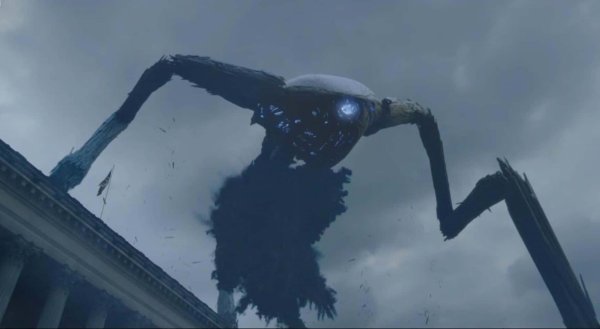
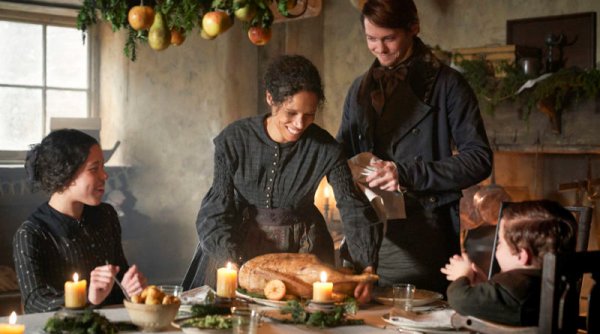
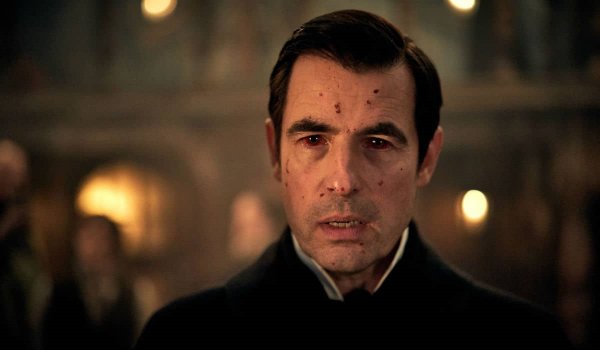
From late to 2019 to the beginning of 2020, the BBC aired three high budget, prestige television adaptations of classics of Victorian literature: A Christmas Carol, The War of the Worlds and Dracula. I had... mixed opinions on all three of them.

You can read my reviews of the Victorian telefantasies at Television Heaven by following these links:


Monday, 18 December 2017

REVIEW: A Christmas Carol - Jack Thorne, The Old Vic

I adore A Christmas Carol. I read it pretty much every year. And so I was thrilled to have the opportunity to see the latest stage version at the The Old Vic in London, scripted by Jack Thorne and starring Rhys Ifans as Ebenezer Scrooge. It was, in a word, wonderful.

The stage in central to the theatre, constructed from cash boxes beneath Victorian street lanterns. The stage is simplistic but ingeniously operated, the world of the play made up from doorframes, sound effects and faux snow. The frontmost rows of the audience are practically on the stage, and by the boisterous, glorious finale, Scrooge is running amongst the aisles, the entire theatre brought into the production.

The best adaptations of classical material are frequently those that take the greatest liberties with the source text, and this newest version of A Christmas Carol is a good example. While it is true to the spirit of the novel (pardon the pun), it has been heavily rewritten, with only the best remembered and most essential lines retained. The events that are visited through Scrooge's past, present and future vary significantly from what we see in the novel, although there are also elements retained that are usually forgotten. The strength of the production lies not only in the new script, but in how vividly and powerfully it is brought to life.


Ifans is astonishingly good as Scrooge, taking his place as one of the very best. His Scrooge is hairy, unkempt, clad in threadbare robes and physically aged, but full of life. It is a very bitter sort of life, though, making him the loudest, coursest, most intimidating version of Scrooge I've seen, shouting, bullying and spitting his way through the performance. (Really, I felt for those people in the front row.) As he is taken back through time, we see him as a young boy (played well by Jamie Cameron), but soon Ifans steps into the role, straightening up and taking on a youthful vigour as Scrooge relives the essential moments of his life.

Most adaptations give greater significance to Belle than the novel does, making her a major factor in his callous outlook, rather than merely a victim of it, and this version in particular follows her further in her life than is usual. In this version, Belle is the daughter of Fezziwig, streamlining the backstory somewhat, and is charmingly played by Erin Doherty. A major change from the usual storyline is the attention given to Scrooge's home life as a boy and young man, giving him a hypocritical hatred of his penny-pinching father (Alex Gaumond, who also portrays a desolate and distraught Marley). These scenes also give a lot of time to Scrooge's sister, Little Fan, later mother of his nephew Fred, who is portrayed with great spirit and sympathy by Melissa Allan.

Almost every member of the cast takes at least two roles, most of them taking on duties as group narrators, and several of them taking on two major roles in the story. Particularly good are John Dagliesh as a likeable, open-faced Bob Cratchit, Alastair Parker as an especially ebullient Fezziwig, and Golda Rosheuvel as Mrs. Fezziwig and the Ghost of Christmas Present.

It's always fascinating to see how the three Ghosts of Christmas will be portrayed, especially on stage when special effects and visual trickery are limited. Here, unusually, we have an all-female role call of festive phantoms (Marley notwithstanding), who appear as part of the same class of spirit, rather than the strange assembly we have described in the novel. Initially, the Ghost of Christmas Future is visualised by the entire extended cast, veiled in black, swarming Scrooge, before a single character from his past is brought back to stand for the ghost in one of the most effective changes to the story.

Tiny Tim is played by four different children, each one taking turns of different performances. When I saw it, Grace Fincham played the youngest Cratchit. She gave an absolutely beautiful performance that put me to tears. Even as Tim's fate - far more immediately portrayed here than usual - affects Scrooge terribly, he remains defiant in the face of the ghosts for a long time. Perhaps the most effective change is to Scrooge's funeral, where, instead of being empty, sees people from his life attend to read eulogies and declare that they do indeed hold love for him, in spite of his attempts to push them away. I'm tempted to say it improves upon the original in this regard, making a powerful and positive effect on Scrooge's attitude rather than frightening him with something negative. When it comes to the climactic finale, Scrooge really is a changed man, Ifans taking the aggressive energy from before and channelling it into a joyful, exuberent, Doctorish performance. The entire audience is invited to his "invasion" of the Cratchits' home, before everything quietens down for the final, beautiful moments. 

Tuesday, 29 August 2017

REVIEW: Grave Warnings

Ed. Bob Furnell, Robert Mammone and Jez Strickley


Pencil Tip Publishing is one of the newer small presses, and while it is so far known best for TV tie-in works, it is already expanding in a new direction: original horror fiction.

Grave Warnings is a compact, evocative book of horror stories, with five authors penning short, punchy tales of terror. Although the title and cover to the book would suggest that this is a collection of ghost stories, it's more varied than that. Although ghost stories do feature, the five tales cover an impressive array of styles and genres between them. If there is one thing that links the stories, it is that the true horror is often not at the hand of something supernatural, but is very human in origin.

The collection opens with “Deceased Estate” by Sarah Parry, a very effective story that sets the grim tone for the book. Parry cleverly shifts the storytelling from light and conversational to desperate and horrific, creating a chilling tale with a hint of a modern Lovecraftian vibe. In spite of the inhuman monstrosities it hints at, “Deceased Estate” is a warning on the perils of unchecked greed.

The theme of avarice continues with Craig Charlesworth's “The Dumb Show,” the most traditional ghost story in the collection. A fun pastiche of Victorian-era short stories, Charlesworth's story is a penny dreadful that sees money-hungry men try to use a haunting to their own financial advantage, even as one tries, or claims to try, to turn over a new leaf. The biting final scene proves that it is the living that present the most to fear.

The Specimen” by Jodie van de Wetering is a brief interlude between the heavier stories, and introduces a man whose unwholesome pastime leads to his becoming truly lost to nature. It's the shortest but most immediately potent story, simply and effectively told.

Hannah G. Parry presents “The Citizen,” an unassuming title for a disquieting and powerful story. Although it is a ghost story, “The Citizen” inverts the usual conception of a haunting in order to make her protagonist question his choices. It's an unsettling tale of cowardice and brutality, emotions so easily entwined, set against the very real, very human horror of revolutionary France, when Paris was, not for nothing, known as the Land of Fear. This story is my personal highlight of the book.

Finally, “Vacancy” by Hamish Crawford brings us back to seemingly ordinary life, with a story that makes us question the protagonist's sanity as he relates the story of how his life changed when he took in a new lodger. With only a hint at something supernatural, “Vacancy” draws on some of the same concerns as “The Citizen”: that we, as men, can commit acts we never thought we were capable of.

Grave Warnings is a a pleasantly unsettling set of stories, and I look forward to more.


Purchase as copy here.