Showing posts with label Fourth Doctor. Show all posts

Friday, 11 April 2025

Television Heaven roundup

It's been quiet here of late, but I have been a busy person elsewhere, including writing up a bunch of stuff for Television Heaven.

Having discovered the truly remarkable Severance just before the second season began, thereby rather deftly missing the three-year hiatus by being slow off the mark, I've given both seasons a spoiler-lite review.

Twenty years after it aired, and with a new, fifteenth series just round the corner, I've written an in-depth, episode-by-episode review of Series One of Doctor Who, starring Christopher Eccleston and Billie Piper.

We've also got some classic Doctor Who with the bizarre Sylvester McCoy serial Paradise Towers, Chris Boucher's three Tom Baker stories The Face of Evil, The Robots of Death and Image of the Fendahl, and the Jon Pertwee classic Doctor Who and the Silurians.

I've gone even more retro with my old favourite Mike & Angelo, that CITV classic that might just have been inspired by Doctor Who (well, let's be honest, it was.) Both incarnations of Angelo get their moment in this overview.

All three of Sky One's adaptations of Terry Pratchett's Discworld novels now have reviews, including the Christmas-themed Hogfather, the first adventure The Colour of Magic, and the superb Going Postal.

And, of course, there's more to come.

Monday, 28 October 2024

Hallowe'en at Television Heaven

It's spooky season, so it's time to review some classic chillers (because the rest of the year I don't watch monsters and ghosts and things, not at all).

Pop along to Television Heaven for new reviews on the ingenious horror spoof Garth Marenghi's Darkplace, the most terrifying part of which is that it's somehow now twenty years old; the Frankensteinian hammy horror of 1970s Doctor Who serial The Brain of Morbius; and, the Hammer movie Quatermass and the Pit (aka Five Million Years to Earth), featuring perhaps the very best version of the good Professor. 

Plus, Mark Turner-Box reviews the 1979 miniseries of Stephen King's Salem's Lot, while Malcolm Alexander examines the more recent horror series The Enfield Haunting.

Enjoy an array of Martians, monsters, vampires, ghosts, apemen and invasive broccoli.

Friday, 26 July 2024

Television Heaven update

Evening all,

I've a bunch more reviews over at Television Heaven this week.

First, we have the adventures of sleuth, magician technician and all-round know-it-all Jonathan Creek.

Then we join Michael Kitchen as Hastings' finest in WWII crime drama Foyle's War.

Then, having been just announced for a relaunch, I revisit the groundbreaking prehistoric documentary Walking with Dinosaurs.

You may also have missed some classic Tom Baker Doctor Who reviews. Gothic classic Pyramids of Mars introduced the terrible Sutekh, who returned to plague the Doctor in the latest series. A few years later, the Doctor was recruited by another godlike entity to search for the cosmic Key to Time, a season-long quest I've divided into part one (featuring The Ribos Operation, The Pirate Planet and The Stones of Blood) and part two (featuring The Androids of Tara, The Power of Kroll and The Armageddon Factor).

That's it for the moment, while I knuckle down to some fiction.

Tuesday, 27 June 2023

WHO REVIEW: Once and Future 1 & 2

 There's something a little underwhelming about Big Finish's latest multi-instalment extravaganza, put together to mark Doctor Who's sixtieth anniversary. A story involving the Doctor in multiple incarnations, meeting friends and enemies in unexpected combinations sonds like the very thing to mark the occasion, but it's also exactly what Big Finish has been churning out in quantity for the last few years. With the company now given over to almost pure nostalgia, this is business as usual. I bought the first two releases almost out of a sense of obligation, rather than expecting anything new.

Admittedly, the idea of having the Doctor pushed back through his lives in a catastrophic "degeneration" is a fun one, and a good way of having multiple Doctors involved without just having them taken out of time or just bump into each other as they usually do. For real impact, though, this should be the current Doctor - indeed, setting this right after "The Power of the Doctor," with the Doctor regenerating back into David Tennant and then through all their past lives would tie in beautifully - but BF aren't allowed to do that. Instead, this is during the Time War, and we're not even clear on which Doctor has been injured. (It seems that it's probably the Eighth, going by the TARDIS sound effects and McGann's notable absence, but this isn't certain.)

It's also one of those conceits that would work better on screen than, in which case it would look essentially the same as the mysterious guardians of the Doctor's subconscious in the aforementioned "Power." On audio, there's just about enough variation between the different actors' voices for the incarnations to differentiate, with only Tom Baker and McCoy really distinctive enough from a single line to truly stand out. I also can't help but wonder: what's he wearing? Are his clothes changing too, or is he repeatedly regenerating while wearing the same, now doubt rather careworn, outfit?

PAST LIVES


First up is this episode from Robert Valentine, which does precisely what you'd expect it to. The Doctor settles on the form of Tom Baker, arriving back on Earth on the trail of the Monk, who he's sure has something to do with all this. (What the Doctor can and cannot remember seems to change per scene in this series.) For his own benefit, the Monk has abducted Sarah Jane, straight from her mistaken drop-off point in Glasgow, mere moments after The Hand of Fear. This is a nice touch, albeit one that plays merry hell with established contintuity, but that doesn't seem to be much of a priority with this series, and rightly so.

Rufus Hound is entertaining as always as the Monk, and Sadie Miller continues to do a good job of filling her mother's shoes as Sarah Jane. UNIT get involved, with both Jenna Redgrave and Ingrid Oliver returning as Kate Stewart and Osgood. While it's fun to hear this collection of characters together, there's really nothing else to it. A group of the most generic aliens you could hope to avoid turn up and cause complications, and the entire thing unfolds predictably. "Past Lives" just about works as the launch to a series, leaving us with more questions than answers, but barely works as an adventure in its own right,

THE ARTIST AT THE END OF TIME


The second episode, written by the reliable James Goss, is far better, giving us an original concept as the basis for the story. In the twilight days of the universe, a high-end art gallery displays works cribbed from civilisations in their final moments. Only it seems to be that, quite impossibly, they're all by the same artist. The Doctor, settling on his cricketiest form, arrives looking for a Time Lord so he can sample some DNA (buy them a drink first), and his clone-ish daughter Jenny arrives on the trail of the mystery of the artworks.

There are two big draws for this release. One is having real-life father and daughter Peter Davison and Georgia Tennant playing fictitious father and daughter together. Unfortunately, Big Finish already did that, ten years ago, for their fiftieth anniversary release. As you might expect, the two of them have wonderful chemistry together, and Davison's perfected older, grumpier version of his Doctor works well with the fast-witted, enthusiastic Jenny. Yet it again feels so predictable, bringing them together on the basis that, well, that's what we do for the anniversary, right?

The other draw is the inclusion of the Curator, played here by Colin Baker, giving us not one, but two, classic Who actors in the role. Given that the whole point of this series is that the Doctor is jumpig between faces, having Baker the Second in here as well seems a bit superfluous. Fortunately, the story makes it worthwhile, giving us a truly intriguing and affecting tale of the Doctor's far, far off future. This is seemingly a long way beyond the days when he was even calling himself Curator, now retired at the end of time and painting planets as they are about to bite the dust. Baker gives a lovely, melancholy performance that's similar to, but distinct from, the Sixth Doctor.

Again, there are oddities to ponder. I'm fine with the idea that the Curator varies his appearance over time, either by regenerating again or simply picking a face for the week, but shouldn't the Doctor recognise that face? Given that this is seemingly the Eighth (or later) Doctor, just wearing the face of the Fifth, isn't he surprised to meet someone wearing the face of the Sixth? Also befuddling is that the Doctor is now fully aware of his daughter's existence, again bringing into question when this takes place for him, or just how memory is supposed to work in these stories.

Quibbles aside, though, "The Artist at the End of Time" is a strong story, giving apocalyptic stakes in the most genteel, personal way. On this basis, I think I'll give the third episode a try, but whether I can be persuaded to stay for the whole story is another question.

Sunday, 7 November 2021

Spooky Season

This October and into early November I cranked up the spookiness and wrote a bunch of reviews and a little fiction to celebrate Hallowe'en and the drawing in of the winter nights.

I've submitted a new, very short story to Vocal's Foggy Waters competition. You can read "Ginny" here. I also reposted my old story "Don't Drink the Water" as part of the contest since it coincidentally fit the criteria. 

Review-wise, I've written a bunch of new pieces for Television Heaven. As well as my regular installment of The X-Files (now onto the underrated eighth season) I've got Nigel Kneale's Beasts, What We Do in the Shadows (already a little out-of-date since season three has just been released in the UK) and children's classic The Trap Door. Plus we have two vampiric 1980s Doctor Who serials, State of Decay and The Curse of Fenric.

Please go an check them out, and I hope you enjoy. Spooky season isn't over, of course, as the new Ghostbusters film is out very soon and this has led to a surge in psychokinetic activity, so look out for more 'busters stuff soon too. Plus more Buffy, Doctor Who and a little bit of Trek.

Friday, 23 April 2021

WHO REVIEW ROUND-UP: Return of the Cybermen

This is the first in, I think, the sixth run of Lost Stories, which began over ten years ago and petered out a few years later when it looked like Big Finish had completely mined the resource of undeveloped Doctor Who stories. Then, the range made an unexpecter return with a pair of stories two years ago, and it looks like there are plenty more scripts to be unearthed from the depths of the Beeb's filing cabinets.

Return of the Cybermen is the original version of what would become Revenge of the Cybermen (Jedi return, but Cybermen can wreak revenge, apparently), which closed out season twelve in 1975. This is the script written by Gerry Davis, co-creator of the original Cybermen, adapted for the new format by John Dorney. Refreshingly, it's presented as what it is: an alternative final story for that season, with no attempt to fit it into existing continuity. There was, apparently, a plan to do this, with a timey-wimey twist at the end, but it was ultimately decided not to go with this, which is a relief. The earlier Lost Stories recreation of "Season 27" misguidedly rewrote original storylines to try to fit in with where Big Finish had already taken the characters, rather than giving us the original ideas as an alternative continuation. I prefer this: a look sideways at what might have been.

The big draw here is having the Fourth Doctor reunited with Sarah Jane and Harry for a new adventure, something which seemed very unlikely to ever happen. Ian Marter, of course, sadly died in 1986, aged only 42, while we've just had the tenth anniversary of Lis Sladen's death. While Sladen reprised the role of Sarah Jane Smith for Big Finish in her own series, before doing the same for the BBC, by the time Tom Baker finally decided to join BF she was too ill to continue and died soon after. Yet we now have a new season twelve TARDIS team, with Sladen's daughter Sadie Miller taking on her role, and BF stalwart Christopher Naylor playing Harry Sullivan. 

It's really rather a beautiful recreation of this classic team. While it was never going to truly recreate the combination of Baker, Sladen and Marter, it comes remarkably close. Miller sounds similar to her mother, of course, but occasionally, just occasionally, she sounds exactly like her, and it's spooky. Naylor, on the other hand, does a fine impression of Marter that never sounds like a send-up. Both are fine audio actors and do their forebears proud. Tom Baker, of course, is on fine form as always as the Doctor. He never seems quite as enthused with these straighter sci-fi stories as with the sillier ones, but he never fails to give a spellbinding performance. 

Not that Return of the Cybermen isn't silly. It's marginally more sensible than the version that reached the screen, but not by much. It still relies on the conceit that the Cybermen, having developed a terrible weakness to gold, would elect to go straight for an asteroid covered in the stuff, and that's just the start of their illogical actions. Still, this version, which has no Vogans on their planet of gold, is a bit more reasonable, although the asteroid we get, populated by what sounds to be a lost colony of South Africans, isn't exactly the most enticing setting for the climactic sequences.

Events on the Nerva Beacon are rather more gripping, with some excellent performances by the guest cast. I particularly enjoyed Nicholas Asbury's gruff interpretation of the station commander, a real no-nonsense spacedog. The music and audio effects provide a very 1960s feel to events. There are a lot of recycled elements from Davis's earlier scripts, too, such as the Doctor's reliance on his 500-year-diary (straight from The Tomb of the Cybermen) and the Cybermen's extreme vulnerability to radiation (The Tenth Planet). It would have been derivative in1975, but they would have gotten away with it then, while an audio presented to fans who've watched and heard this stuff over and over it seems repetitive. Still, at least there's consistency, even if it does hammer home just how many weakness the Cybermen have. 

I don't think Return of the Cybermen will top many best-of lists for BF this year, but it's a pretty solid, enjoyable adventure made special by the performances of the lead cast. In any case, it's a better, more coherent story than the one that replaced it, an let's be honest, even that old nonsense is a lot of fun.

Friday, 11 December 2020

WHO REVIEW CATCH-UP: Out of Time


Out of Time is the first in a trilogy of audios from Big Finish, which are each going to be released a year apart - pretty restrained for the company, who normally chuck out a major box set every couple of months when there's something significant to shout about. Each one features the Tenth Doctor teaming up with a classic series incarnation, and a fan favourite monster. Next year we'll have The Gates of Hell with David Tennant and his father-in-law against the Cybermen, followed by Wink in 2022 with Colin Baker and the Weeping Angels. 

First though is Out of Time itself, which sees Tennant team up with Fourth Doctor Tom Baker. This is, of course, a big thing, with the two most popular Doctors by any reasonable measure joining together for an adventure. This doesn't, however, automatically mean it's going to be any good, although you'd at least expect it to be pretty entertaining. Which, in all fairness, it is. It's a slight story, more of a runaround than anything, but then again, does a release like this need to be anything else?

The Tenth Doctor pops in for a visit at the Cathedral of Contemplation, a huge, mysterious structure outside of time where anyone from any era can attend for solace. He's in a mood because he's avoiding his impending regeneration, and has gone there on his big holiday before facing The End of Time. However, the Fourth Doctor is already there, having picked up a temporary travelling companion in the form of Private Jora (Kathryn Drysdale), a young deserter from the 26th century.

There's some enjoyable farce as the Tenth Doctor avoids (poorly) letting on who he is to his earlier self, while secretly hoping he'll work it out. It doesn't take Four too long to get the measure of him, and he pretty quickly squashes Ten's sulk about the future. Four's meeting himself in a new form, and for him, it's confirmation that he'll survive, whereas for Ten regeneration is death. 

However, Jora's space commander dad turns up looking for her, followed by a phalanx of Daleks, leading to the two Doctors working together to run rings around them as they plan to use the temporal powers of the Cathedral to invade the Earth and win the war. The Doctors' eventual victory is pretty cunning. 

While there's nothing really unusual or outstanding here, it's a pretty fun little adventure, livened up by some wonderful chemistry between two beloved Doctors who, for the most part, keep on the right side of self-parody while doing a bit of a best-of performance. And after all, isn't that why we're here anyway?

Best Lines:

 "More like apres-deva-vu: knowing what's going to happen but only after it does. Maybe it's always like this when I run into them... well, I wouldn't remember."

"Old school? I prefer to think of myself as classic!"

Placement:

For the Fourth Doctor, in the period between The Deadly Assassin and The Face of Evil. For the Tenth Doctor, during the gap between The Waters of Mars and The End of Time, but presumably after the Time Lord Victorious period. For the Daleks, the 26th century, in the Second Dalek War that followed Frontier in Space - except that they're Time War Daleks, so presumably travelling back along their own timeline, which ties into the events of the novel Prisoner of the Daleks.

Monday, 23 November 2020

The Very Best of Doctor Who


 It's November the 23rd, 2020. 57 years ago today, Doctor Who made it's first appearance on BBC1. You have to watch Doctor Who today, it’s the law. 

So it’s appropriate that today I have a new piece on Television Heaven, about that greatest of Doctor Who serial, City of Death

“Exquisite. Absolutely exquisite.”


Monday, 22 June 2020

WHO REVIEW: 'Scratchman' by Tom Baker


This was one of the great unknowns of Doctor Who. An original Doctor Who movie for the 1970s, Doctor Who Meets Scratchman (occasionally Doctor Who and the Big Game, which is a less exciting title) was a script written by Tom Baker and Ian Marter to feature themselves and Elisabeth Sladen. It never happened, and the details of it were left obscure until 2007 when Marcus Hearn uncovered the original scripts and wrote an in-depth article on it. Before this, we knew that it involved the Doctor facing a figure that may have been the Devil himself, and that they wanted to get Vincent Price for the role (there was also a plan to get Twiggy on as the companion when it looked increasingly unlikely it would involve Sladen and Marter).

Then came the announcement that Tom Baker himself was to novelise the script. In fact, at first James Goss was down to write it, following his successful novelisations of City of Death, The Pirate Planet and the other great unmade movie project, The Krikkitmen. With all the Douglas Adams scripts covered, Scratchman was the only Tom Baker script left to novelise, unless they try to get a book out of Exploration Earth. It turns out that Goss's name was just a placeholder to keep the surprise of Baker's authorship under wraps, although I suspect he had at least some involvement, since some of the prose does sound like his. On the other hand, Baker is an established writer himself (treat yourself to the wonderfully disturbing children's book The Boy Who Kicked Pigs), and much of it just sounds like pure Tom.

We'll never really know just how much of it was Tom's own work, how much was from Marter's scripting, and how much was assisted with by Goss, but the final result is an absolute joy. There have been a couple of novels told first person by the Doctor, and the Fourth Doctor at that, but they never really feel like they're actually giving us a glimpse of the Doctor's personality. Tom Baker, of course, knows his Doctor inside-out, and it's a pleasure to have him tell the story. The book is full of wry observations, non sequiturs and absurd metaphors, but the silliness doesn't overtake the mounting horror of the book. To begin with, the misfortune is no greater than a trampled picnic (but even the Doctor seems ready to burst into tears at that), building to the extermination of an island population as they are horribly transformed into scarecrows. It sounds ridiculous and probably would have looked so on screen, but in prose it's nightmarish. The scarecrows, weirdly enough, are a vanguard for the Cybermen, who have allied with Scratchman foolishly. It's a sort of dry-run for a Cyber-conversion virus. On the island, though, even these deadly threats pale into comparison with the dreadful local busybody, Mavis Tulloch...

The second half of the book takes place in Scratchman's dimension, going full-on surreal and delving into some truly unnerving imagery. Whether Scratchman is the Devil or not (and that would open up a few continuity questions with the other Devils on Doctor Who) he's a being who revels in fear and power and forces nightmarish visions on his victims.In fact, visions of the past and future are a big part of this story. The Doctor faces visions of his past enemies, and even scarecrow versions of his former selves, but there's also signs of things to come. Sarah sees her own future adventures up to and including her own spin-off series, and there are sneaky cameos by the Tenth and Thirteenth Doctors. It's very much a modern reworking of the old script, using the intervening decades to add all sorts of nods and winks to the story. The entire tale is folded into a framing story where the Doctor has to justify his adventures to (yet another) Time Lord court. So, really, the entire thing is a vision, and who knows just how much is true?

Scratchman is a daft old romp while also being a solid horror story, which is about as perfect an evocation of the prime of Tom Baker's Doctor Who tenure as it's possible to be. It's a tragedy that neither Sladen nor Marter are here to see it finally come to fruition (Marter presumably would have co-written this with Baker had he not died so tragically young). It's even better listened to, with Baker giving his all with an absolutely raucous narration. Easily one of the most entertaining Doctor Who novels in years, and probably far better than a movie ever could have been.

Placement: Sarah and Harry have already encountered the Loch Ness Monster, so it's after Terror of the Zygons. They're taking a holiday when the story starts, so this is presumably a breather after The Android Invasion and before The Brain of Morbius, when Sarah is back to travelling with the Doctor alone.


Sunday, 24 May 2020

LOCKDOWN - Doctors Assemble!

This one is right on the cusp of being a Fans Who review. Naturally, a complete multi-Doctor extravaganza like this is going to need some impersonators, but this is almost all impersonators. Two of them - Jacob Dudman, who does the Eleventh Doctor (perfectly) and Jon Culshaw (who does the Third, Fourth and Fifth Doctors) - have performed as stand-in Doctors for Big Finish. Other than that, the only bona fide Doctor is David Bradley, who's the third First Doctor on the TV series, and since he was cast for his physical resemblance to Hartnell, he actually sounds the least like the original Doctor. Bradley's involved, of course, because this is a semi-anniversary show to tie-in with the watch-along of An Adventure in Space and Time. Did they try to get any more "real" Doctors? We know at least some of them would be up for it.

But still, this is great. The most ambitious of the Lockdown stories so far, organised by Emily Cook, with fourteen Doctors all chatting at each other in the TARDIS. At fifteen minutes, there's barely a plot, but that's not the point. This is tremendous fun. Everything from the recycled classic lines to the brilliant profile pics for each Doctor. The empty shelves of toilet paper behind the War Doctor is just hilarious. "No more," indeed. Some of the impressions are better than others, but they're all good enough to sell it. Other than the semi-official guys, Chris Walker-Thomson's Second Doctor and Jonathon Carley's War Doctor are probably the best, but everyone makes a good Doctor. James Goss knows how to write a funny Who story, and this is right up his street. Just lovely.

Watch it here and enjoy!

Thursday, 21 May 2020

Who Novelisation Quest 4: "The Pirate Planet" by James Goss

"The Doctor rarely slept, and when he did, it was purely for the sheer fun of it, and the delight at the breakfast that would follow."

That's just one of the many delightful and captivating lines that makes this book such a joy. The phrase "Bohemian chutney" sticks in the mind as well, but then, chutney's like that.

After the success of Gareth Roberts's novelisation of Shada, the BBC looked at novelising the remaining serials that had not received the Target treatment. While Roberts would not return, James Goss stepped up, proving himself a perfect match for the silly, satirical style of Douglas Adams. It followed City of Death, my all time favourite story, the novelisation of which I approached with trepidation. Surely it couldn't live up to the original? Well, no, since so much of that serial was in the performances, but it was certainly very good.

The Pirate Planet, though, that's something else. The original is good, of course, an entertaining diversion with a clever idea at its centre, but there's the sense that Adams was trying out ideas and hadn't quite got his style down yet. The concept of a literal pirate planet, appearing throughout the galaxy to swallow up unsuspecting worlds and rob them of their resources is an ingenious one, and just one of many in the story. Add to that Adams's humour, and you've a sure fire winner.

Yet, the story's missing something on telly. Goss refines it, working, notably, from Adams's original script rather than the rewritten version that would make it to the screen (doubtless for budgetary reasons as much as anything). As such, how much of the dialogue and description is from Adams and how much from Goss is never entirely clear, and it's testament to just how perfectly the authors fit together that the join is impossible to see.

There are, of course, many deviations from the broadcast story, but this makes it seem all the more in the tradition of the Targets, the best of which shifted greatly from the televised versions. Indeed, this is quite improved over what we saw. The concepts are tightened, the humour given another draft, and everything just gels.

In this version, Romana is a wittier, cheekier version, more on the way to becoming her next incarnation, even though it is explicitly only her second day aboard the TARDIS. The Pirate Captain is a huge and terrifying cyborg, his body reeking of roasting meat, and his face hidden behind a huge, wire beard. The Mentiads, referred to as Mourners, make a great deal more sense with some further exploration. Indeed, everyone's history is explored, although it's the long-suffering Mr Fibuli who benefits the most from a third dimension. His exhausted waiting-for-god existence adds both pathos and hilarity to the scenes aboard the bridge.

Intriguingly, it's hinted that the Black Guardian himself is behind some of the events, tying the story into the Key to Time narrative better than it ever did when it was actually aired as part of it. A significant addition is the Doctor and Romana's time in the Knowhere. A very Adamsian concept, this is a torture device that assails its victims with illusory horrors, allowing the Daleks a cameo in the story. The only difference to the TV version that doesn't really work is the final cliffhanger, which, rather than having the Doctor dupe his enemies with holograms (and thus reveal a major secret of the story) sees him actually walk the plank and be rescued.

The brilliance of The Pirate Planet led the BBC to employ Goss to novelise Doctor Who and the Krikkitmen, and finally, led to the publication of Tom Baker's own lost story Scratchman, which I will finally get round to reviewing very soon. Also, Jon Culshaw's reading of the audiobook is truly exceptional, and steps it up another level again.


Data: 
First published by BBC Books in 2017
Based on The Pirate Planet, first broadcast in 1978
Audiobook read by Jon Culshaw

Tuesday, 6 August 2019

WHO REVIEW: The Legacy of Time


While Big Finish Productions started producing audioplays in 1998 (with the adaptation of the Bernice Summerfield New Adventure Oh No It Isn't!), it was in July 1999 that the released their first Doctor Who production, The Sirens of Time, on CD and audio cassette. Twenty years later, when even CDs seem a bit archaic and most people download their purchases, BF has released their own anniversary celebratory box set featuring a spread of Doctors, companions, favourite characters and time-twisting shenanigans. SPOILERS will follow in this review of the gigantic six-hour collection.


I've been a bit disappointed in BF's reliance on the same handful of writers and recurring cast, it makes sense for an event project to be placed in reliable hands. Ken Bentley directs all but one episode and by its nature, this features a host of recognisable voices playing familiar characters. The set involves six very separate stories which are linked by a general theme of things going wrong with time, all of which are eventually linked together in a just-about coherent fashion. The overall plot is basically irrelevant, though – the fun is in the individual adventures and the cross-pollination of various Doctors and spin-off casts.

LIES IN RUINS by James Goss

The set kicks off, appropriately enough, with Bernice Summerfield hard at work in the field. She's joined by River Song, who has of late been enjoying her own series of adventures in The Diary of River Song, where she has encountered various incarnations of the Doctor, and latterly, the Master, in flagrant defiance of continuity or logic. Given that River is essentially a combination of the two great heroines of the Wilderness Years, Benny Summerfield and Iris Wildthyme, it makes sense that she should finally meet one of them. (River meets Iris is one story that I'm dying to hear.)

Having two time-travelling archaeologists could have been an exercise in redundancy, but Alex Kingston and Lisa Bowerman have a great chemistry that balances finely between catty one-upmanship and bawdy companionship. It's a bit like when Rose and Sarah Jane fought over the tenth Doctor, only to bond over their mutual experiences of travelling with him. River has one up on Benny, having actually married the Doctor rather than simply been very good friends indeed, but they rub along together surprisingly well once the Doctor turns up.

The eighth Doctor is the version who arrives in the story, but he's not the version either Benny or River remember. Benny, of course, mostly encountered this Doctor in the earlier days of his life, while River, while meeting him in the latter years, still found him in generally good spirits. This is a tired, angry Doctor, though, one who's very, very close to becoming the Doctor of War. When confronted by a very personal threat, he comes closer than ever before to turning the corner from hero to warrior. It's not merely their shared affection for the Doctor that brings River and Benny together though, but also their mutual dislike of his new companion, the impossibly bubbly Ria (named for the companion in the old, pre-BF Audio Visuals range, and played with rambunctious energy by Alexandria Riley).

As good as the ladies are, though, it's Paul McGann's performance that really blows the competition away. This is a Doctor who's lost his faith in the universe after seeing it torn apart in the Time War, who, in the words of River, has lived a very long time indeed. It's a funny thing that the Doctor we saw the least of on TV (of the main incarnations) is the one whose borne one of the longest and most traumatic lives.

THE SPLIT INFINITIVE by John Dorney

The second story jumps back an incarnation for a story that sees characters from the eighties during the sixties and seventies. BF's Countermeasures series – one I haven't explored much, unlike The Diary of River Song – has featured the special operations team from 1988's Remembrance of the Daleks, in their natural home of the 1960s, and latterly regrouped in the 1970s. “The Split Infinitive” hedges its bets by being set in both decades, utilising the running concept of time anomalies to tie the two periods together in ingenious fashion. Cue lines along the lines of “meanwhile, ten years earlier...” as events in one period influence the other and vice versa.

Sly McCoy rrrrollls and rrroarrs through the adventure, while Ace hops back and takes care of events in the further past. They're both completely at ease in their characters after all these years, although McCoy's performance is still as idiosyncratic as ever. The Countermeasures team are a solid troop of characters, but it's Pamela Salem's Professor Jensen who stands out for me – she's an actress of pure class. Dorney's script brings in the Rocketmen, BF's own brand of recurring space gangsters, who work perfectly in the retro setting, although they are a bit too similar to the also-ran baddies that appear in the first episode. There is, however, a gorgeous joke put in just to explain the unending nonsense around UNIT dating.

THE SACRIFICE OF JO GRANT by Guy Adams

Episode three is an exercise in nostalgia, one that could have been saccharine but is actually rather beautiful and moving. BF's UNIT series is another one that's been going for donkey's years, on and off, and lately has been updated to include not only the Moffat-era UNIT team of Kate Stewart and Osgood, but also Katy Manning as Jo Jones. This (slightly misnomered) episode sees Mrs Jones and Ms Stewart pulled back in time to the Pertwee era.

As with “The Split Infinitive,” this episode involves a story split across two points in history, this time on the Jurassic coast. Yes, there are great sea dragons wrenched from prehistory by the temporal disturbances (good idea, that). Plot is secondary here, though, with this story hinging on the emotional interplay between the characters. I certainly didn't expect a highlight of this box set to be the Doctor and Jo chatting over a pub lunch.

I've been a bit sniffy about Tim Treloar's turn as the third Doctor, but it sounds like he's lately really gotten a hold of the role. There are moments in this episode where he's absolutely dead on Pertwee, although there are others where he drifts pretty far away. Regardless, hearing Jo catch up with her Doctor is a beautiful thing. Nevertheless, the most affecting moment is Kate taking a brief but moving phone call from her late father (recreated here by Jon Culshaw), and god, that was beautiful.

RELATIVE TIME by Matt Fitton


“The Doctor's Daughter” was a dreadful episode, but it did introduce a character who clearly had more potential than the episode explored. “Relative Time” brings back Jenny Anomaly, fresh from her own BF series about a year ago. Georgia Tennant (nee Moffett) is of course the real life daughter of Peter Davison, and having the sort-of daughter of the Doctor share a story with her actual father is, of course, irresistible. They have, in fact, appeared together in a BF Doctor Who before, 2000's Red Dawn, Georgia's first acting role I believe.

In “Relative Time,” she plays Jenny as a lively, adventurous, exciting character, heavily drawing on the performance of David Tennant as the Doctor. So, we basically have someone working with her dad while playing her husband. Still, it works, and the interplay between the more fuddy-duddy fifth Doctor and the boisterous Jenny is a lot of fun. It's always good to hear the snarky side of the fifth Doctor come out, as well, and he's in a dreadful mood for a lot of this story.

The episode see the insane Time Lord known as the Nine attempt a grand heist. This is, of course, an earlier version of the Eleven, the villain of the Doom Coalition box sets with McGann. While I'm not entirely sure if a character who continually reverts to his own earlier incarnations needs to be portrayed in earlier regenerations, I really enjoyed John Heffernan's posh kleptomaniac. He's got his own sidekick in the form of Thana, an immortal ne'er-do-well played by Ronni Ancona. It's a bit of silliness that has time for a few poignant moments between father and daughter, but mostly, it's just a lot of fun.

THE AVENUES OF POSSIBILITY by Jonathan Morris

The fifth instalment of the set was originally to have been a Jago & Litefoot story, but the death of Trevor Baxter necessitated a major rethink. Jonathan Morris has come up with an ingenious idea, of alleyways that lead from the past to variant futures, and as he says in the behind-the-scenes interview, it's something that could spawn a ten-part epic. Here, though, it's mostly used as a way to up the ante as the time anomalies threaten to turn British history into a fascist nightmare, and remind that there by the grace of god we go.

In place of the Victorian sleuths, the sixth Doctor is accompanied by Charley Pollard, formerly companion to his next-incarnation-but-one, and DI Patricia Menzies. These characters first appeared together in the 2008 release The Condemned, and it's bizarre to think that this radical mix-up of a later companion and an earlier Doctor happened over a decade ago. It's still a lot of fun to hear Anna Hope's broad Mancunian police officer join forces with India Fisher's posho Edwardian adventurer.

Acting as pseudo-companions are John and Henry Fielding, (Richard Hansell and Duncan Wisbey), who ground the story in some kind of rationality. I knew Henry Fielding as the author of Tom Jones and was only peripherally aware of his role as the founder of the first modern police force, but I was completely clueless as to his brother John. This was a man who revolutionised social justice and became a respected magistrate after he was blinded as a teenager. He could even, it is said, recognise the criminals of London by the sounds of their voices. This is someone who deserves far more exploration than this relatively short adventure can allow.

COLLISION COURSE by Guy Adams
The final story in the set has to pay double duty as both the fourth Doctor adventure and the obligatory multi-Doctor knees-up. Respect to BF for not making this another full-on multi-Doctor story with the Daleks and the Master causing trouble, as might have been expected. The eventual meeting of all the Doctors to save the day is only the climax to the story, and Tom Baker gets a fairly decent story to himself, but it's easy to overlook it in all the subsequent excitement. We do, however, get a rather lovely celebration of the varied nature of the fourth Doctor era, with both Louise Jameson and Lalla Ward returning as Leela and Romana respectively. The unlikely pairing have become a great double-act over the years in the Gallifrey series, and here we have them both remembering a trip with the Doctor to the planet Henlen; however, the details of their journeys are heavily at odds.

The overarching story reaches its head with temporal anomalies and jostling timelines running out of control. It's all down to the nefarious Sirens of Time, returning from the very first BF Doctor Who adventure, something that feels quite right and proper. Tied into this is the vital journey of the first ever TARDIS, a turning point for the history of the entire universe and a moment ripe for pardoxes and cosmic catastrophe. It's fannish as hell but there's nothing wrong with that in anniversary story, and the climax, while silly in the extreme, is punch-the-air good fun. While it's a trifle hard to swallow Benny being dragged into it again, seemingly just because she's so important to BF rather than any sensible story reason, it's a good excuse to have her meet Leela and Romana plus multiple other Doctors. (At the end of this story and including all media I think she's clocked up eleven distinct incarnations, even more than River.)

It's all an excuse, really, to get as many Doctors together in one room as possible. The proto-TARDIS needs six Gallifreyan pilots, so Romana needs a crew, and all six incarnations of the Doctor from earlier in the set turn up. What's even more indulgent, yet tremendously welcome, is a drop-in cameo from three more. I won't say the actors involved, but one played a villain on the series, one played a companion, and one is married to another star of this box set. It's all rather joyous and sends this very pick-and-mix release out on a high.

Saturday, 18 May 2019

WHO REVIEW: Audio Adventures of Paul Magrs

Next, in my overdue review catch-up: an audiobook and audioplay from the wonderful, whimsical Paul Magrs, one from Big Finish and one from the Beeb.

MUSE OF FIRE


First is the long-awaited reunion between the Doctor and Iris Wildthyme. Part of the Big Finish main range - a very occasional pick for me these days - this came out at the very end of last year. Muse of Fire sees the transtemporal adventuress meet the seventh Doctor at last, something which I've been waiting to hear ever since she bitched about the portentous little sod back in her first full length Doctor Who appearance, the 1998 novel The Scarlet Empress. We don't get very many Iris audios these days, and she hasn't been in a Doctor Who one for an age, so this was one to look forward to.

Muse of Fire sees both Iris and the Doctor arrive in 1920s Paris. Beautifully recreated with some excellent scene-setting from Magrs and very effective sound design by Benji Clifford, this is the perfect setting for Iris. It's a time of parties, sophisticated drinking, socialites and artists of all stripes. It's the latter which drives the plot, as it becomes apparent that someone or something is pushing the greatest, most important upcoming artists of the time away from Paris. Magrs displays his marvellous imagination in a story that includes a truly bizarre alien being that fits the themes and settings of the story perfectly. Katy Manning is as adorable as ever as Iris, especially when she is partnered with Philip Olivier's Hex, a rarely used companion these days. The team of Seven, Ace and Hex is one of the best in the audios, but it's Hex's enamoured friendship with Iris which works best.

For his part, the Doctor often takes a dim view of Iris's involvement with history, but he is particularly belligerent and judgmental here. It's good to see this most all-knowing and inscrutable of Doctors taken down a peg or two when he realises that he hasn't made the right call this time. However, the biggest treat of all is Iris's own companion, David Benson's Panda, fulfilling his life's dream as an influential art critic and finally appearing in a Doctor Who story. Panda is such a wonderfully silly idea for a character - a walking, talking stuffed animal with the voice and manners of an inebriated Noel Coward - that his adventures with Iris seemed destined to be consigned to some parallel universe, away from the main Doctor Who narrative. Finally, he meets the Doctor, who even provide an origin story for the little chap, although, as with Iris's various origins, you'd best not take it as the gospel truth.

Muse of Fire is a joy throughout, mixing humour and drama as only Magrs can, although a mark off for not calling it "Destiny of the Dali."

THE WINGED COVEN


Sadly, Big Finish are apparently not interested in further scripts from Magrs, a foolish decision since his unique voice is a breath of fresh air amongst the same tiny stable of regular writers they rely on these days. Indeed, if it wasn't for his scripts for the BBC's Nest Cottage series, Tom Baker would never have become enamoured with Doctor Who on audio and never have joined Big Finish after years of asking. However, BF's loss is the Beeb's gain, since the month gone saw the release of The Winged Coven, the latest audiobook in the linked Nest Cottage series of adventures, which began with Hornet's Nest back in 2009. Magrs tells the story of writing for and meeting Tom Baker here, and it's clear he enjoys writing these stories as much as I enjoy listening to them.

The Winged Coven is the second audio to be read by Susan Jameson in character as Mrs Wibbsey, the Doctor's housekeeper and occasional companion in this strange and special sideline of adventures. It's an odd little corner of the Whoniverse and one to cherish, where a seemingly older version of the fourth Doctor (the Curator, perhaps?) lives in a house in Sussex, when he's not off on his adventures. Magrs gas always had a thing for middle-aged ladies and their eccentric, parochial view of the world, and the fun that can be had juxtaposing this with the fantastic and cosmic. Jameson's conversational delivery is perfect for this gossipy story of witches and aliens, where she has to contend with a secret society, a to-do in the minimart and the usual difficulties with Deidre Whatsit. It's less a Doctor Who story, really, than a Wibbsey adventures, and I'm fine with that. The perfect listening for a cosy night in.

Thursday, 29 March 2018

WHO REVIEW: The Thing from the Sea

BBC Books are now adding to their prodigious range of novelisation readings with some original audiobooks for classic series Doctors. We're long past the days of Missing Adventures and Past Doctor Adventures so new releases for the original seven are a rare treat. We have Big Finish, of course, with their huge library of adventures, but there's a different quality to an audiobook than there is for an audioplay. Then there are the hybrid versions, with limited casts and a mix of narrative reading and character acting, such as the Companion Chronicles.

Another series that began with this strange hybrid style was the Nest Cottage series, written by Paul Magrs and starring Tom Baker as the fourth Doctor. Indeed, it was the initial run, Hornet's Nest, that coaxed Baker back to the fold, and without this BBC commission, it's unlikely he'd be performing as the Doctor for Big Finish today. The following series, Demon Quest and Serpent Crest moved back towards a full-cast play approach, but there was something about the narrative style that suited the fourth Doctor, particularly with Paul's eccentric and lyrical prose style.

The first of the BBC's new past Doctor range is this new follow-up to the Nest Cottage adventures, The Thing From the Sea. It's read by Susan Jameson, from the point of view of her character Fenella Wibbsey, the Doctor's out-of-time housekeeper. There's a little exposition at the beginning to bring listeners up to speed with the events of her previous appearances in the above sets, but it's actually easy enough to just drop in and begin here (although I would recommend listening to the Nest Cottage series - they're often broadcast by BBC Radio 4Extra). Poor old Wibbs has been left tending to the cottage, while the Doctor has returned to his adventures in time and space. The Doctor returns with more pomp than warning, dressed in his burgundy ensemble (suggesting a late adventure in his fourth lifetime).

The Doctor whips Wibbsey into a gothic adventure in an historical Italian settlement, with a mysterious, charming count ruling a sickly populace. The perfect set-up for a Doctor Who adventure, and that's before the Thing from the Sea washes up on the beach. At just over an hour long (which seems to be the standard for these new audiobooks), this is a brisk, entertaining experience with a nice mix of the fantastic and the science fictional, all tied up with Paul's trademark weirdness. No one else creates worlds quite like him, and his turn of phrase makes it all the more enjoyable. The only slightly clunky moments come from scenes that are from the Doctor's point of view, which requires Wibbsey to recount what the Doctor apparently filled her in on later, but overall having the story told from her point of view works well. Paul Magrs has a special affinity for uncanny old ladies.

On that note, I also recommend listening to this new podcast from Bafflegab Productions, Grandma Guignol. These podcasts are making available for free the audio series The Brenda and Effie Mysteries, formerly the stars of Paul's successful novel range. Despite getting rave reviews and picking up awards, the audio series didn't get the popular attention it deserved. So Bafflegab have made it available this way. You can listen to it on iTunes, and be sure to subscribe to avoid missing any installments. I'll look at reviewing it once the series is complete.

The Thing from the Sea is available from BBC Worldwide, Audible and all audio and book stockists. Adventures for the first and third Doctors are set to follow.

Saturday, 24 March 2018

WHO REVIEW: Doctor Who and the Krikkitmen (audio novelisation)

Written by James Goss, based on a story by Douglas Adams
Read by Dan Starkey


Doctor Who and the Krikkitmen is a strange beast. Its convoluted history begins with a TV serial pitch by Douglas Adams back when he was script editor for Doctor Who in the late 70s, before being reworked as a spec script for a Doctor Who movie. It might have stayed in the “unmade stories Hall of Fame” had Adams not been so adept at reusing his own material. Like City of Death and Shada, which we reworked aggressively to become the basis for the Dirk Gently books, The Krikkitmen was rewritten to become part of The Hitchhiker's Guide to the Galaxy. At first lined up to be the opening parts of a second Hitchhiker's TV series, it then became the basis for the third novel, Life, the Universe and Everything. Decades later, this was adapted by Dirk Maggs to become the Tertiary Phase of the original iteration of Hitchhiker's, the radio series.

Which is what makes the new novelisation of The Krikkitmen such an oddity. Based on the copious notes and plot breakdown originally submitted by Adams back in the day, the new novel by James Goss feels less like Doctor Who per se than a sort-of DW/HHGttG hybrid. This isn't odd in itself – Doctor Who was very much like Hitchhiker's in this period, mainly because Adams had his fingerprints all over it and tested out his ideas on the series. Still, The Krikkitmen does have the problem of feeling overly familiar to anyone who's read Life, the Universe and Everything.

Doctor Who fans are used to stories existing in multiple form. There are half-a-dozen versions of Adams's other grand unfinished story, Shada, and something like nine versions of the first Dalek story. It's the differences in style, content and format that make these revisits interesting. The problem with The Krikkitmen is that Adams reworked so much of it to become Life, the Universe and Everything that there isn't so much of a difference to it. The Doctor's lines were basically split between Slartibartfast and Trillian, so now the dialogue is back with the Doctor and Romana. So much of the story, particularly the opening scenes, just sound like rerunning the novel.

Still, between Adams and Goss, there's plenty more built into the Doctor Who version of the story. Goss peppers the story with references to past and (relative) future Doctor Who events, and there's a significant side plot which involves the intervention of the early Time Lords, necessitating a visit to Gallifrey. Ther's a lot more extra material, as well, with various little side trips on the quest to find the pieces of the Wicket Gate, but they make the story feel more like Hitchhiker's, not less, so rambling and bizarre they seem. Also, Adams's original story concept is still brilliant: that cricket, that most English and genteel of sports, is in fact a race memory of the most horrific and destructive interstellar war the Galaxy has ever known. Oh, and behind the Krikkitmen, there's an even worse and more destructive alien species who have the means to destroy the entire universe. It just doesn't feel fresh anymore.

Nonetheless, Goss is as close to a replacement for Adams as we're going to get. I've not read his novelisation of City of Death (my very favourite DW serial, and one I'm reluctant to revisit in prose in case it doesn't live up to the original), but the reading of The Pirate Planet is tremendous. That's one thing Goss's prose really has going for it, and another thing it has in common with Adams's: it's absolutely made to be read aloud. It's hard to beat Jon Culshaw as a reader of fourth Doctor material (as with The Pirate Planet) but Dan “Strax” Starkey does an amazing job, giving the telling a relaxed, conversational tone while perfectly capturing the Doctor and Romana.

Doctor Who and the Krikkitmen would probably have made an amazing movie once. It certainly made a great Hitchhiker's novel. It also makes for a great new Doctor Who novel, so long as you haven't read Life, the Universe and Everything first.

Friday, 24 November 2017

Visiting Shada on Doctor Who Day

The 23rd of November is the anniversary of Doctor Who's first broadcast, and outside of Christmas it's as close as I get to a religious holiday. Most years I settle down to watch An Unearthly Child, but this year I was lucky enough to attend the press launch for the new animated reconstruction of the unfinished 1979 story Shada. Thank you very much to Laurence Marcus of Television Heaven for organising this. I got to speak to proper newspaper people and everything.

It was a rather wonderful experience, even if, rather appropriately considering the history of the serial, it almost wasn't shown due to technical difficulties.

My full write-up is here.


Monday, 27 March 2017

The Almost Doctors by Babelcolour

Stuart 'Bablecolour' Humphryes has uploaded his latest video, this one initially inspired by a request from Mark Gatiss. Humphryes has created a very clever "mockumentary" which gives us a glimpse into parallel timelines, where different actors played the part of the Doctor. Actors like Jim Dale and Fulton McKay, who were offered the role in reality but turned it down or were eventually deemed unsuitable. It's a fascinating what-if making use of some ingenious video manipulation.

He's started with Part Two, covering the 1970s, with the 60s-focused Part One to follow. Hopefully we'll get a Part Three as well if we're very good.


Thursday, 20 March 2014

PAPYRUSAURUS

Yes, you're probably pronouncing it wrong. Don't worry about it.

If you're following my blog, you're probably into either Doctor Who, or dinosaurs, or some other bit of geekery. In which case, you could do worse than checking out the crafting genius of Papyrusaurus, if you have failed to do so already.

Ashley, the Chief Executive Dinosaur of Papyrusaurus, reclaims old books and transforms their pages into works of nerdy art.

She does Doctor Who tributes

and Monsters Inc. stuff for kids 

and Firefly stuff 

and she does pretty amazingly cute things with dinosaurs.


Check out the whole store. There's a lot more - not just prints, but Christmas decorations, wreaths and rosettes. She designs tributes for Supernatural, Harry Potter, Ghostbusters... all the geeking best.

You can check out her store at CraftStar through the link above, or on Etsy here. Papyrusaurus is US based, but ships worldwide.

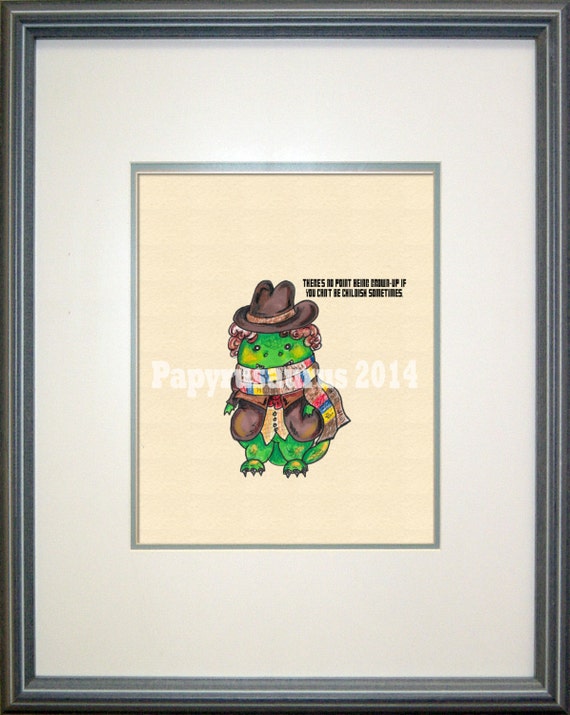
And seriously, check this out. It's the Bakersaurus Rex.

Wednesday, 18 December 2013

WHO REVIEW: The Death Pit by A.L. Kennedy

Following the success of the Puffin kids' e-shorts range for the anniversary, the BBC have kicked off their own series of e-book novelettes featuring some impressive authors. There are several aspects here that are worth celebrating. For one, it's good to see the Beeb continuing Puffin's mission of signing up authors new to Doctor Who, rather than relying on the same reliable stalwarts they've used for years. It's something that has worked very well for the BBC's 'big event' novels in recent years, and it's encouraging to see them sticking with it. A big thumbs up for both Puffin and the Beeb for involving a number of female authors, underrepresented in Doctor Who and sci-fi in general over the years. Finally, this seems to be turning around. It's also good to see that the upsurge in demand for fiction featuring 'classic' Doctors during the anniversary year has convinced the BBC to commit to a continuing range featuring incarnations old and new.

The Time Trips range kicks off with The Death Pit by dark fantasy author A.L. Kennedy. It's... peculiar. It's certainly not what I'd have expected from Kennedy, a writer who has a reputation as being rather serious, with a well-known antipathy towards "Hollywood endings." While The Death Pit has its share of cynical characters with grim personality flaws, it's a comedy piece through and through. Set on a golf course in her native Scotland, where junior secretary Bryony leads an understimulated, in desperate need of something fulfilling in her life. Bryony's witty inner voice keeps all her scenes highly enjoyable, even if her thoughts and comments are mostly jokes, rather than anything resembling what people would actually think or say.

She does work very well with the version of the Doctor presented in the story. Ostensibly, this is the fourth Doctor, although judging by the characterisation, he's more of a generically buoyant new series type. While Kennedy certainly seems to be a fan of Tom Baker's era - one major character is named David Agnew, a giveaway in-joke - she doesn't get his persona quite right, even judging it by his later, sillier stories. It's not bad, and nowhere near as off as Eion Colfer's wonky first Doctor from his Puffin short, but it does jar on occasion.

While the threat facing Bryony and the Doctor, and all who reside at Fetch Brothers Golf Spa, is inventive and unsettling, the story itself meanders, which isn't a positive in a short like this. There are also too many characters, with several having no real cause to be included, barely interacting with the story. The monster is revealed to feed on some of humanity's nastier attributes, leaving it open to a love-conquers-all-type ending which is anticlimactic. There's also a lack of closure, with the story rather fading away at the end. Perhaps some of the characters will be picked up in other instlaments, but it does this story no favours. Good fun, but heavily flawed, The Death Pit is not the best start for a new series.

Placement: The Doctor is on his own and particularly daffy, so probably between seasons fifteen and sixteen.

Tuesday, 29 October 2013

WHO REVIEW: The Light at the End

Let's admit it, chaps and chapettes – it's getting exciting now! The fiftieth anniversary is almost upon us, and Big Finish has released its own celebratory get together a month early, the devils. While the TV series is focusing, quite sensibly, on the 21st century Doctors, fans who want to see the elder Doctors represented can rest assured that Big Finish has done us all proud with The Light at the End.


BF supremo Nicholas Briggs has spoken of his reluctance to go for a multi-Doctor team-up. This is understandable, of course; balancing the needs of multiple leads and all their companions with a coherent, diverting storyline isn't easy. Big Finish has quite some history with multi-Doctor stories. Briggs himself kicked off the range with The Sirens of Time, which took the fifth, sixth and seventh Doctors, then BF's entire roster, and built a fun but flawed story around them. Each Doctor had an episode, with a finale that teamed them all up to save Gallifrey. For the fortieth anniversary, BF took a different tactic, with Zagreus using the unusual idea of bringing Peter Davison, Colin Baker and Sly McCoy in to support Paul McGann's eighth Doctor, but as new characters. The subscriber special The Four Doctors was more straightforward, with Doctors five to eight all taking part in a time-crossing adventure, before a brief fan-pleasing get-together at the end, while Project: Lazarus gave us a rather peculiar Six/Seven team-up.


The Light at the End is a little more traditional in its set-up. It's essentially a new Five Doctors, bringing together the five extant 20th century Doctors together. There's plenty of interaction between the various Doctors, and while the story understandably focuses on the surviving Doctors, the first three incarnations are featured. Though separated from their successors, the first three Doctors do take part in proceedings, mostly appearing as phantoms to the rest of the characters. Big Finish's solution to the lack of the original actors is one that will divide fans, to be sure, but it is, on the whole, successful, and it wouldn't seem right to not have the characters included. The degree to which these Doctor stand-ins will convince listeners is variable, but they ultimately pull it off, and bump this five Doctor team-up to include all eight of the old gents.


The story for Light is, understandably, straightforward, despite the transtemporal shenanigans. The Master, in his pre-Traken form, purchases the services of the Vess, a rather Dalek-like race of intergalactic arms dealers. Using their ultimate weapon, the nature of which is rather ingenious, the Master causes the TARDIS to collapse in on itself, causing the Doctor's timeline to collapse inwards with it. When the various Doctor are first made aware of the threat when a mysterious red light appears in their TARDISes, as they pass through a particular point in space and time. They each track it back to Totton, Hants, on the 23rd of November, 1963. Yet only the fifth Doctor manages to reach Totton, with the others being diverted into a peculiar pocket universe. How these supposedly disparate locations fit together is rather clever, and the crux of the Master's plan.


To begin with, the Doctors are kept separate, gradually pairing off before all eight of them come together for the grand finale. The fifth Doctor and Nyssa are able to reach the house at Totton, the location that is mysteriously linked to the unfolding events. Peter Davison and Sarah Sutton are perfect as usual as an older, more mature version of their televisual team, quietly investigating the mystery that has affected Bob Dovie. John Dorney is excellent as Bob, a perfectly ordinary man whose life is torn apart by the sudden intrusion of the Doctor and Master into his life. There's even an appearance by young Benedict Briggs, son of Nicholas, as Bob's offspring Kevin. It's rather cute, but events become unsettling very quickly in this spooky section of the story.


The fourth and eighth Doctors, and their respective companions, get to team up against the Master, and the result is joyous. The two Doctor who we never thought we'd get back, and here they are, bouncing along together, two gorgeous voices in conversation. Their Doctors get on marvellously, with the exception of a little fashion critique, and the actors have some real chemistry. If there's ever the chance of a further team-up with these particular Doctors, I'd buy it in a heartsbeat. The companions are just as good, with India Fisher's Charley and Louise Jameson's Leela sharing some fun scenes. It's just lovely stuff.


The other pair-up, between Doctors number six and seven, is also very successful. There's something extra appealing about having a Doctor dealing with his immediate successor, especially when it's the exuberant sixth Doctor meeting the more subdued seventh. Nicola Bryant doesn't get too much to do as Peri, but she has some good chemistry with Ace, and gives McCoy a gently moving moment as he comments on the strange feeling of meeting long lost friends. Sophie Aldred gets a treat of a scene as Ace. Not only does she give us the funniest moment of the play with her rundown of the various Doctors (“Old Man White Hair, Beetles Haircut...”), she's fantastic partnered with Colin Baker. It's strange to hear Ace with another Doctor – for some reason, it's hard to imagine her with anyone but McCoy – but she's well matched by Colin Baker. The temporal ghosting as the TARDIS collapses lets us hear some other companions too, with almost everyone that Big Finish still has at their disposal making at least a brief contribution.


Geoffrey Beevers is wonderful as the Master, but that's no surprise. His silkily sinister tones are perfect for the audio version of the Doctor's oldest enemy. While his successor once opined that “a universe without the Doctor scarcely bears thinking about,” this severely damaged version of the Master is fuelled by nothing more than desperation and cold, agonising hatred. He's a particularly nasty piece of work, and using the instantly recognisable villain as the threat for this story save time. It's a strong, streamlined story, well structured, cleverly revisiting the same events from alternative viewpoints. Plus, we get to hear the eighth Doctor face the Master again, which has been a long time coming.


Finally, all eight Doctors come together to solve the Master's plot, but naturally, it's the original who finally cracks it. The eventual solution is a little pat, and might irritate some listeners as it undoes much of what we've just heard. However, it works, and leads to a very funny epilogue. This is a corking adventure, balancing all the Doctors better than ever expected. A well made, well written story that celebrates all eras of the series prior to the great relaunch, The Light at the End is an absolute treat.