Showing posts with label Martians. Show all posts

Monday, 28 October 2024

Hallowe'en at Television Heaven

It's spooky season, so it's time to review some classic chillers (because the rest of the year I don't watch monsters and ghosts and things, not at all).

Pop along to Television Heaven for new reviews on the ingenious horror spoof Garth Marenghi's Darkplace, the most terrifying part of which is that it's somehow now twenty years old; the Frankensteinian hammy horror of 1970s Doctor Who serial The Brain of Morbius; and, the Hammer movie Quatermass and the Pit (aka Five Million Years to Earth), featuring perhaps the very best version of the good Professor. 

Plus, Mark Turner-Box reviews the 1979 miniseries of Stephen King's Salem's Lot, while Malcolm Alexander examines the more recent horror series The Enfield Haunting.

Enjoy an array of Martians, monsters, vampires, ghosts, apemen and invasive broccoli.

Sunday, 19 January 2020

Victorian Nightmares

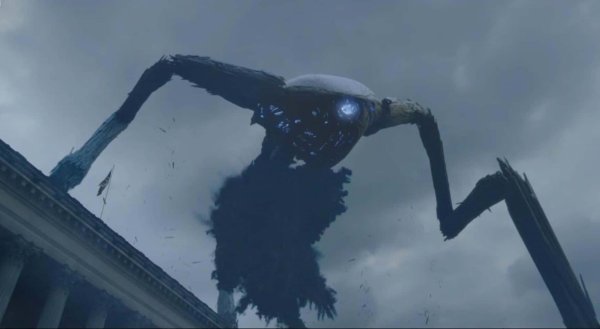
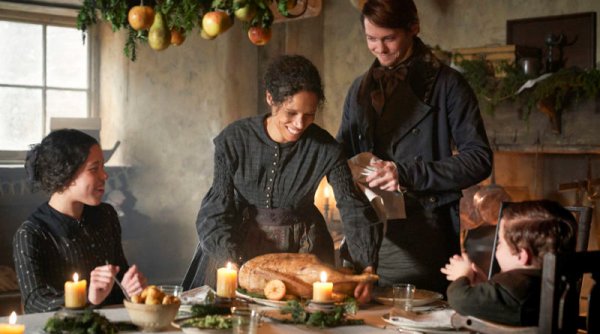
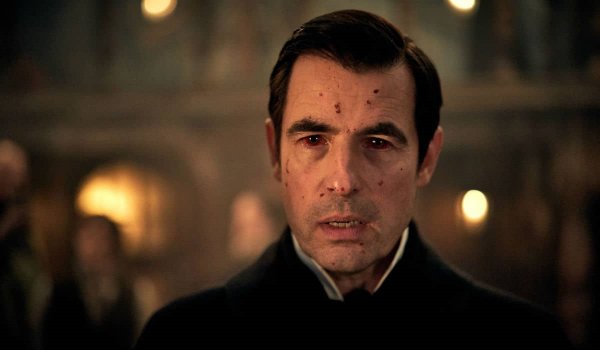
From late to 2019 to the beginning of 2020, the BBC aired three high budget, prestige television adaptations of classics of Victorian literature: A Christmas Carol, The War of the Worlds and Dracula. I had... mixed opinions on all three of them.

You can read my reviews of the Victorian telefantasies at Television Heaven by following these links:


Sunday, 24 September 2017

Now available - The Throne of Peladon

Season 41 of The Doctor Who Project is now begun. The first story, The Throne of Peladon by James P. Quick, is now available to read for free. Part two, The Secret of Peladon, is available next Saturday.

Give it a read if you enjoy classic era Doctor Who stories, political intrigue, mediaeval adventures or hermaphrodite hexapods. Click the cover and go read!


http://www.thedoctorwhoproject.com/files/seasons/season_41/The%20Throne%20of%20Peladon.pdf

Thursday, 15 June 2017

WHO REVIEW: 10-9 -"Empress of Mars"

By George, that was jolly good fun, what?

"Empress of Mars" is inarguably the most straightforward episode we've had this year, and in a season that has seen a conscious attempt to go back to basics, that's saying something. There isn't a single surprising thing in this episode; even that lovely monster cameo at the end is about as predictable a bit of fanwank as you could get with Mark Gatiss in charge. Indeed, this is about the least surprising episode you could get from Gatiss; Victoriana crossed with Pertwee, with a touch of Troughton, is about as Gatiss as you could get.

None of which is a criticism. Straightforward and predictable is not always a bad thing. Sometimes all you want is a good, old-fashioned adventure where you know who's good, who's bad, and who appears bad but will ultimately come good. After a few episodes that tried to do new things with Doctor Who but didn't really pull them off, going back to the old days and just doing it bloody well is a tonic.

This is an episode that exists primarily to justify some arresting visuals. Mars is always a source of spectacle, and the conceit of the British Army colonising the planet, red tunics against red soil, couldn't be anything other than gorgeous. Opposing the red tunics are the iridescent green carapces of the Ice Warriors, and the Empress Iraxxa, with her crimson visor. It's an array of red and green.

The Ice Warriors always were the archetypal big green monster, huge clomping lizards with pincer hands and rasping voices. They've been refined a bit since then, both in the Peladon stories of the seventies (on which, more later) which introduced the Ice Lords in their fine capes and glitter, and again in 2013's "Cold War." This is the new Ice Warrior that Gatiss introduced then, thankfully not slithering out of its carapace for a sneak around some ducts. Ice Warriors, to me, should be towering, clanking brutes, and so they are here. But that doesn't mean they can't be characters. While the bulk of the Martian cast are lumbering monsters, the main man Friday is a rather interesting character, a being who has a genuine reason to be conflicted between his ancestral ties and his current situation. The success of the character really goes to actor Richard Ashton, who gives a quiet and dignified performance as the lonely Martian. He absolutely raises the episode up above the sheer silliness it could have been, portraying the noble creature who looks sluggish and cold-blooded but is actually passionate and possessed of a delicate enough touch to catch a saucer in one chitinous pincer.


Also impressive was Adele Lynch as Iraxxa, a character that veered close to becoming a walking cliche of the "Aren't men stupid?" variety but thankfully avoided it. She actually turned out as a rather well-written antagonist, one who never let her understandably strong loyalty to her people lead her to do something stupid. It's a good thing the decision was made to allow the Martians to speak with an easily understandable voice style, instead of hoarse rasping, although for a moment I was convinced Iraxxa was played by Sarah Parish, since she sounded exactly like the Empress of the Racnoss from "The Runaway Bride." Of course, the Martians would sound better here, because this is their natural atmosphere - that was established as far back as 1969's The Seeds of Death.

The human characters are almost as important in an episode like this, and much of the running is held together by Anthony Calf's excellent performance as the "coward" Colonel Godsacre. A note perfect performance of another archetypal character, that rises above cliche by virtue of strong writing and excellent acting. Also very good is Ferdinand Kingsley as Captain Catchlove, such an out-and-out prig that you can feel how hated he is by every other character on screen, Most of the remaining soldiers get little opportunity to distinguish themselves, although Bayo Gbadamosi made young Vincey very likeable.

There are some lovely visual moments in the episode, from the "God Save the Queen" message to the stars to the sonic disruptors that kill the Martian victims in a bloodless but horrible manner. Most arresting is the Warrior reaching up slowly from beneath the ground, and although this calls back to "The Hungry Earth/Cold Blood," that episode was seven years ago, and so hardly fresh in the minds of most viewers. Although, watching the episode with a normal person (well, relatively normal), suggests that most viewers won't remember there's a difference between Ice Warriors and Silurians. They are, after all, both green, scaly humanoids whose females are surprisingly curvy for reptiles.

Gatiss has already stated that this episode was, briefly, going to be set on Peladon, and that would have pushed the very unsubtle anti-Brexit element of the story to the forefront. The Curse of Peladon was, after all, about the UK joining the European Economic Community. However, we did at least get that wonderfully fanwanky moment when an individual from Alpha Centauri answered the Martians' distress call. Not only was this a direct callback to the Peladon stories - the very first foundations of the Federation that will form two thousand years later, perhaps - but they even got the original Alpha Centauri actor Ysanne Churchman out of retirement to voice the Cyclopean alien once more. Not that it could ever be anyone but the Alpha Centaurians - they are the next star system along, after all. I'm slightly amazed the production team would even show us the bizarre creature again, although its probably for the best that they elected to only show us its head, and not the, ah, shaft.

Capaldi gets to do his best Pertwee in this episode, raging against imperialism and war for its own sake while threatening the aliens with a massive great tank. Pearl Mackie, on the other hand, gets little to do, her presence in the episode being mostly made up of pop culture references and an occasional note that she is the only other female in the main body of the story. It's Nardole's brief presence that's most baffling. While removing him and TARDIS from the story gets rid of an easy escape route for the Doctor and Bill, there is no indication of why the TARDIS suddenly shifts back to Earth. Is it down to something the Master did, and if so, how? And what are we to make of Missy's sudden concern for the Doctor? The only thing I can take from it is that the Doctor has, indeed, already begun regenerating...

Victorian attitudes: There's some questionable racial politics in this episode, or rather, there aren't any. Godsacre's only problem with Bill being a space police officer is that she's a woman, with no mention of her racial background. There's no racial politics mentioned at all, beyond "We're British, we belong anywhere!" which is distinctly odd, considering they've just come from the wars in South Africa. Then there's the casting of Vincey. Bayo Gbadamosi is great, but the idea that a black man could fight not only serve in the British army, but marry a white girl, is almost without precedent. Indeed, Gatiss protested the casting; his interview here makes an interesting point about balancing representation with historically realistic casting. In another story, it might matter less, but in a story about imperialism, it seems a strange thing to overlook.

Best line: "Sleep no more, my warriors!" Mark Gatiss namedrops his own episode.


Saturday, 4 July 2015

REVIEW: Lost on Mars by Paul Magrs

Paul Magrs tends to write stories that take a whimsical, askew look at mundane life. While he does employ science fiction tropes, particularly in his Doctor Who work, the fantastical is never far away.Lost on Mars, as the title suggests, takes a classic sci-fi setting – that of a struggling human colony on the Red Planet – but injects a large dose of the fabulous. There are elements of Steampunk and horror in its make-up, but foremost it is in the tradition of classic children's literature. Lost on Mars is a potent coming-of-age story, in which our heroine, Lora, is forced to grow up in order to survive in a terrifyingly unpredictable world.


Unlike most of Magrs's work, which is intrinsically English, Lost on Mars has more in common with frontier stories like Little House on the Prairie. Our Town, the ramshackle settlement on the Martian plains, is home to Lora and her family, three generations under one roof, including Grandma, one of the original colonists who came from Earth at the end of the 21st century. In spite of the futuristic setting, life there is more like the late 19th century edge towns in the Old West, or Australia. Life involves constant hard graft, and Our Town is a safe place in a wilderness filled with unknowable dangers. Until the Disappearances start, and even the town provides no safety. There are some genuinely unsettling moments as people are slowly picked off by a largely unseen Martian force, and the overriding feeling throughout the book is one of ever-present uncertainty and danger.


Magrs's Mars (perhaps we should call it Planet Magrs) is home to a baffling array of life forms, from the unthreatening reptilian livestock the townsfolk depend on, to a variety of more sophisticated, and potentially deadly, Martian natives. Phantom-like Martians appear to be the cause of the Disappearances, and even Lora's unexpected friendship with one of their number does little to lessen the sense of menace that their presence engenders. Forced to flee Our Town, Lora and her remaining family and friends take their chances in the wilds of the Martian outback, where things only get stranger and more uncertain. The plot doesn't let up for a moment; as soon as it seems the true nature of the story is clear, everything is called into question by another unexpected revelation. The story ends up in a place quite unlike where it began, the nature of Lora's world now unclear. Every revelation is questionable, every answer suspect.


Lora is a fine protagonist, a fully realised character who develops from girl to young woman as her life changes and she grows into new responsibility. Her brother Al, although not as significant to the story at first, undergoes similar development. Family is at the heart of the story and the characters' actions. This is a new and fascinating world that Magrs has created, although some elements familiar to his readers show up, from mention of “Celestial Omnibuses” to the essential batty old ladies that he loves so much. Then there's Toaster, the adorable Servo-Furnishing, a sentient sunbed who acts as pet, butler and friend to Lora and her family, and whose first iteration appeared in the author's 2007 Doctor Who novel, Sick Building. It's also good to see that, although it is far from a focus of the novel, there is a queer presence among the cast of characters. Although the setting is new, this feels absolutely Magrs.


The first in a trilogy, Lost on Mars ends with some closure but with a stack of mysteries left unsolved. This is an excellent book for young readers and has plenty to offer old types too. It would make for an excellent Sunday night family drama, should the BBC survive long enough to revive the artform. Book two quickly, please.

Lost on Mars can be ordered from Firefly Press and is also available from Amazon. It is also available on Kindle.

Wednesday, 25 February 2015

Monochrome Marvels 1

I've long been a fan of old TV and film, and one of the wonderful things about it is how much more there always is to still discover. Nosing around on the internet can reveal all sorts of gems, free to view.

A Message from Mars (1913)


The poster advertises Hawtrey's involvement but shows Clark.
The first feature length science fiction film made in the UK, A Message from Mars was released by the BFI at the end of last year, restored and returned to its original colour tints. I've only just got round to watching it, but after a hundred years I'm sure a couple of months can't hurt. A silent film, it has only a few text inserts, the story mostly being told through the acting. It's a beautiful work, largely down to its star, Charles Hawtrey (not that one). Hawtrey was born in 1858 and was the leading comic stage actor of his generation. It was towards the very end of his career that he began to perform in silent films, using his expressive physicality to put across his characters' emotions. The cast also includes Hubert Willis, who was most famous as Doctor Watson alongside Eille Norwood's Sherlock Holmes.

A little research tells me that the film was based on an earlier version released in New Zealand in 1903, now lost, and itself based on a play by Richard Ganthony. It's essentially a spacey version of A Christmas Carol, with Hawtrey's character Horace shown the error of his selfish and miserable ways not by a series of ghosts but by Remiel, a Martian sent to Earth to prove his own abilties. I love E. Holman Clark's performance as Remiel; his expression of sheer indignation when he is given his earthly assignment. The Martian setting of his origin scenes might as well be heaven or some fantasy realm, but interplanetary romances were in vogue in that era. You can stream it on the BBC website.

Next : The Adventures of Captain Marvel (1941)


Tuesday, 24 February 2015

Paperback Writer

Iris Wildthyme of Mars is now available in paperback from Obverse Books, priced £12.99 (about $20).

Buy buy buy

Saturday, 20 September 2014

Capaldi in Space

There are some great little programmes hiding out on BBC Radio 4-Extra. This week I listened to The Further Adventures of the First King of Mars, which actually came out in 2008. It was originally written by Nick Walker to mark the fiftieth anniversary of Sputnik 1's orbital mission. I'm not sure of the connection, seeing that Sputnik never went to Mars, but never mind. It was repeated over the week in five fifteen-minute installments. A canny move, seeing that is read by Peter Capaldi, and thus serves as something to keep all the Doctor Who geeks going between episodes.

We all hoped that the twelfth Doctor would be like Malcolm Tucker in space, and while there's a touch of that to the character, it's Capaldi's mission captain here who is really the holder of that mantle. OK, the swearing isn't there, but god, this is an angry, overbearing and utterly disturbed man on a mission to Mars. The first manned mission to the red planet, totally ruined by having this man in command, utterly unsuited to the role and totally out of his depth. Over five short episodes there is a crash-landing, a death and an astonishing discovery that leaves the mission in tatters and the nature of Mars changed forever, all recounted by Capaldi with increasing hysteria. All hinging on his accidental running down of a space centre chimpanzee. It's just wonderfully bizarre, and Capaldi's caustic telling makes it. This should be repeated every year; it's a brilliant piece of cynical, completely British science-fiction. 

Wednesday, 3 September 2014

Obversally Yours

Woohoo! Iris Wildthyme of Mars is now available for pre-order from Obverse Books!

The latest set of adventures featuring time-travelling adventuress Iris Wildthyme and her animal friend Panda, IWoM is to be released on the 30th of September. It features stories from all sorts of excellent authors, including editor of the book Philip Purser-Hallard, Ian Potter, Simon Bucher-Jones, Selina Lock, Dale Smith, Juliet Kemp, Richard Wright, Rachel Churcher, Mark Clapham and Lance Parkin, Aditya Bidikar, Blair Bidmead, and also me. It is availabel at a reduced price for pre-order in hardback and ebook formats.

Also on the way is another volume from Mr. Purser-Hallard, the third anthology of The City of the Saved. Tales of the Great Detectives takes us beyond the end of time and explores the many facets of the greatest detective, Sherlock Holmes. It too is available for pre-order in hardback and ebook for release on the 30th.


Friday, 20 June 2014

Iris Wildthyme of Mars cover ready

The full cover design for Iris Wildthyme of Mars has now been finalised. Beautiful artwork by Paul Hanley and fantastic design by Cody Schell. Just beautiful stuff. Full images on editor Phil Purser-Hallard's blog.


Saturday, 19 April 2014

Iris Wildthyme of Mars - coming soon!

Author and editor Philip Purser-Hallard has now posted the full line-up for Obverse Books' next anthology, Iris Wildthyme of Mars, at his blog, Peculiar Times.

The stories, collected in pseudo-chronological order (from classical philosophical heavens to postmodern soft science fiction) are:

'Wandering Stars' - Ian Potter
'Lieut. Gullivar Jones: His Bad Weekend' - Daniel Tessier
'Iris: Chess-Mistress of Mars' - Simon Bucher-Jones
'Death on the Euphrates' - Selina Lock
'And a Dog to Walk' - Dale Smith
'Talking with Spores' - Juliet Kemp
'Doomed' - Richard Wright
'The Last Martian' - Rachel Churcher
'Lilac Mars' - Mark Clapham and Lance Parkin (sequel to the New Adventure 'Beige Planet Mars')
'City of Dust' - Aditya Bidikar
'The Calamari-Men of Mare Cimmerium' - Blair Bidmead
'Green Mars Blues' - Philip Purser-Hallard

Yes, that's my name right there. My story, being a sequel to an early planetary romance, comes second in the evolving scheme of Martian fiction. I'm in incredibly esteemed company here, alongside some of my favourite and most respected authors. Nerve-wracking, but exciting, in equal measure.

Iris Wildthyme of Mars should be available in print and e-book formats from Obverse Books in the summer. Pre-orders should be available soon.

Friday, 4 April 2014

Robert Rankin's ridiculous illustrated book, Alice on Mars, is being adapted into a film!

Bestselling writer of far-fetched fiction Robert Rankin, author of the Brentford Trilogy, Armageddon: The Musical and The Toyminator, among others, has joined forces with producer/director Martin Gooch, director of the award-winning films Search for Simon and After Death and contributor to such productions as Judge Dredd and The Muppets.

The team have launched an Indiegogo fundraiser with tons of perks to help finance this movie. They've also created a promo video to give a flavour of the production and introduce the cast. Check it out.


Monday, 27 January 2014

WHO REVIEW: The Lost Stories 4.3-4.4

LORDS OF THE RED PLANET

THE MEGA


Among the mad rush of events that overtook the world of Doctor Who at the end of 2013, Big Finish reached the end of its Lost Stories range. Originally created to bring the unmade 1986 season of Doctor Who to life, later series moved beyond the adventures of the sixth Doctor, recreating unmade serials for the Doctors from Billy Hartnell through to Sly McCoy. The fourth and final run has reached its culmination with two six-part adventures, one for the second Doctor and one for the third. Naturally, each of these is in the enhanced audiobook type of format, somewhere between a reading and a performance. Indeed, these two releases are as close to a full-cast performance as you can get with several key cast members no longer extant.


Lords of the Red Planet is the gloriously named third and final story drawn from the archived notes of Brian Hayles, following the previous releases The Dark Planet and The Queen of Time . It involves the Doctor, Zoe and Jamie arriving on Mars and becoming witness to nothing less than the creation of the Ice Warriors. With the genesis of the Daleks, Cybermen and Sontarans all now established, it's not surprising that the Martian menaces would get there own treatment eventually. What is more unexpected is that this was actually proposed right back in 1969, intended to be the second appearance of the creatures. In the event, The Seeds of Death was made in its place. It's hard to say which was actually the stronger story; what we have here is not a final script, but is based on two slightly different draft treatments by Hayles. John Dorney has done a good job of crafting them into a cohesive story. The performances are uniformly good, although Nick Briggs does overstretch himself a little by adding even more alien voices to his roster.


Where the serial falls down is in its length, something it has in common with many Troughton stories. It's a more interesting concept than what we got in The Seeds of Death, but perhaps a less televisually exciting one. It certainly would have been expensive to produce, with the sheer numbers of Martians of various stripes being a likely reason it was vetoed. Hayles paints a picture of Mars that sees it as a dying planet inhabited by the last vestiges of a once powerful culture, driven to indolence and marking time till their extinction. The Gandorans are the architects of their own maltreatment at the hands of their genetically enhanced mistress, and the ensuing power struggle has an air of inevitability to it. The actual origins of the Ice Warriors, accidentally christened as such by the Doctor here, is intriguing. There was always a sense that there was something artificial about them, yet they are clearly organic. Here we learn that they are forcibly evolved and technologically upgraded, transforming them from mere beasts to a powerful fighting force. A martial culture in both senses, then, and destined to inherit the planet. How easily this account fits with other tales of Ice Warrior history is harder to say, but given that this is penned by the real-world creator of the creatures, it should perhaps be considered the truest history.


I found The Mega rather less enjoyable to listen to. The first, and only, third Doctor release for the Lost Stories range, this one comes from a treatment by Bill Strutton, author of intergalactic bug-fest The Web Planet. It's at the same time a talky piece and an action-oriented one. It takes an age to get going, and once it does, it never really manages to do the action justice. Hailing from the hinterland between seasons seven and eight, The Mega is a story in the gritty, near-future style of The Ambassadors of Death. It's the plausible future from the point of view of a writer in the 1970s, with plenty of international political action, then-topical references and corrupt officials, with a hefty does of high-concept science fiction mixed in. It probably would have looked fantastic on television. The problem being that neither the action setpieces nor the bizarre, extraterrestrials (the Mega themselves) come across terribly well on audio. Simon Guerrier stresses that this was the toughest script assignment he's had, and it shows. I'm just not convinced this story was well chosen for adaptation to audio, particularly in light of the death of so many of the original cast. Both Richard Franklin and Katy Manning do their best, but it doesn't really come off. As much as I adore Manning, and as much as others have praised her attempt at Pertwee, her im-Pert-onation just doesn't work for me either.


While both the Lost Stories and the Companion Chronicles ranges are now over or winding up, Big Finish intend to move forward with an Early Adventures series. While the gradual development of these releases has shown that there is clearly a way that stories for the first three Doctors can still be produced, there are still some kinks to be ironed out. Although the Troughton stories have been largely successful, Pertwee adventures are harder to get right, something that is true both in the Companion Chronicles line and The Mega. With the sad loss of Elisabeth Sladen, Nick Courtney and Caroline John in recent years, this vibrant era of Doctor Who is slipping out of our grasp and may never truly be recreated.

Wednesday, 2 October 2013

So what do you call someone from Jupiter?


Everyone knows that Martians come from Mars. That's straightforward enough. Beyond that, things get fiddly. Just what do you call someone from Jupiter, Venus or Pluto? What of the asteroid belt? Even in professional astronomy circles, people argue over the correct use of demonyms and adjectives for astronomical bodies. Much of the terminology used today originates from alchemical, astrological and classical works, and the growth of science fiction has only made it more confused. Of course, nowadays we know the likelihood of finding little green men on Mars or Mercury is slim to none, but the use of adjectival forms is necessary to describe features on the planets or their satellites. Plus, there's still fiction - everyone loves a good, old-fashioned Martian invasion.

Firstly, we need to look at where the names of the planets come from. The eight major planets, barring the Earth, take their names from Roman gods, with which they were identified by early astronomers. The Roman gods are mostly equivalent to the Greek pantheon, the Romans being dab hands at assimilating the traditions of other cultures, so each planet has an equivalent Greek name, which, unsurprisingly, is how they are known in Greece. In classical astronomy, the sun and moon were considered to be planets, since the exact definition of a planet was a long way off (and still hasn't really been settled on). The Romans knew of five actual planets beyond the Earth: Mercury, Venus, Mars, Jupiter and Saturn, all of which are, under the right conditions, visible to the naked eye. Uranus was identified as a planet in 1781 by astronomer Sir William Herschel, having previously been misidentified as a star. Neptune was discovered in 1846 by  Urbain le Verrier, although it may have been discovered independently by John Couch Adams three years earlier (in fact, Galileo had first seen the planet over two hundred years earlier, but again, had misidentified it as a star). Pluto, which is, of course, no longer considered a planet, wasn't discovered until 1930, by Clyde Tombaugh. Rather wonderfully, a portion of his ashes are currently en route to Pluto on the New Horizons spacecraft.

The upshot of this is that the adjectival forms of planets have to follow classical rules, which sometimes throws up some oddities. Also, the traditions of astrology - which, for centuries, was part of astronomy - and alchemy, have granted supposed properties to the planets. In alchemy, each classical planet had a symbol, and each of the spheres was thought to be related to a human attribute. The result is that the adjectival forms of planet names have meanings in themselves in modern English.

Mercury

Mercury, the innermost and smallest planet of the solar system, is named for the fleet-footed messenger of the gods; the original, Roman version being Mercurius, which is sometimes used in astrology. His Greek equivalent is Hermes. The adjectival form of Mercury is mercurial, which can mean swift, quick-witted, volatile or changeable. Capitalised, Mercurial is used to describe objects and features related to the planet Mercury, although Mercurian is becoming more commonly used. An inhabitant of Mercury would be a Mercurian. An alternative demonym or adjective would be Hermean, from Hermes; a related term is hermetic, once used in alchemy, but now used to mean sealed away (as in 'hermetically sealed'). Mercury is, of course also the name of a metallic element; all the classical planets were alchemically linked to a particular metal, but only mercury has adopted the name of its planet (the traditional names being hydrargyrum or quicksilver). Mercurial can, therefore, also refer to compounds of the element mercury.

Venus

Venus is where things start to get problematic. Named for the goddess of love and sex, Venus is the only major planet named after a female figure (although many minor planets are too). The adjectival form of Venus is venereal, which does not have a pleasant connotation. The Greek equivalent, Aphrodite, is rather pretty, but again produces an adjective with unfortunate connotations: aphrodisial or aphrodisiac. The correct term for an inhabitant of Venus would, therefore, be a Venerean, but the connotations of venereal disease means that this has, unsurprisingly, fallen out of favour. The most common word used today is Venusian (occasionally Venutian), but this is linguistically problematic, kind of like using 'Marsian' for something from Mars. My preferred term is Cytherian/Cytherean, a word originally related to the Greek island of Kytheros, which had traditional links to the goddess Aphrodite. It's a very attractive word, in my view. Sci-fi stories featuring inhabitants of Venus sometimes use both Venusian and Cytherian as names for separate cultures or species on the planet.

Venus is both the Morning and Evening Star, and in Latin, had separate names for both phases. It was Hesperus, or Vesper, in the evening, and Phosphorus or Eosphorus in the morning. A such, other terms you might like to use for Venusians are Hesperian and Phosphorian.
Nobody likes being called a Venerean.

Earth

The Earth is, of course, named after that dusty stuff we stand on, rather than any mighty god or goddess. The Latin term for the earth was tellus. The goddess of the Earth was Tellus, or Terra, whose name lives on in romance languages as the term for the Earth (such as the Spanish Terra or French le terre). The Greek goddess was Gaia or Gaea, again, still in common use as an alternative name for the Earth, or its biosphere as an entity, in the so-called Gaia Hypothesis. 

The correct adjective to apply to the Earth is terrestrial, used for both things of the earth, as in the land, and the Earth, as in the planet. From this we get the term extraterrestrial, for things beyond the Earth. Science fiction has never been happy with this term. Too mundane, I guess (mundane also meaning 'of the world,' as it happens, from the alternative Latin term mundus). Why not Terrestrian for an inhabitant of the Earth? Old-fashioned sci-fi popularised the terms Earthling and Earthman, which today are considered old hat and are usually used humorously. Futurama suggested Earthican. The most common term for inhabitants of Earth in sci-fi is Terran, which is very occasionally used scientifically; indeed, Terra is commonly used as an alternative name for the Earth in English language sci-fi. Confusingly, terra is also used for landmasses on other worlds in astronomy. An alternative term that I favour is Tellurian, from Tellus, which was used by E.E. 'Doc' Smith in his Lensman series, and by Robert Holmes in his Doctor Who work. Tellurium is a semi-metallic element sometimes called sylvanium; tellurian can also refer to compounds and ores of this element. Arthur C. Clarke, in 3001: The Final Oddyssey and other works, stuck with terrestrials for Earth-born humans, often with 'Terries' as a mildly pejorative nickname used by offworlders.

Monday, 2 September 2013

WHO REVIEW: The Ice Warriors DVD


The Ice Warriors is famous for one thing, the thing it was designed for: introducing a popular new monster to Doctor Who. Unlike most attempts to create a successful reoccurring foe for the series in the sixties (I'm looking at you, Quarks) this one actually worked. The Ice Warriors returned the following year, made two appearances opposite Pertwee in the seventies, and then vanished from the screen to become one of those monsers that evryone kept trying to bring back. No one quite managed this until this year, although there were some interesting things done with the Martians in prose and comics during the intervening period. All that said... the Ice Warriors really aren't terribly interesting monsters. Effective, yes, but not interesting.

They look great, of course, in the same way that the Cybermen and the Daleks look great. Big, weird monsters from space, the sort of thing almost guaranteed to get kids to fall in love with the show.  They're essentially a redesign of the Cybermen, in fact; they're clearly cybernetic, with visors in place of eyes, mechanical-looking claws and a sonic gun grafted onto their arms. Like the Cybermen, they stand as generic monsters, there to storm the current serial's base very slowly. They're even thawed out from the ice, as the Cybermen had been a mere two serials earlier. (This is the third story in a row set in a snowy locale. Season Five is as much the tundra season as the monster season.) When it comes down to it, big green men from Mars are not an original concept. Even lizard men had become pretty cliched in sci-fi by this stage. The Ice Warriors' success has nothing to do with the idea behind them; it's purely down to an appealling design. However, it's a design that works well enough to have secured them a somewhat iconic status in the ranks of Doctor Who's many monsters.

What's peculiar is that the hulking tortoises we see are clearly not what was intended in Brian Hayles's script. When Arden and his colleagues discover Varga in the ice, they describe him as a prehistoric man, and clearly "pre-Viking." Even through the polystyrene snow and clear plastic ice we can see that Varga is no man, and that his armour is of a different kind entirely to a Scandinavian pillager's. The script features an ancient humanoid, someone frozen in the ice for longer than is archaeologically feasible, with the astonishing explanation being that he is, in fact, an alien visitor. What we get on screen is a Koopa Trooper on steroids, and while the change makes sense - I doubt space Vikings would have caught the kids' imaginations so well - it clashes with the dialogue. What we see is clearly very different to what the characters are seeing.

Where the serial is really interesting is in its view of the future and of the universe. Nothing dates like science fiction, and the Troughton years were particularly keen on making visits to the 21st century that look absurd to modern eyes. The Ice Warriors goes rather further, to the year 3000 or 5000, depending on how one interprets the dialogue, but is still a fascinating insight into how scientific views in 1967 led to a very different vision of the future than we might have now. That the world is embedded in its "second Ice Age" - geologically inaccurate, but good enough for a general viewer, surely - is brought about by man's own hubris. This period of the series featured a number of climate-changing devices, but in this case it is the overuse of synthetic foods that has led to the strange conditions. By wiping out all the farmland to make room for more homes, the inexorable progress of humanity has led to a vast global cooling. Of course, from a modern perspective this is ridiculous, for as we now know, the destruction of plant life will more likely lead to global warming. Nonetheless, this theory was taken seriously at the time, and the "second Ice Age" that threatens Brittanicus Base and forces people to be evacuated to Africa is a plausible threat by the understanding of the time.

Other scientific anomalies are evident in the story, such as the contention that Mars' atmosphere was predominantly nitrogen-based. Again, this was the consensus at the time, whereas measurements taken over the intervening years have proven that the red planet has a thin atmosphere composed primarily of carbon dioxide. This rather makes a mockery of the Doctor's anti-Martian weapon of ammonnium sulphate. Always the chemist, the second Doctor shows no qualms in using chemical weaponry against the aliens. Then, of course, there is the serial's attitude to computers, which comes across as staggeringly luddite today. In the future of The Ice Warriors, humanity is dictated by great master computers, which calculate all variables before issuing their advice in a staccato monotone. The growing use of computer technology in 1967 was a clear and inevitable inspiration for science fiction writers, almost all of whom completely failed to predict the nature and degree of how computers would be incorporated into our lives. The Ice Warriors is part of a very late-sixties subgenre in which human beings must learn to live their own lives away from the tyranny of computers (see pretty much every second episode of Star Trek in this period). The idea of computers as ubiquitous tools rarely seems to have occurred to anyone. Still, at least the base staff have Facetime.

It's the human element that make the story watchable. Penley and Clent are at the core of the story, both very much stock sci-fi characters - the individualist scientist and the authoritarian overseer - but are written well enough, and crucially performed well enough to go beyond this. Peter Barkworth is fantastic as Clent, his arrogant facade always a step away from cracking open. It's a masterful performance, a brittle character trying to hold it together in an increasingly desperate situation. While his interactions with Penley and the Doctor are fascinating, his defining moment comes when he applauds an underling for voulnteering for the mission, only to be told that he was drafted in. A dozen emotions cross Barkworth's face as his character struggles to maintain his in-control demeanour. It's a gorgeous moment. Penley is almost as good, a characetr that never descends into being the anarchist Clent paints him as. Having Peter Sallis play the part will inevitably cloud it for those of us brought up on Last of the Summer Wine and Wallace and Gromit animations, but Sallis is a good enough actor that this rarely crosses the mind.

Other characters are less well realised. Wendy Gifford does her best as Miss Garrett, but she's very much an ice queen character whose only interesting moments are when she loses her composure. Angus Lennie is great fun as Storr, but the character is the sort of irrational rebel that Clent fears Penley to have become. The guy is nuts, preferring to let a limb go septic instead of talk to those evil scientists. He's strewn from pure cliche. The bear brought in to threaten Penley and Jamie fares better as a character (did he ever act again?) The lead trio are as watchable as always, of course. I'm running out of ways to praise Troughton's performance, and here his chemistry with his co-stars is at its peak. Frazer Hines and Deborah Watling make one of the most gorgeous TARDIS teams ever, and, although they're both playing cardbaord versions of their characters here, they're both on fine form.

The Ice Warriors isn't the most exciting or pacy of serials. Viewers coming to it from the new series in search of the origins of the monster in Cold Blood might be disappointed. The important thing to remember is that this was designed to be watched one episode per week, something that is essential to bear in mind with early Doctor Who. Sit down and watch this and episode or two at a time, and you should be suitable entertained, but it's best not to try to get through it all in one sitting.

Saturday, 13 April 2013

WHO REVIEW: 2013-3: COLD WAR


1983 is just about the latest year that I can consider to be historical. I was born in February 1984, so anything after 1983 feels like the present to me, or at least the modern period. Even though I don’t remember much of the first five or six years of my life (or much from the ages of about fourteen to seventeen, come to think of it, although I think that might be more alcohol related). The year of our birth is kind of hardwired into our perception of the world, with anything that comes before feels somehow separate.

Which is a long-winded way of saying that tonight’s episode of Doctor Who felt to me to have a historical setting. The Cold War is a sort of backstory to my existence, over by the time I became aware of the world at large, represented only by hazy memories of a wall being knocked down on the news, the knowledge that there had been until recently been something important called the Soviet Union, the hand-me-down current affairs of my parents and a whole host of eighties movies on the subject.

This means I lack the experience of Cold War paranoia that would, I imagine, give this episode the frisson of urgency it lacks for me. Intellectually, I know that if Skaldak presses the Big Red Button, a chain reaction of missile launches will send the Earth into a new dark age. Nonetheless, I fail to engage with the threat. It’s old news – the world didn’t end in 1983, after all, just as Clara says. Maybe we need a Pyramids of Mars moment in which we see a devastated world in 2013; or maybe I just need to be five years older to fully appreciate this episode’s setting.

Which is a shame, since Cold War, the episode, holds so much more for me to embrace than just nostalgia for the Cold War, the lengthy threat to international peace.  It’s all nostalgia for something, though. Nostalgia is, as I’ve pointed out before, what Mark Gatiss trades in. It’s his medium. The setting is recognisable to anyone who has seen any submarine drama, but primarily evokes The Hunt for Red October. It was probably a wise decision not to have the cast attempt Russian accents. It makes the characters easier for us to recognise, avoids any embarrassing accent anomalies, and further evokes Red October, with Sean Connery’s famously Scottish Soviet captain.

Most of all, it’s about nostalgia for Doctor Who itself. After all, we’re all here for one thing really: the big, green Martian. The Ice Warriors are one of the classic monsters, despite lacking much in the way of a concept. They are just big, green Martians, and, much like the Zygons (who are also set for a comeback), their appeal lies in their striking appearance. Gatiss, a writer steeped in the series’ mythology, recognises that to make the Ice Warriors work now he needs to do something new with them.

Tuesday, 5 March 2013

They came from Mars...


The Beeb have released an official image of the new Ice Warrior design, set to appear in the third episode of the upcoming run of Doctor Who (which should see them appearing on Saturday the 13th of April). Actually, the image started appearing on the internet a couple of days ago, but it's very much out there now. Personally, I love it, and I'm looking forward to seeing the Martians return; although they were never the most scintillating of enemies for the Doctor, there's something about a big green Martian lizard-man that's just hard to beat. 

The first thing every fan does - well, the second, after the little squeak of joy at seeing a brand new Ice Warrior - is compare it to the original design. The most obvious point is that the redesign is astonishingly faithful to the original, certainly the most faithful monster remake of the new series. Even the Autons looked more apart from their forebears than this, and they were just walking mannequins. 

There are plenty of differences when you look at the two designs together. Apart from the obvious things, like the use of more modern materials and so on, the main difference is an altogether more streamlined appearance when compared to the very cumbersome original. The hips in particular have been slimmed down. However, it's not all that different, in silhouette, to the 'Ice Lord' upper-class that commanded the Warriors in their 60s and 70s appearances (I do hope we get to see a Lord). The new version's shoulders are more built up, making its arms appear a little short compared to its body, and it lacks the tufts of hair found on its forebears (although the one pictures does seem particularly hairy).  The new Warrior's shell is more clearly divided into plates, but the overall effect is much the same, down to the boots and turtle-neck torso armour. One major difference is the hands; the original Ice Warriors had clamp-like pincers, while the new version appears to have bulky but clearly differentiated fingers. I am also very pleased to note that on its right arm, the new Warrior sports some kind of implanted device; I'm hoping this is the sonic weapon favoured by the originals, which made the screen go all wibbly when they shot people.

The status of the BBC foam machines is presently unknown.